
ASEAN Analysis & Commentary
Every analysis published on ASEAN Rising is sourced, datestamped and signed. We're more interested in being right in 12 months than first in 12 minutes.
Foundation pieces
Start here. The three pieces below set out the lens ASEAN Rising uses to read every story.
ASEAN Rising's core lens. Execution Economics is the study of whether countries, companies and institutions can convert obvious potential into delivered outcomes - and which six pillars decide the answer.
The region has capital, demographics, location and policy ambition. None of that has ever been the binding constraint. The next decade is an execution test, not a potential test - and it is already being scored.
Malaysia is the test case for whether ASEAN's middle powers can turn FDI, semiconductors and data centres into compounding domestic capability. Read the live coverage and execution scorecard.
Analysis tagged #industrial policy

 Brunei
 and the semiconductor test
Institutional reliability has become part of comparative advantage. A usable state is often more valuable than an exciting one.
 Brunei
's Economic Diversification and the Semiconductor Test
High-stakes industrial policy is a test of state capacity. Brunei needs to show it can execute.
 Brunei
Japan's CORE Initiative: A Lesson in Execution for ASEAN
Japan's Rapidus has launched the CORE initiative, aiming to bolster its domestic semiconductor industry. For ASEAN, this move highlights the importance of effective execution and institutional reliability in translating ambitious industrial policy into tangible outcomes, a.
 Indonesia
 and the Long Road from FDI Pledges to Production
FDI pledges travel at the speed of headlines, but realised investment depends on the slower work of land, permits, power, and talent. For Indonesia, turning promises into production is the core task.

 Philippines
The Philippines' Data Industrial Complex
Toshiba's expansion of its hard disk drive manufacturing in the Philippines is a positive indicator, but the long-term success of the country's industrial ambitions depends on a deeper integration of infrastructure, talent, and institutional execution.

 Thailand
: Beyond the FDI Announcement
FDI headlines are easy. Execution on industrial policy is harder. Thailand's semiconductor ambitions depend on getting the details right.
 Philippines
Mitsubishi, the Philippines, and the EV Challenge
Mitsubishi Motors Philippines' environmental summit highlights the EV transition challenge for ASEAN, balancing legacy manufacturing with new supply chains.
 Philippines
The EV Transition and ASEAN's Industrial Base
The electric vehicle transition will test the durability of industrial policy frameworks across ASEAN, particularly in established automotive manufacturing hubs like the Philippines and Thailand.
 Philippines
The EV Transition and ASEAN's Industrial Policy
The electric vehicle transition is not just a climate story, it is an industrial policy story. For ASEAN, it brings to the fore questions of capital allocation, supply chain management, and long-term institutional capacity.
 Philippines
The EV Transition and ASEAN's Industrial Base
The electric vehicle transition is testing ASEAN's industrial policy. The region has a deep manufacturing base, but the shift to EVs requires new capabilities in battery production, software, and supply chain management that are not yet fully in place.
 Philippines
The EV Transition and the Allure of Chinese Capital
The recent investment by GAC in the Philippines' EV sector is not just a commercial deal. It is a strategic move that reflects the deep, structural economic ties between China and ASEAN.

 Singapore
, Malaysia, and the Hyperscale Squeeze
Data center investment is pouring into Singapore and Malaysia. While Singapore has a head start, Malaysia's own industrial policy is setting up a classic contest for hyperscale dominance.
 Thailand
: EV Policy is No Substitute for Execution
Thailand has a trust deficit and an infrastructure deficit in its electric vehicle transition. Policy can signal intent, but foreign direct investment flows to where the power, land, and talent are.

 Vietnam
's Tax Plan Tests Its Industrial Strategy
Vietnam is considering a tax overhaul to shift investment towards technology and R&D. While the aim is to help local firms move up the global supply chain, success will depend on institutional execution, not just incentives.
 Thailand
's EV Transition and the Reliability Test
Thailand's EV ambitions depend on more than just attracting foreign investment. The government must also execute on its own promises to build a predictable, reliable institutional framework for a new generation of industry.
 Malaysia
's Aerospace Ambition Needs Institutional Depth
Malaysia's aerospace industry is attracting foreign investment. But turning announcements into reality requires stronger institutions to deliver land, power, and talent.
 Thailand
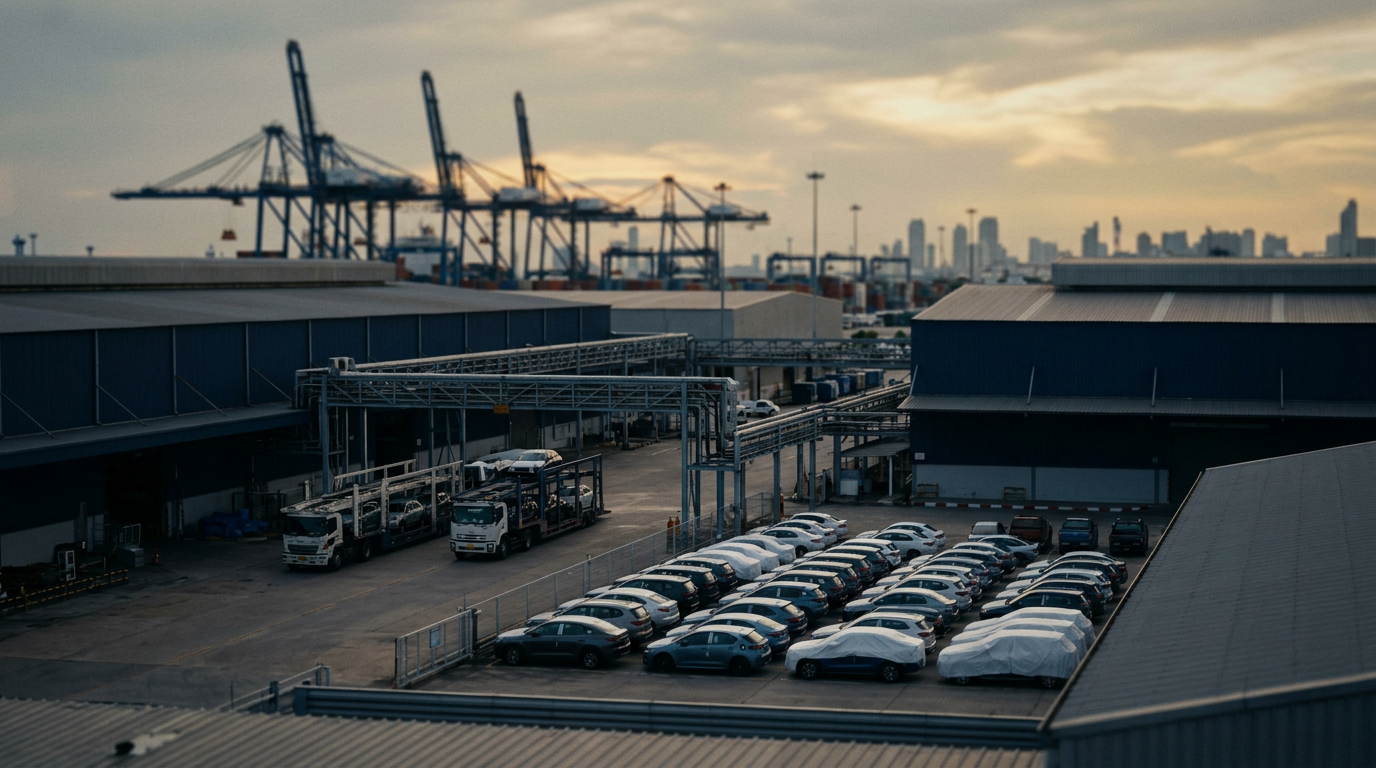
's EV Tax Shift: A Test of Institutional Execution
Thailand's auto sector is calling for clarity on a revised EV tax policy. The debate shows how a nation's industrial policy framework can determine whether announced foreign investment becomes realised economic value.
 Philippines
The Philippines, EV Tariffs, and the China Trade Balancing Act
The debate over extending zero tariffs on electric vehicles in the Philippines is not just about local industry or green transitions. It is a case study in how ASEAN nations are managing deep trade links with China.
 Malaysia
Malaysia's Budget 2027 proposal for the semiconductor industry highlights a deep-seated challenge for ASEAN: how to manage economic dependency on China while building national industrial capacity.
 Malaysia
's Automotive Ambition Meets a Familiar Test
Malaysia aims to transition its automotive sector from assembly to higher-value manufacturing. Success will depend on the slow work of improving institutions, infrastructure, and talent.

Copper, Capacity, and ASEAN's Data Centre Surge
The global AI-driven expansion of data centres is creating a surge in demand for copper, a trend with significant implications for ASEAN's industrial strategy and infrastructure development.
 Philippines
Sovereign AI needs more than factories
The Philippines is learning a hard lesson in the global chip race: attracting foreign factories is not a substitute for a national industrial strategy that builds sovereign capabilities in compute, data, and digital identity.
 Singapore
 Adds Data Centre Capacity in a Play for AI Dominance
Singapore's recent allocation of 200 MW of new data centre capacity is a calculated move to solidify its position as a global AI hub, emphasizing coordinated infrastructure over sheer scale.
 Singapore
, Hyperscale, and the Jurong Island Power Allocation
Singapore's allocation of 200MW of power on Jurong Island for four data center developers is a lesson in capital coordination as an industrial input. Where utilities, planning, and connectivity move together, capacity follows.
 Vietnam
's High-Tech Directive Tests Its Institutional Capacity
Hanoi has set ambitious goals for mastering rare earth and semiconductor processing by 2030, but success will depend on aligning institutions and developing the necessary talent and infrastructure.
 Singapore
 Eases Data Centre Moratorium, But The Real Story Is Coordination
Singapore's latest data centre capacity allocation is not just about megawatts. It is a lesson in how coordinated planning for power, connectivity, and land is a critical industrial input, shaping the digital future of the region.
 Vietnam
's Tech Ambitions Test Its Execution Capacity
Vietnam's industrial policy aims for leadership in rare earths and semiconductors. Realizing this ambition will depend on its capacity to translate policy into action on the ground.
 Vietnam
Can Vietnam's SOEs Manufacture a Semiconductor Industry?
Hanoi has tasked military-run Viettel with developing a domestic semiconductor industry. The test is whether state-owned enterprises can execute on a national industrial policy without crowding out the private sector.
 Malaysia
's High-Stakes Bet on the Global Chip Industry
Malaysia aims to lead in advanced chip packaging, a move that tests its institutional capacity to climb the value chain while navigating deep trade ties with China.

The Chips Are Down: ASEAN, China, and the New Semiconductor Reality
A recent report from The Diplomat highlights the efforts of six ASEAN nations to bolster their semiconductor industries. This intensifies the region's relationship with China, a trade dynamic ASEAN Rising calls a "structural feature, not a cyclical one."
 Malaysia
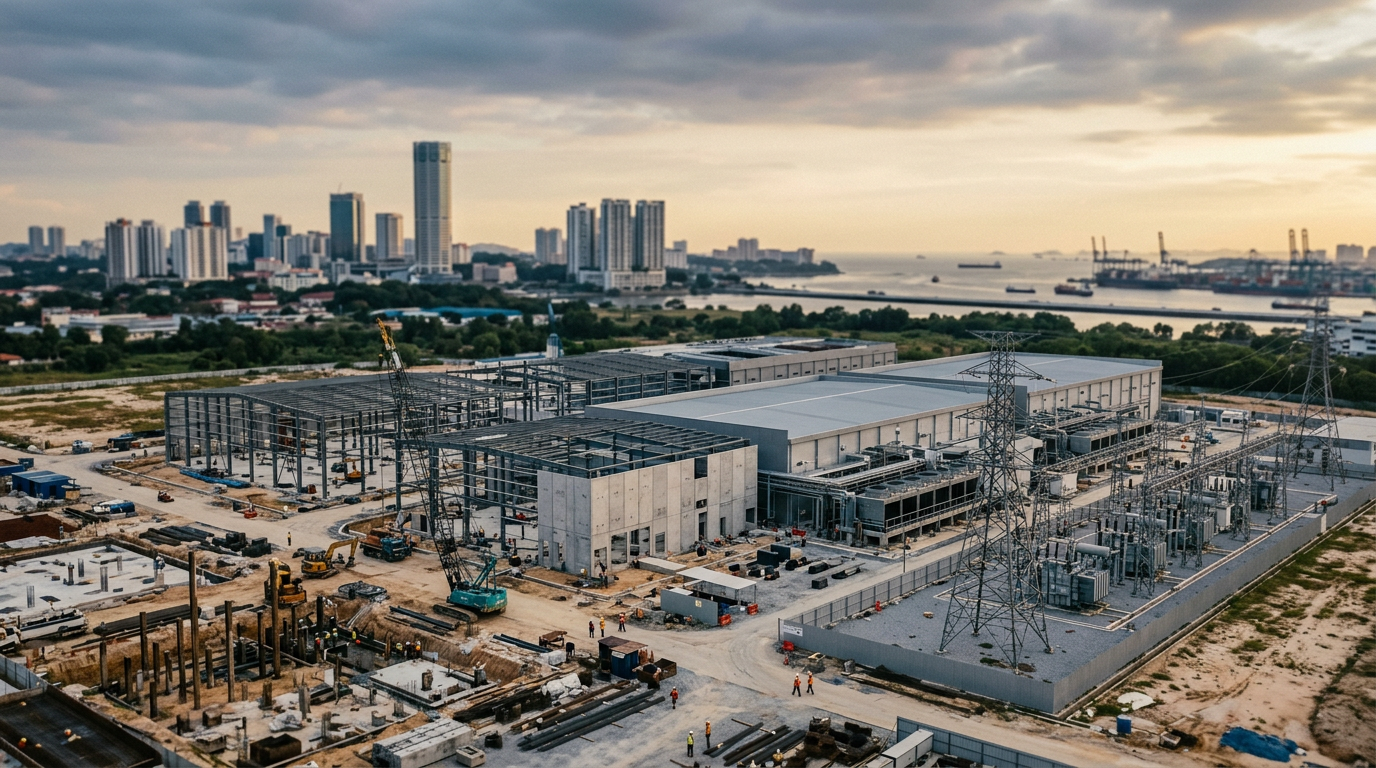
's Data Centre Boom is a Case Study in Coordinated Industrial Strategy
The recent success of Malaysian construction firms in the data centre sector is no accident. It is a direct result of a coordinated industrial strategy, centered in Johor, that demonstrates how aligning infrastructure, capital, and planning can attract hyperscale investment.
 Indonesia
's Palm Oil Strategy Tests Dependency Management
Indonesia's push to process palm oil domestically is more than an economic plan; it's a strategic test of how an ASEAN nation can manage its dependency on major trade partners like China.
 Indonesia
's Palm Oil Strategy and the Challenge of Managed Dependency
Indonesia's push to export more processed palm oil products is a case study in how ASEAN nations are navigating their deep economic ties with China, seeking to add value at home and gain strategic flexibility.
 Thailand
's Steel Woes and the ASEAN-China Trade Dilemma
Challenges in Thailand's steel sector, driven by Chinese exports, highlight a structural dependency that requires careful management of trade, industrial policy, and strategic investment across ASEAN.