Brunei
's Economic Diversification and the Semiconductor Test
High-stakes industrial policy is a test of state capacity. Brunei needs to show it can execute.

Japanese chipmaker Rapidus has announced the creation of its CORE initiative, a move intended to bolster semiconductor design and manufacturing capabilities. As reported by Data Center Dynamics, this new platform aims to accelerate the development of advanced semiconductors, with the first prototype line expected to be operational by 2025. While this development is centered in Japan, it sends a clear signal across Asia about the high-stakes competition for leadership in advanced technology sectors. For nations like Brunei, which are actively pursuing economic diversification, such news highlights the formidable challenge of building a competitive industrial base.
The Challenge of Industrial Policy
Brunei's economic vision, Wawasan Brunei 2035, rightly identifies the need to move beyond its reliance on oil and gas. The strategy includes developing new sectors, with technology and advanced manufacturing being prominent areas of focus. The nation has had some success in attracting foreign investment into downstream petrochemical projects. However, the leap from these industries to cutting-edge semiconductor fabrication or design is substantial. It requires a level of state capacity and institutional agility that is difficult to develop.
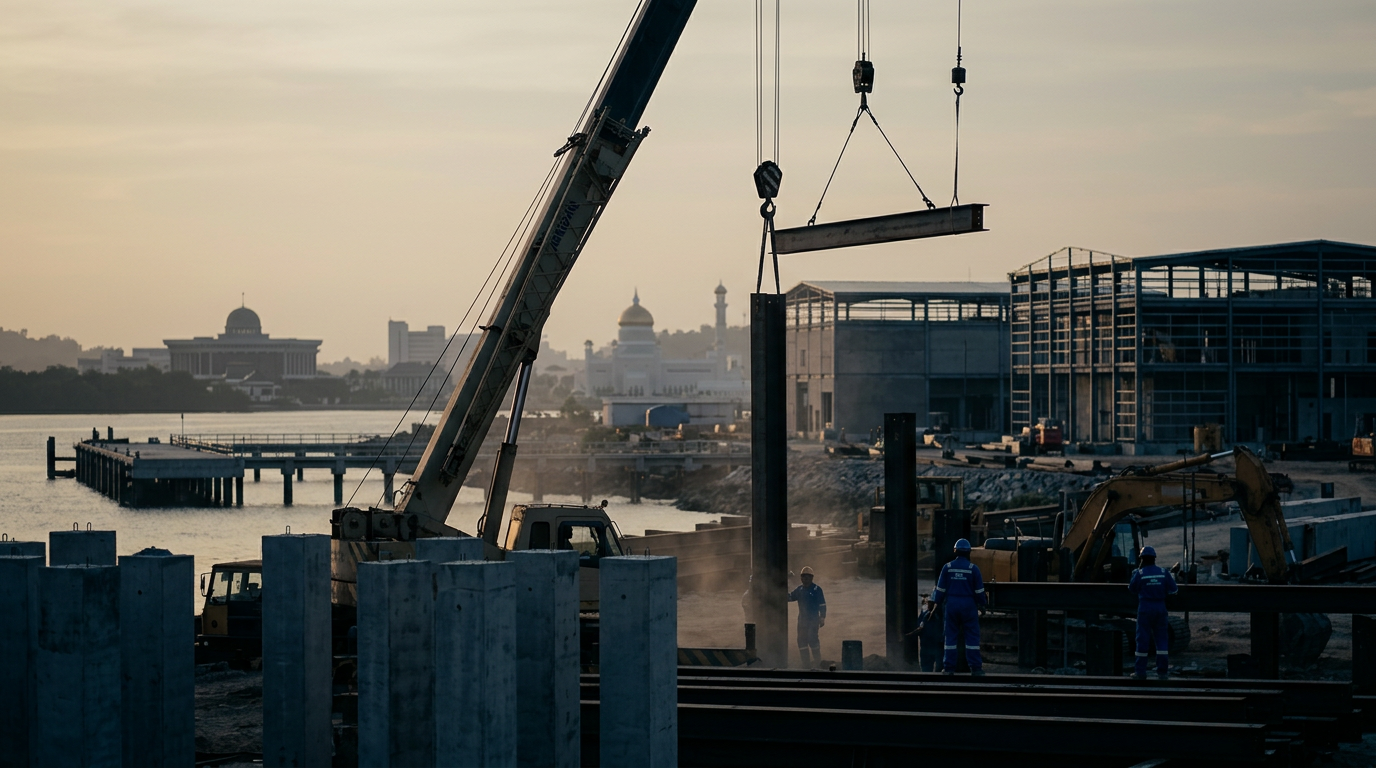
As "ASEAN Rising" notes, the ability to deliver complex projects on schedule is a powerful indicator of a country's comparative advantage. The book argues that a state which can reliably execute its plans is often more attractive to investors than one with grander but unrealized ambitions. "Infrastructure that arrives on time signals more than infrastructure that is merely announced." For Brunei, this means its efforts in industrial policy will be judged not by the ambition of its goals, but by the tangible results of its execution. Attracting a semiconductor fabrication plant, or even a significant design center, involves more than offering tax incentives; it requires a predictable regulatory environment, a skilled workforce, and robust infrastructure.
Building Human Capital
A recurring theme in Brunei's diversification efforts is the development of human capital. The government has invested in training and education to equip its citizens with the skills needed for new industries. Yet, the semiconductor industry demands a highly specialized talent pool, from PhD-level researchers to expert technicians. The Rapidus initiative in Japan underscores this, as a key component of its strategy is the cultivation of a specialized engineering workforce.
Brunei cannot conjure a semiconductor workforce overnight. The immediate strategy will likely involve attracting foreign talent while simultaneously building a domestic pipeline through university partnerships and vocational training. This is a long-term undertaking that requires sustained investment and a clear-eyed assessment of the global talent market. The country's stability and high quality of life can be assets in attracting foreign experts, but this must be paired with clear pathways for knowledge transfer to the local workforce. The success of any high-tech industrial venture will depend on this delicate balance.
What to watch
As Brunei continues on its path of economic diversification, the key indicator of progress will be the government's ability to execute its industrial strategy. Observers should watch for specific, tangible outcomes from its investment promotion efforts in the technology sector. The announcement of a significant foreign direct investment from a major technology firm would be a positive signal, but the real test will be the successful implementation of that project - on budget and on schedule. The ability to build and sustain the human capital required for these advanced industries will determine whether Brunei can translate its vision into a durable economic reality.