

Brunei, business & markets coverage
Capital: Bandar Seri Begawan
Energy-rich micro-state diversifying into halal industries, Islamic finance and downstream petrochemicals.
 Malaysia
 Singapore
 Indonesia
 Thailand
 Vietnam
 Philippines
 Cambodia
 Laos
Laos Myanmar
 Timor-Leste
Execution lens
How Brunei scores on the six Execution Economics pillars: institutions, capital, infrastructure, talent, technology and trust. Country scorecards are published progressively as research is completed.
Latest from Brunei
 Brunei
Brunei's AI MOU: A Test of Institutional Reliability
A new agreement between NEC and the UNDP to apply AI to climate action in Brunei is a small-scale, real-world test of the country's capacity to execute on its ambitious digital and green transition plans.
 Brunei
ASEAN Plus Three: Labor Interdependence with China, Japan, and Korea
The recent ASEAN Plus Three Labour Ministers Meeting shows how regional cooperation on labor, reskilling, and social protection is deepening. For ASEAN, this is not just about managing relations with its northern neighbors, but about building a more resilient and integrated.
 Brunei
Brunei's Data Center Ambitions Test ASEAN's Infrastructure Readiness
Brunei Darussalam is making a concerted push into the data center market, aiming to leverage its stable energy supply. Success will depend on coordinating capital, infrastructure, and talent, not just on providing cheap power.
 Brunei
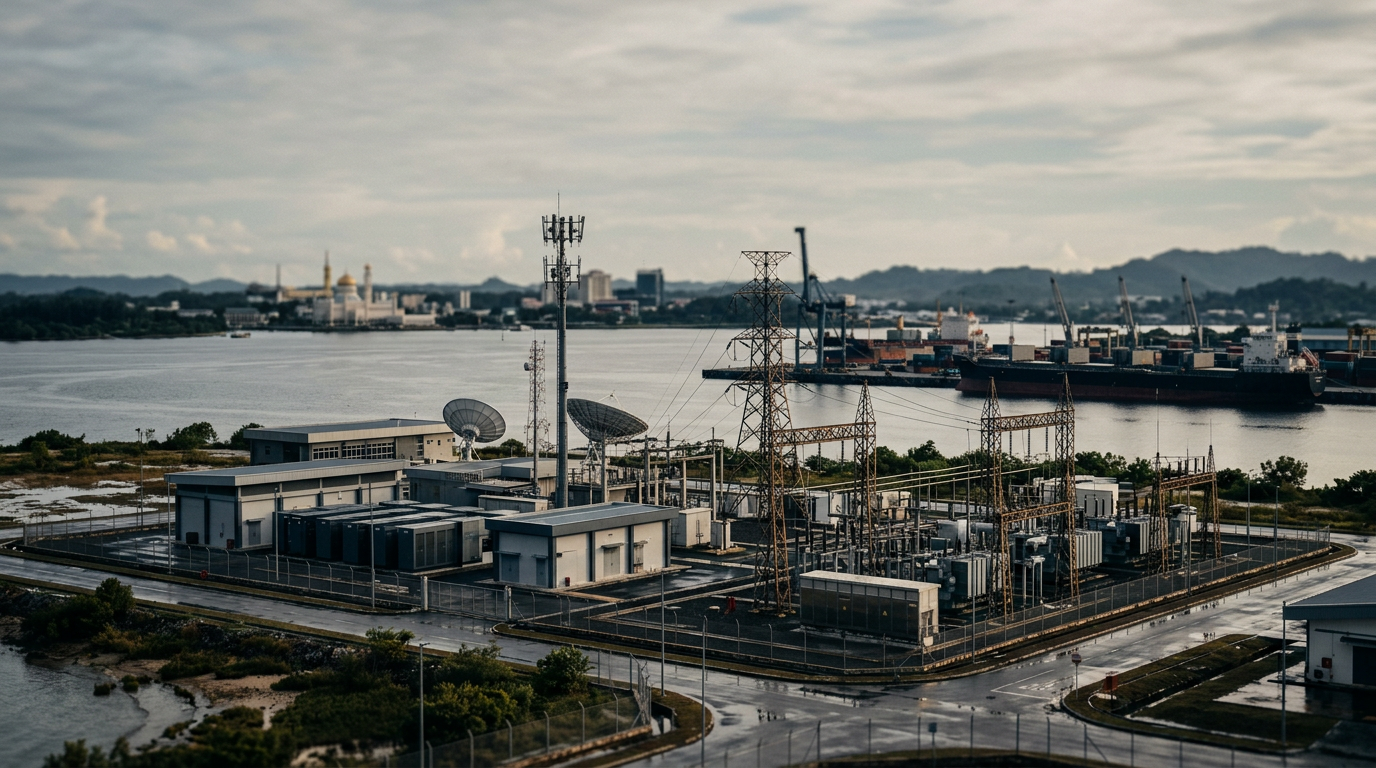
Brunei, Data Centers, and the Value of Boring Infrastructure
Brunei has a credibility problem. The country has long announced its intention to become a smart nation and a digital hub. But announcements are not the same as execution, and data centers are a demanding asset class.
 Brunei
Brazil Looks to ASEAN, But Talk is Cheaper Than Action
Secretary-General of ASEAN, Dr. Kao Kim Hourn, met with Ambassador Maria Luiza Lopes da Silva of the Brazilian Cooperation Agency to discuss deepening cooperation. The meeting highlights a growing interest between the two regions, but turning dialogue into tangible results.
 Brunei
Brunei, Microsoft, and the Value of a Usable State
Microsoft's expanded partnership with Qcells to develop virtual power plants in Brunei highlights a key theme from ASEAN Rising: "A usable state is often more valuable than an exciting one."
 Brunei
Denmark, ASEAN, and the Value of Boring
The new ASEAN-Denmark partnership is a reminder that a usable state is often more valuable than an exciting one. It is a quiet success story for the often-criticized ASEAN Secretariat.
 Brunei
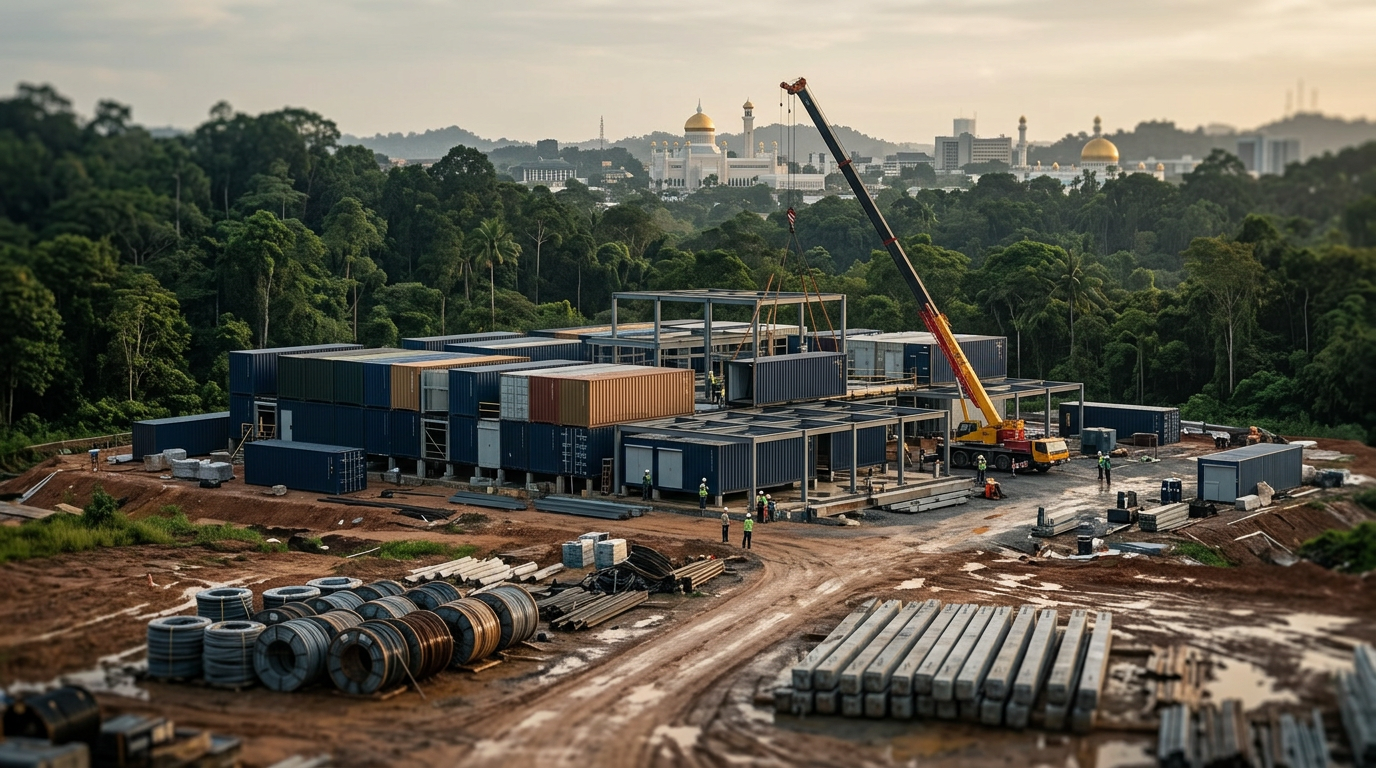
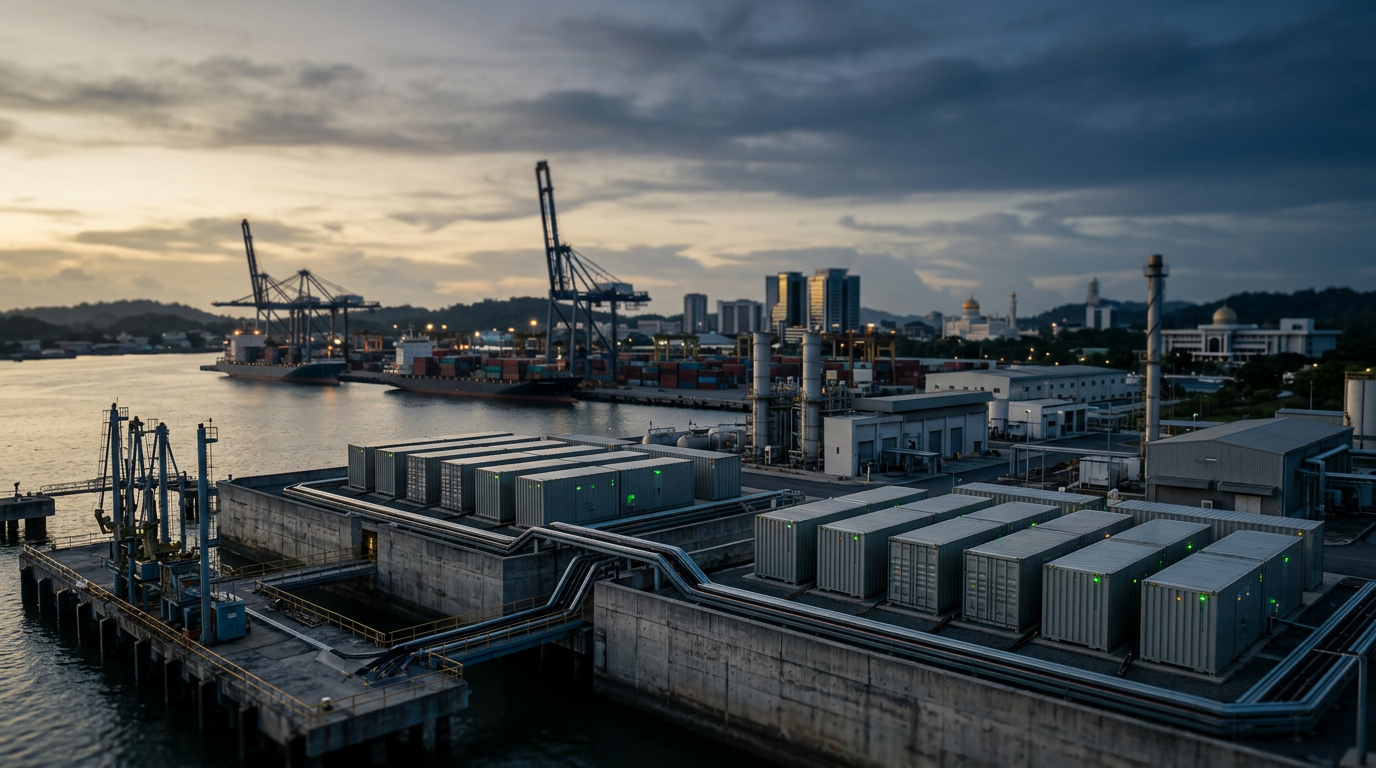
Brunei's Data Center Buildout Tests State Capacity
Brunei's recent announcement of a prefabricated data center power module is a step toward economic diversification. Its success will depend less on the technology itself and more on the institutional capacity to execute.
 Brunei
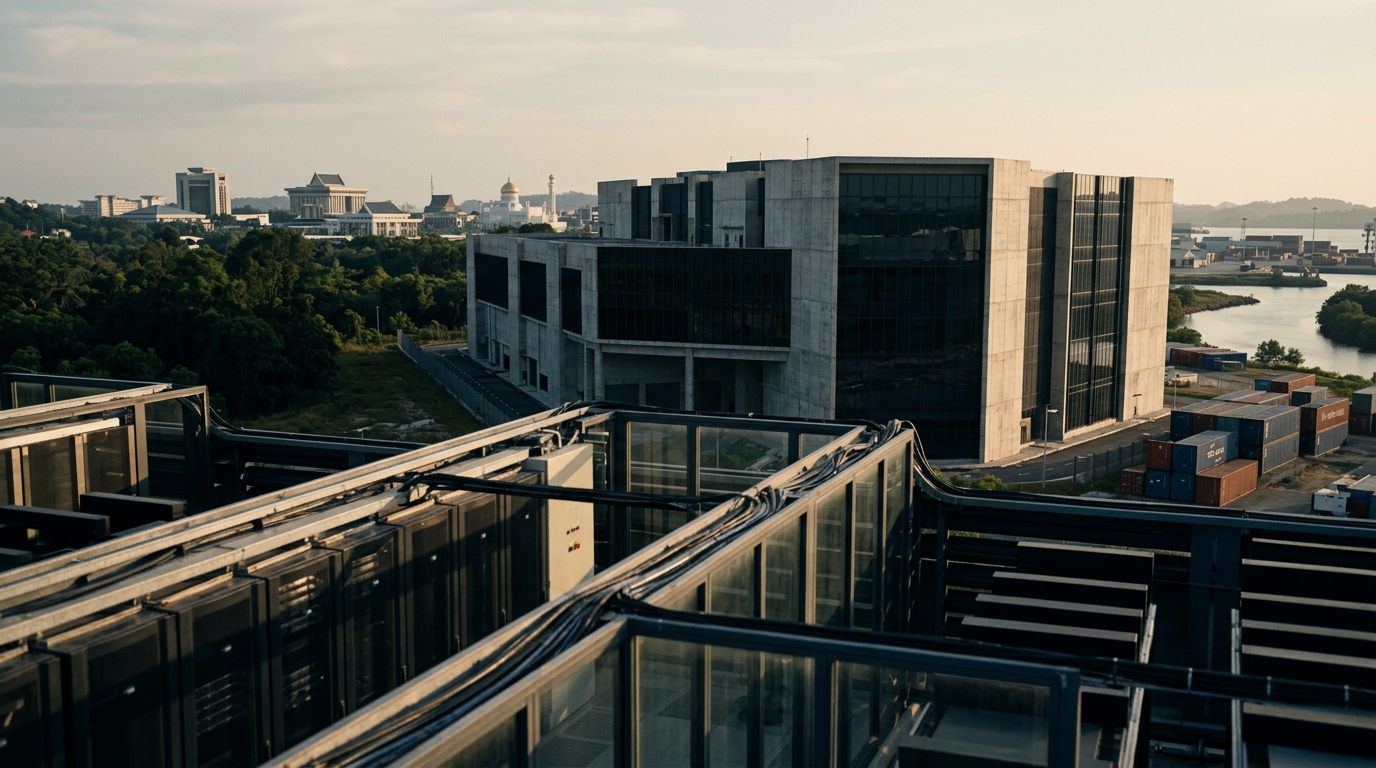
Edge Computing and the Test of Sovereign AI in ASEAN
The launch of a new distributed AI cloud service highlights a fundamental question for ASEAN: true AI sovereignty will be determined not by models, but by control over the underlying infrastructure of compute, data, and digital identity.
 Brunei
Nvidia's Compute Bet and the Test for ASEAN's AI Sovereignty
A major investment in AI compute by Nvidia highlights the infrastructure challenge for ASEAN. The region's AI ambitions depend less on new models and more on the control of underlying data, compute, and digital identity systems.
 Brunei
ASEAN's China Strategy Begins with Talent Development
The launch of a fellowship for junior diplomats highlights a core ASEAN truth: managing the deep, structural economic relationship with China depends on the long-term project of building human capital within the bloc's institutions.
Brunei intelligence
All trackers →Investment & FDI signals
Full fdi tracker →- fdi· Brunei· 23 September 2026ADB, S&P cut Philippines growth forecasts
The Asian Development Bank and S&P Global Ratings have slashed the economic growth forecasts for the Philippines due to the prolonged impact of the Middle East crisis and weaker investments.
- fdi· Brunei· 22 September 2026Secretary-General of ASEAN participates in the 15th AEM-Russia Consultation
The ASEAN Secretary-General participated in the 15th AEM-Russia Consultation in Manila, where the ASEAN-Russia Strategic Programme on Trade and Investment Cooperation for 2026-2035 was endorsed.
Trade & supply chain signals
Full trade tracker →- trade· Brunei· 22 September 2026Joint Media Statement of the Fifteenth AEM-Russia Consultation
The Fifteenth ASEAN Economic Ministers-Russia (AEM-Russia) Consultation was held on 22 September 2026 in Manila, Philippines, co-chaired by officials from the Philippines and Russia.
- trade· Brunei· 20 September 2026Secretary-General of ASEAN participates in the 10th AEM-HKC Consultation
The Secretary-General of ASEAN participated in the 10th AEM-Hong Kong, China Consultation in Manila, Philippines, discussing the progress of the ASEAN-Hong Kong, China Free Trade Agreement (AHKFTA).
- trade· Brunei· 16 September 2026Secretary-General of ASEAN to participate in the 58th ASEAN Economic Ministers’ (AEM) Meeting and Related Meetings in Manila, the Philippines
The Secretary-General of ASEAN will lead the ASEAN Secretariat delegation to participate in the 58th ASEAN Economic Ministers' (AEM) Meeting and related meetings in Manila, the Philippines, chaired by the Philippines' Secretary of Trade and Industry.
- trade· Brunei· 9 September 2026BIR allows VAT refunds for exporters
The Bureau of Internal Revenue (BIR) allows qualified export-oriented enterprises to claim VAT refunds on local purchases and imports while awaiting zero-rating certification from the Department of Trade and Industry.
Infrastructure signals
Full infrastructure tracker →- infrastructure· Brunei· 10 September 2026US agency to upgrade airport screening at NAIA
The US Trade and Development Agency and New NAIA Infrastructure Corp. signed an agreement to modernize security screening at the Philippines' main international airport, NAIA.
- infrastructure· Brunei· 8 September 2026NEC signs MoU with UNDP to support conservation, climate action through use of AI
NEC and UNDP signed an MoU to use AI for conservation and climate action, including improving the resilience of AI and digital infrastructure.
- infrastructure· Brunei· 5 September 2026MBC: 2026 growth unlikely to meet government target
The Makati Business Club predicts that Philippine economic growth may fall below the government's 2026 target, but suggests accelerated government spending could support growth.
Brunei coverage themes
- Trade & supply chains. Bilateral flows, RCEP, tariff shifts and sector exposure.
- Investment & FDI. Inbound capital, sovereign deals and sector destinations.
- Capital markets. Exchanges, IPO pipeline, debt, currency and portfolio flows.
- Technology. Startups, fintech, AI deployment and platform regulation.
- Binding constraints. Fiscal, structural, institutional and geopolitical limits.
- Boardroom briefings. Bespoke Brunei briefings for boards and investors.