Singapore
Singapore Eases Data Centre Moratorium, But The Real Story Is Coordination
Singapore's latest data centre capacity allocation is not just about megawatts. It is a lesson in how coordinated planning for power, connectivity, and land is a critical industrial input, shaping the digital future of the region.

Singapore has awarded a provisional 200MW of new data centre capacity to four existing operators, as reported by The Edge Singapore. The move partially lifts a moratorium imposed in 2019 and directs development to a specific location on Jurong Island. While the additional megawatts are significant, the true story is not about the raw numbers but about the city-state's model of coordinated industrial planning, a theme central to its economic strategy.
Execution and Infrastructure
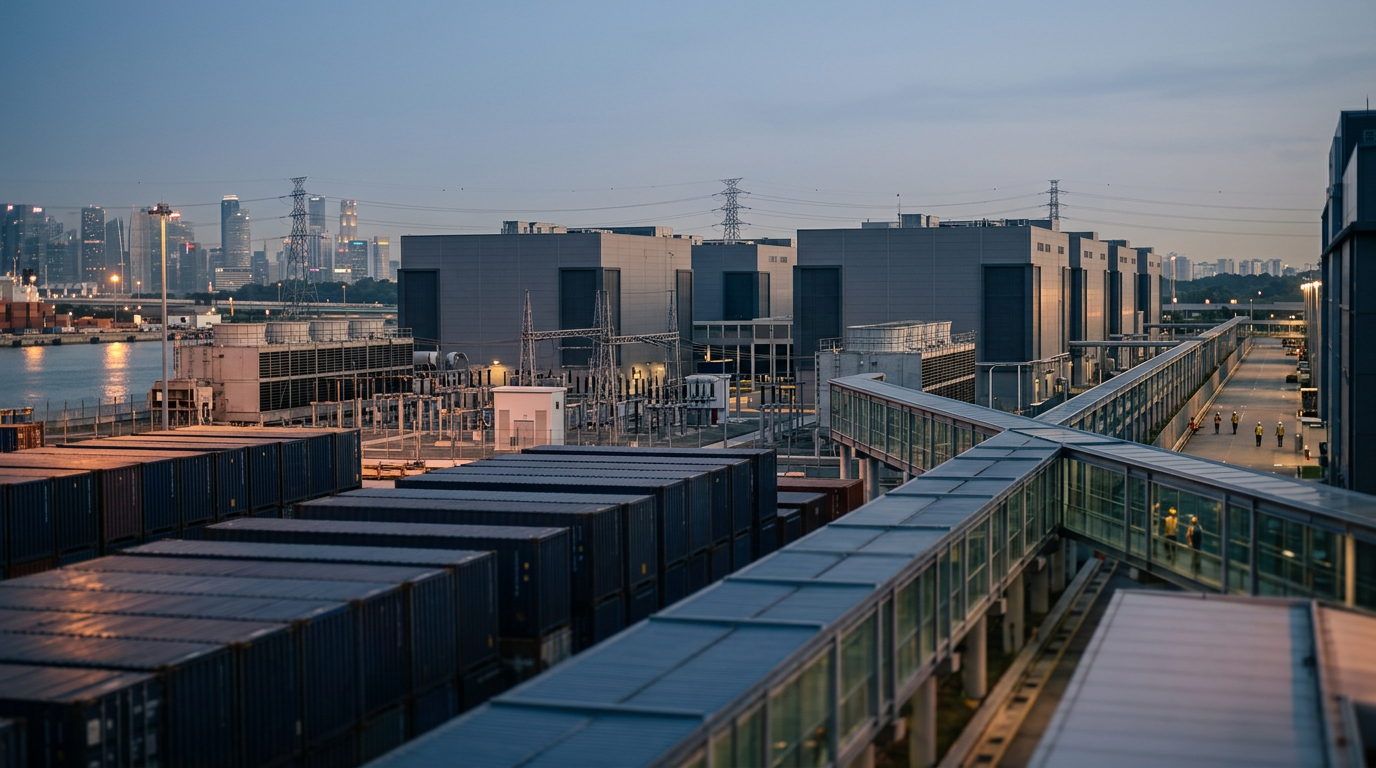
Singapore's approach to the data centre sector extends beyond simple capacity allocation. The decision to award 50MW each to Digital Realty, Equinix, and Keppel for facilities on Jurong Island is a deliberate act of industrial execution. It concentrates new development in a specific zone, allowing for focused and efficient upgrades to the power grid and other essential utilities. This prevents the scattered, piecemeal development that can strain municipal resources and delay projects elsewhere.
As detailed in the book ASEAN Rising, this method underscores how Singapore treats planning and utility readiness as direct inputs to industrial success. Instead of leaving infrastructure as an afterthought, the government ensures that power, water, and fiber connectivity are in place to meet the demands of high-intensity users like data centres. This proactive stance reduces project risk and attracts the world's largest operators, who prioritize certainty and speed to market.
Capital and Control
This recent allocation is also a demonstration of regulatory control designed to maximize value for the national economy. By limiting the awards to a modest 200MW and favoring existing operators, Singapore signals that it is not pursuing growth at any cost. The government is managing the sector's expansion to align with its long-term energy sustainability goals and land use priorities. This contrasts sharply with a purely market-driven approach, where capacity might expand rapidly but with significant negative externalities like stress on the national power grid.
The core insight is that "capital coordination is itself an industrial input." When government agencies, utility providers, and private sector operators move in concert, large-scale, high-value projects can flourish. The Jurong Island data centre cluster is a physical manifestation of this principle. Where this coordination is absent, projects often falter, regardless of other advantages. By orchestrating the key variables of land, power, and connectivity, Singapore ensures that hyperscale investment flows into a prepared and predictable environment.
What to watch: Observe how the operators and Singapore's utility providers manage the grid upgrades and heat-abatement strategies for the new Jurong Island facilities. Success in this concentrated zone will likely serve as the blueprint for future allocations and influence data centre development policies across Southeast Asia, particularly in markets like Malaysia and Indonesia that are also trying to attract hyperscale investment.