Thailand
Thailand's Steel Woes and the ASEAN-China Trade Dilemma
Challenges in Thailand's steel sector, driven by Chinese exports, highlight a structural dependency that requires careful management of trade, industrial policy, and strategic investment across ASEAN.
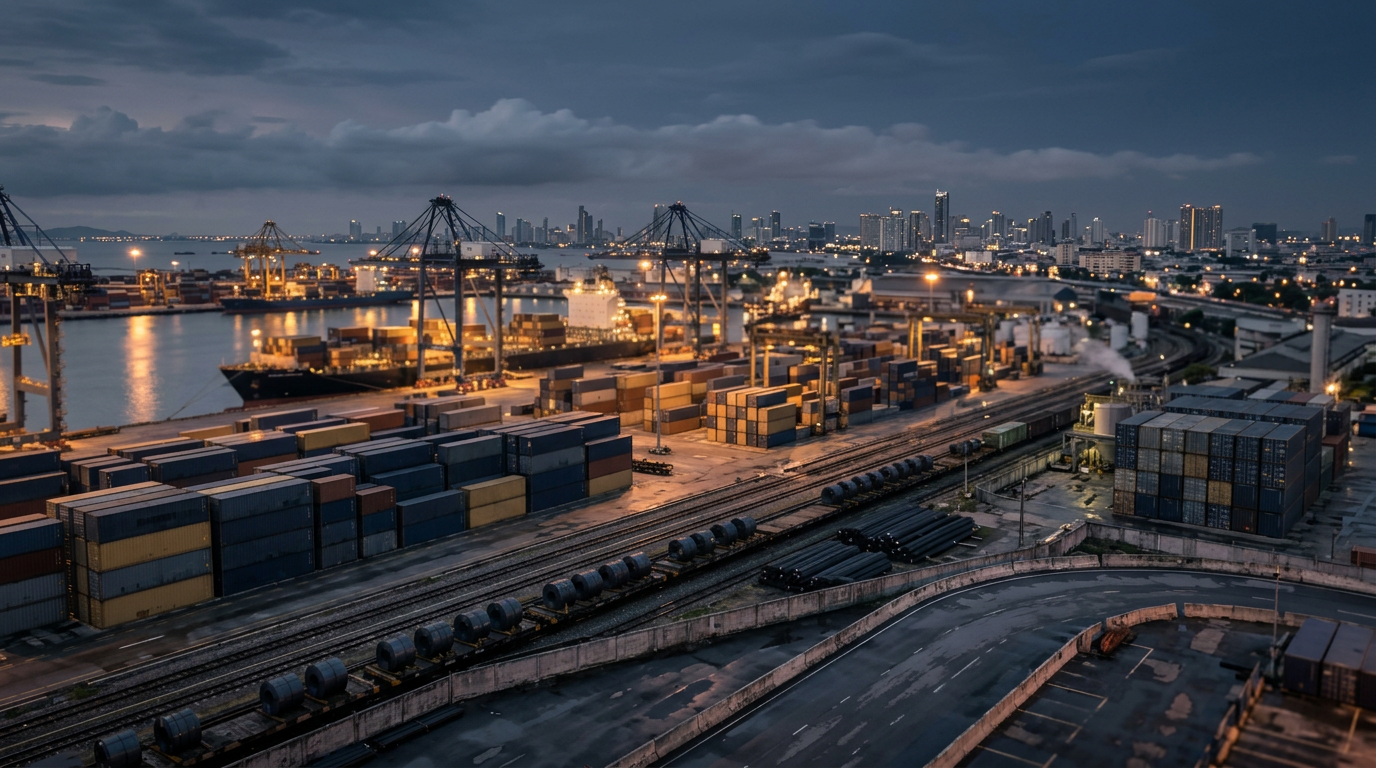
A recent report that Thailand's steel industry is being strained by global price volatility and a flood of imports from China is a familiar story for many industries across the region. According to the Bangkok Post, local producers are facing intense pressure from the scale of Chinese exports. This situation in a single industry serves as a clear illustration of a much broader economic dynamic between ASEAN and its largest trading partner, one that presents both benefits and serious structural challenges.
The Glut Hits Home
The immediate problem for Thailand's steel manufacturers is one of execution and survival. When faced with a deluge of lower-priced imports, domestic firms see their margins shrink and market share erode. This is not a reflection of a lack of competitiveness in a fair market, but rather a consequence of state-supported industrial overcapacity in China being exported abroad. For Thai companies, this creates a difficult operating environment where capital for investment in modernization or expansion becomes harder to justify or secure. The core of the issue is a mismatch in scale and economic structure that puts specific ASEAN business sectors at a disadvantage.
This is not a new phenomenon. Industries from textiles to solar panels across Southeast Asia have faced similar pressures. The response has often involved national governments using trade defense instruments, such as anti-dumping tariffs, to shield local producers. While these can provide temporary relief, they do not address the underlying cause and can introduce their own complications in a deeply interconnected regional economy.
A Structural Feature
The economic relationship between ASEAN and China has evolved past simple trade growth. It is now a complex web of integration. As ASEAN Rising notes, "trade depth with China is now a structural feature, not a cyclical one." This insight is fundamental to understanding the current situation. The intense competition in the Thai steel market is not a temporary fluctuation but a symptom of this permanent feature. The question for governments and business leaders is no longer whether to engage with China's economy, but how to manage the resulting dependency without sacrificing economic sovereignty or strategic options.
This deep integration means that simplistic protectionism is not a viable long-term solution. Supply chains across ASEAN are intricately linked with China. A factory in one ASEAN country might assemble finished goods using components from three others, with raw materials or key processing having originated in China. This makes any policy response a delicate balancing act. Disrupting imports in one area can have unintended consequences for the export competitiveness of another.
Building Resilience
Addressing this structural dependency requires a multi-faceted approach centered on improving the region's own industrial base. This is a matter of institutions, talent, and trust. National institutions need to develop and execute coherent, long-term industrial policies that look beyond short-term protection. This means identifying sectors where domestic firms can compete and creating the conditions for them to succeed.
Success hinges on investment in talent and technology. ASEAN nations can move up the value chain by producing more sophisticated, higher-quality goods that do not compete directly on price with mass-produced Chinese products. This requires a skilled workforce and access to capital for research and development. Fostering trust between government and the private sector is foundational for these long-term industrial strategies to work. Firms must have confidence in the stability and predictability of government policy to make the necessary long-term capital investments.
Ultimately, managing the trade relationship with China is less about building walls and more about building a stronger foundation at home. It is about strategic investment, institutional competence, and a clear-eyed view of the permanent economic realities of the region.
What to watch
What to watch are the policy choices made in Bangkok and other ASEAN capitals. An increase in targeted anti-dumping investigations may provide insight into short-term tactics, while a more coordinated regional dialogue on industrial capacity would suggest a more strategic, long-term approach. The investment patterns of the region's leading firms will also be a key indicator. A discernible shift in capital allocation toward new technologies and higher-value production will signal a meaningful adjustment to the permanent reality of China's industrial scale.