Malaysia
Malaysia's Data Centre Boom is a Case Study in Coordinated Industrial Strategy
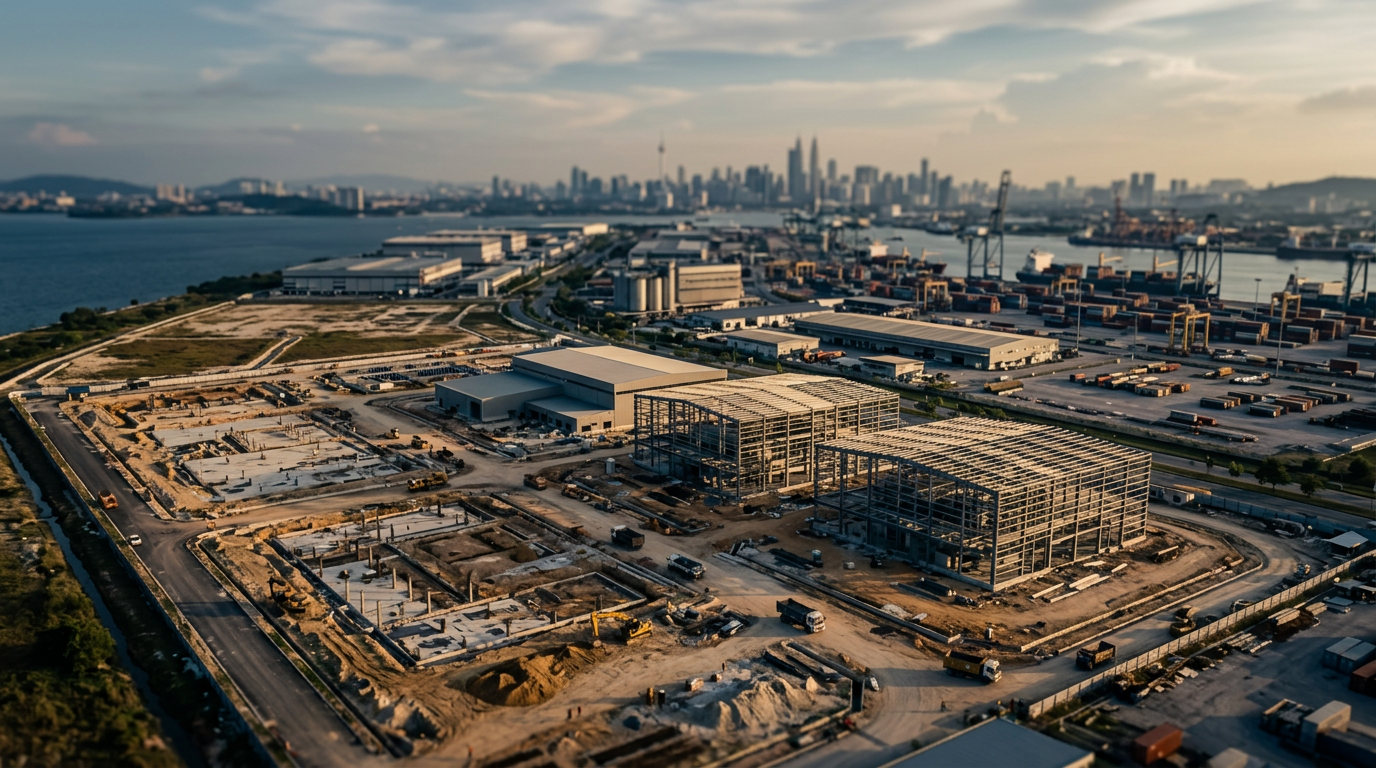
The recent success of Malaysian construction firms in the data centre sector is no accident. It is a direct result of a coordinated industrial strategy, centered in Johor, that demonstrates how aligning infrastructure, capital, and planning can attract hyperscale investment.
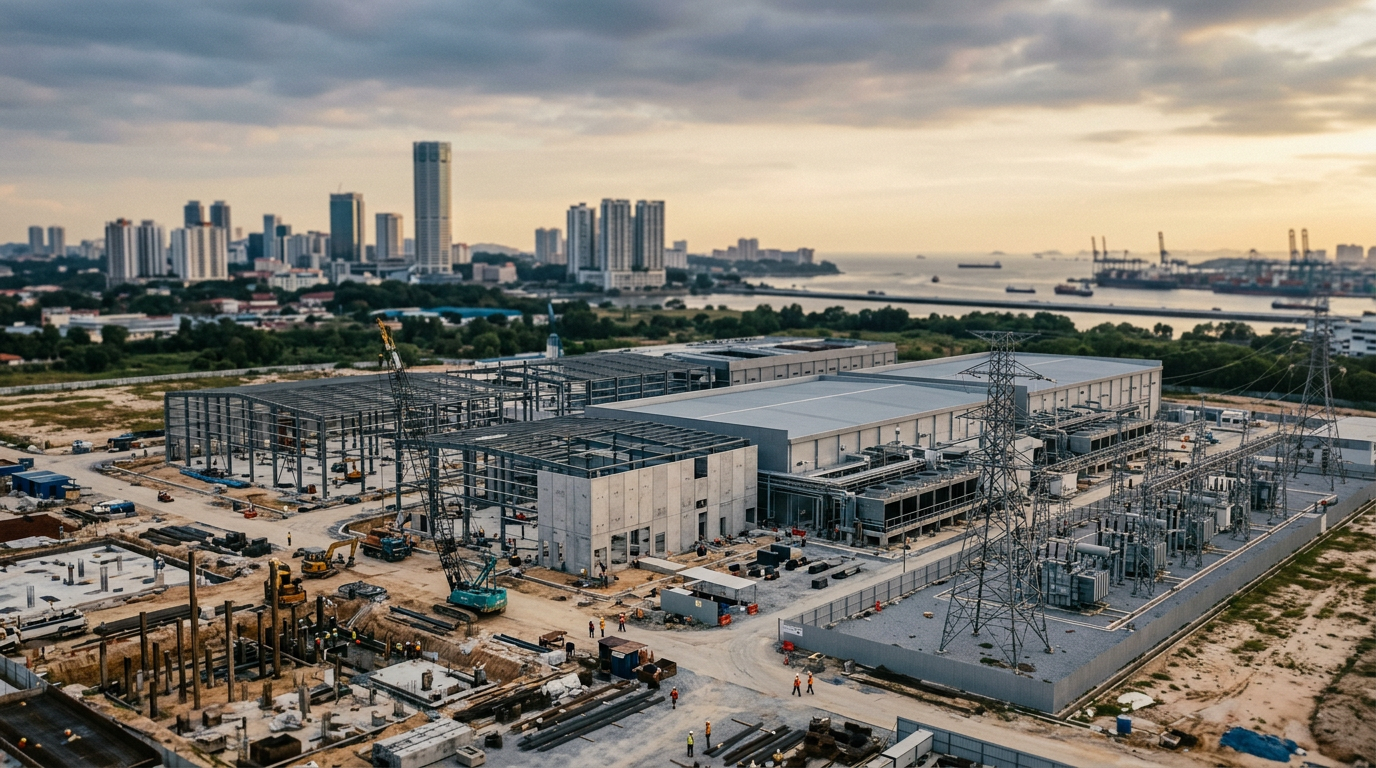
A recent report on Malaysian construction firm Sunway Construction Group Bhd (SunCon) highlights the robust demand for data centres in the country, particularly in Johor. According to The Star, the firm anticipates sustained earnings from a strong order book filled with data centre projects. While on the surface a story about a successful construction company, the boom it represents is a powerful illustration of a more profound economic phenomenon: the successful execution of coordinated industrial strategy.
The Johor-Singapore Nexus
Much of the explosive growth in Johor's data centre market is a direct consequence of policy decisions made across the causeway in Singapore. In 2019, Singapore placed a moratorium on new data centre projects, citing concerns over land scarcity and the high energy consumption of such facilities. This created an immediate geographical shift in supply and demand. For the global technology companies that require ever-expanding server capacity, the search for a suitable alternative began, and Johor quickly emerged as the most logical choice.
Its proximity to Singapore offers a compelling advantage, allowing data to be processed nearby while remaining connected to the rich ecosystem of undersea cables and network exchanges that terminate in the city-state. This has created a cross-border digital economy, where Singapore provides the high-value network access and Johor provides the land and, increasingly, the power and buildings for the physical infrastructure. It is a regional solution to a national constraint, and it highlights how ASEAN economies can function in a complementary, rather than purely competitive, manner.
Coordination as an Input
However, proximity alone is not enough to attract the billions of dollars in hyperscale investment flowing into the state. The success of Johor is a textbook example of the argument made in ASEAN Rising that capital coordination is itself a distinct industrial input. A collection of cheap land, available power, and tax incentives is not a strategy. A strategy is the deliberate alignment of all the necessary components to create an environment where complex, large-scale projects can succeed with minimal friction.
This is precisely what has occurred in Johor. State and federal authorities have worked to ensure that designated technology parks have access to scalable and reliable power grids, a non-negotiable for data centres that consume enormous amounts of electricity. They have also facilitated the development of robust fibre optic networks and ensured that the regulatory environment is predictable for long-term investors. The book notes that "Where utilities, planning and connectivity move together, hyperscale capacity follows." Johor's ability to attract commitments from some of the world's largest technology firms is a direct validation of this principle. It shows that when the foundational elements of infrastructure are orchestrated as a single package, capital is drawn to the certainty it creates.
From Plan to Execution
The data centre boom is therefore more than just an infrastructure story; it is an institutional one. It demonstrates the capacity of Malaysian state and federal agencies to not only formulate a plan but to execute it effectively. Delivering the reliable power, connectivity, and regulatory approvals required by these projects is a complex undertaking that requires seamless cooperation between public utilities, government planners, and private sector construction and engineering firms. This successful execution builds trust, which is a critical form of capital for attracting further foreign investment. International firms that have a positive experience building their first data centre are more likely to expand their footprint, creating a self-reinforcing cycle of growth.
What to watch
The key question now is whether this model of coordinated industrial strategy can be sustained and replicated. The immense energy and water requirements of data centres will pose an increasing challenge to Malaysia's utility infrastructure and its own environmental goals. Managing this demand will be the next test of the country's planning and execution capabilities. Observers should also watch whether Malaysia can apply the lessons from the Johor data centre boom to other high-value sectors, and whether other ASEAN nations can adopt similar coordinated approaches to attract the next wave of global investment in manufacturing, logistics, and the digital economy.