Singapore
Singapore, Malaysia, and the Hyperscale Squeeze
Data center investment is pouring into Singapore and Malaysia. While Singapore has a head start, Malaysia's own industrial policy is setting up a classic contest for hyperscale dominance.
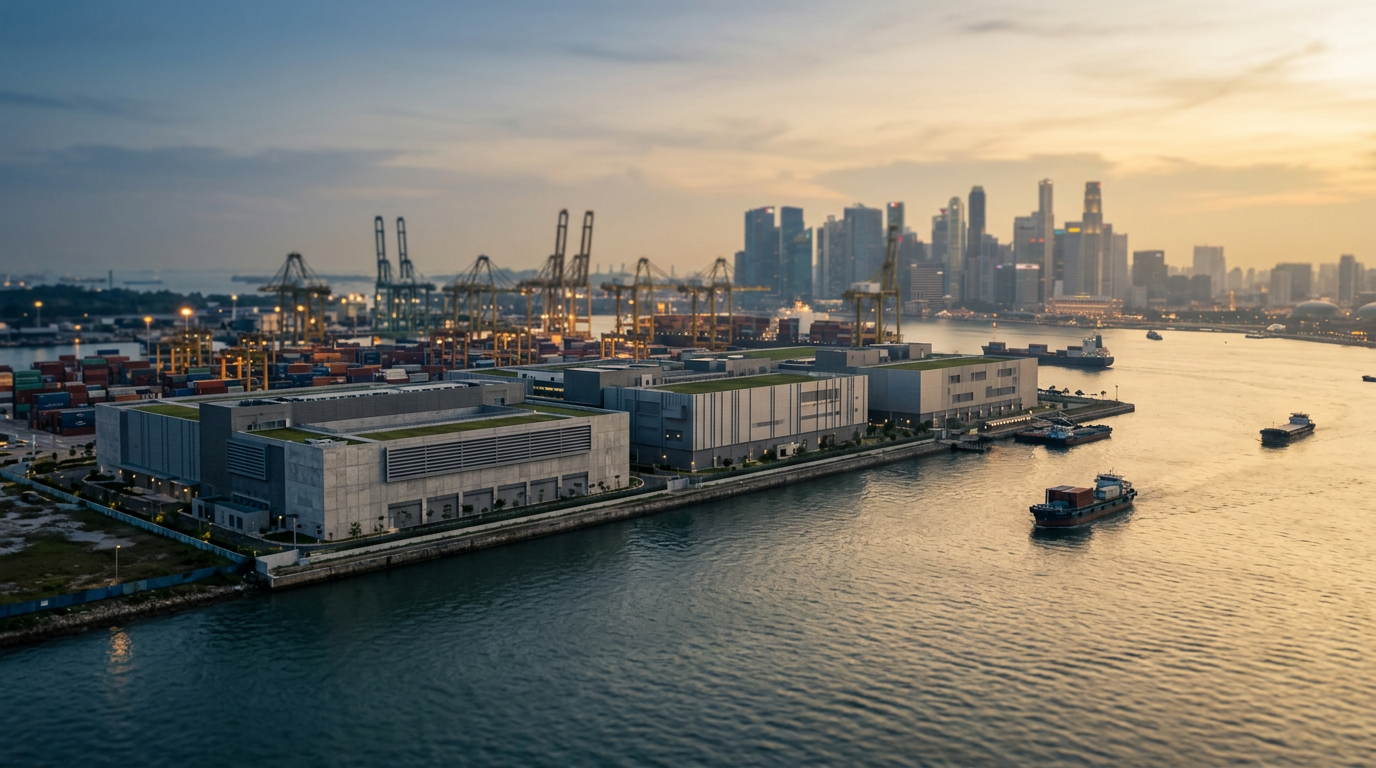
A recent PwC forecast, reported by malaymail.com, sees Singapore's yearly data center investments hitting US$19.2 billion by 2050. This surge is part of a broader regional trend, with neighbors like Malaysia also attracting significant capital. While Singapore has historically dominated this sector, the dynamics of hyperscale investment are shifting across Southeast Asia, creating both opportunities and new competitive pressures.
The Singapore Model
Singapore's success in attracting data centers is no accident. It is the result of a deliberate, long-term strategy focused on creating a favorable environment for high-value industrial assets. The nation has excelled at coordinating essential inputs: reliable power, robust fiber optic networks, and streamlined planning and permitting processes. This integrated approach ensures that large-scale projects can be executed with a degree of certainty that is rare in the region. By treating these coordinated services as a core part of its industrial offering, Singapore has built a formidable moat.
As "ASEAN Rising" notes, this coordination is not just a convenience but a critical factor for investors. The book argues that "capital coordination is itself an industrial input." Where this is present, capital for hyperscale facilities tends to follow. Singapore's ability to align its utilities, infrastructure, and regulatory frameworks has made it the default choice for global technology firms looking to establish a footprint in Southeast Asia. This has allowed it to command premium prices and attract the most sophisticated projects, despite land and energy constraints.
Malaysia's Competitive Push
Malaysia, particularly in areas like Johor, is mounting a serious challenge to Singapore's dominance. It is leveraging its own set of advantages, including more abundant land and lower energy costs. However, simply having cheaper inputs is not enough to win in the hyperscale market. Malaysia is learning from Singapore's playbook by focusing on improving its own institutional execution. State-level initiatives in Johor are aimed at creating dedicated industrial parks with pre-built infrastructure, including power substations and fiber connectivity, to attract data center developers.
The contest between Singapore and Malaysia is becoming a classic case study in industrial strategy. Singapore's model is built on precision, control, and maximizing value from scarce resources. Malaysia is betting on its ability to combine its resource advantages with a new focus on institutional readiness. The outcome of this competition will depend on which location can offer the most compelling package of land, power, connectivity, and regulatory efficiency. For hyperscale operators, the choice is no longer straightforward.
The Talent Factor
Beyond physical infrastructure and capital, the long-term competition will also be decided by talent. Both countries require a steady supply of skilled engineers, technicians, and managers to build and operate these complex facilities. Singapore has a well-established ecosystem for developing technical talent, supported by its universities and a welcoming policy for foreign experts. It has a deep bench of experienced professionals who can manage complex, multi-phase construction and operational timelines.
Malaysia is also investing in its talent pipeline, but it faces the additional task of building this ecosystem at scale. It needs to ensure its educational institutions are producing graduates with the right skills and create an environment that retains them. The availability of a skilled workforce will be a significant factor for companies making long-term investment decisions. The country that can most effectively build and sustain its base of human capital will have a durable advantage in the race for hyperscale investment.
What to watch
As capital continues to flow into the region, watch how both Singapore and Malaysia adapt their industrial policies. Singapore's challenge is to manage its physical constraints while continuing to provide the high-value coordination that justifies its premium status. Malaysia's task is to prove it can consistently deliver the institutional readiness and talent required by the world's most demanding technology companies. The relative success of these two national strategies will shape the future of digital infrastructure across Southeast Asia.