Philippines
The EV Transition and ASEAN's Industrial Base
The electric vehicle transition is testing ASEAN's industrial policy. The region has a deep manufacturing base, but the shift to EVs requires new capabilities in battery production, software, and supply chain management that are not yet fully in place.
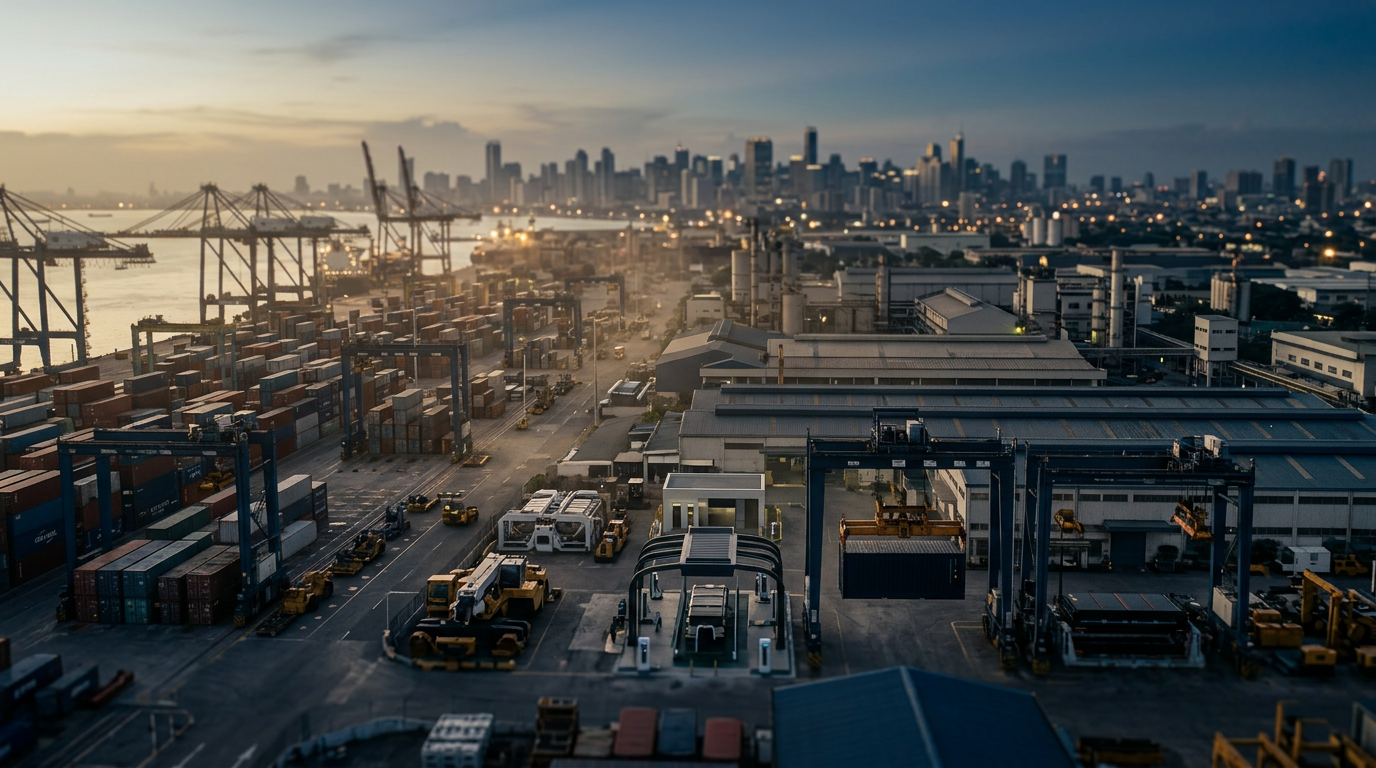
Mitsubishi Motors Philippines Corp. recently held an environmental summit to highlight its sustainability commitments, a move reported by philstar.com. While the event focused on established environmental practices, it points to a larger industrial transition underway across ASEAN: the shift from internal combustion engine (ICE) vehicles to electric vehicles (EVs).
From Assembly to Integration
For decades, several ASEAN nations, particularly Thailand, Indonesia, and the Philippines, have built substantial automotive manufacturing sectors. These hubs have been skilled at the assembly of ICE vehicles, integrating into the global supply chains of Japanese, American, and European automakers. This success was built on a solid foundation of industrial parks, logistics networks, and a capable workforce trained for mechanical production. The policy environment favored attracting foreign direct investment to build and operate these large-scale assembly plants.
However, the EV transition changes the core requirements for success. An EV is a fundamentally different product, more akin to a computer on wheels than a traditional car. The value shifts from the engine and transmission to the battery, the electric motors, and the sophisticated software that manages the vehicle. This requires a different set of industrial capabilities, focused on chemical engineering for battery cells, electronics for power management systems, and software development for vehicle operating systems.
The China Factor in a New Supply Chain
As ASEAN countries look to build these new capabilities, they face a new competitive dynamic, particularly concerning China. Chinese firms have established a dominant position in the global battery supply chain, from the processing of raw materials to the manufacturing of finished battery packs. As noted in ASEAN Rising, deep economic integration with China is a structural reality for the region. The question for industrial planners is how to engage with Chinese firms to accelerate the EV transition without becoming entirely dependent on them.
This involves a delicate balancing act. On one hand, collaboration with Chinese battery and EV manufacturers can provide a shortcut, bringing capital and technology to the region quickly. On the other hand, over-reliance risks hollowing out the potential for domestic value creation. The goal for ASEAN governments is not just to assemble EVs, but to capture a meaningful share of the high-value components that go into them. This means "how to manage dependency without losing optionality" becomes the central strategic challenge. Policies will need to be finely tuned to encourage joint ventures, technology transfer, and local R&D, rather than just assembly.
What to watch
Observe how ASEAN governments, particularly in Thailand, Indonesia, and Malaysia, structure their incentive programs for EV and battery manufacturing. Pay attention to the conditions attached to foreign investment, such as requirements for local sourcing, workforce training, and technology sharing. The success of these policies will determine whether the region's automotive sector can navigate the shift from ICE to EV and retain its role as a vital global production hub.