Thailand
Thailand: EV Policy is No Substitute for Execution
Thailand has a trust deficit and an infrastructure deficit in its electric vehicle transition. Policy can signal intent, but foreign direct investment flows to where the power, land, and talent are.
Thailand's ambition to become a regional electric vehicle hub is attracting investor attention, but a sober look at the country's execution capacity is warranted. A recent forecast from Krungsri Research projects a gradual recovery in the Thai auto market, citing government energy transition policies as a key driver. As reported in the Bangkok Post, this optimism is pinned on the government's ability to translate policy into production.
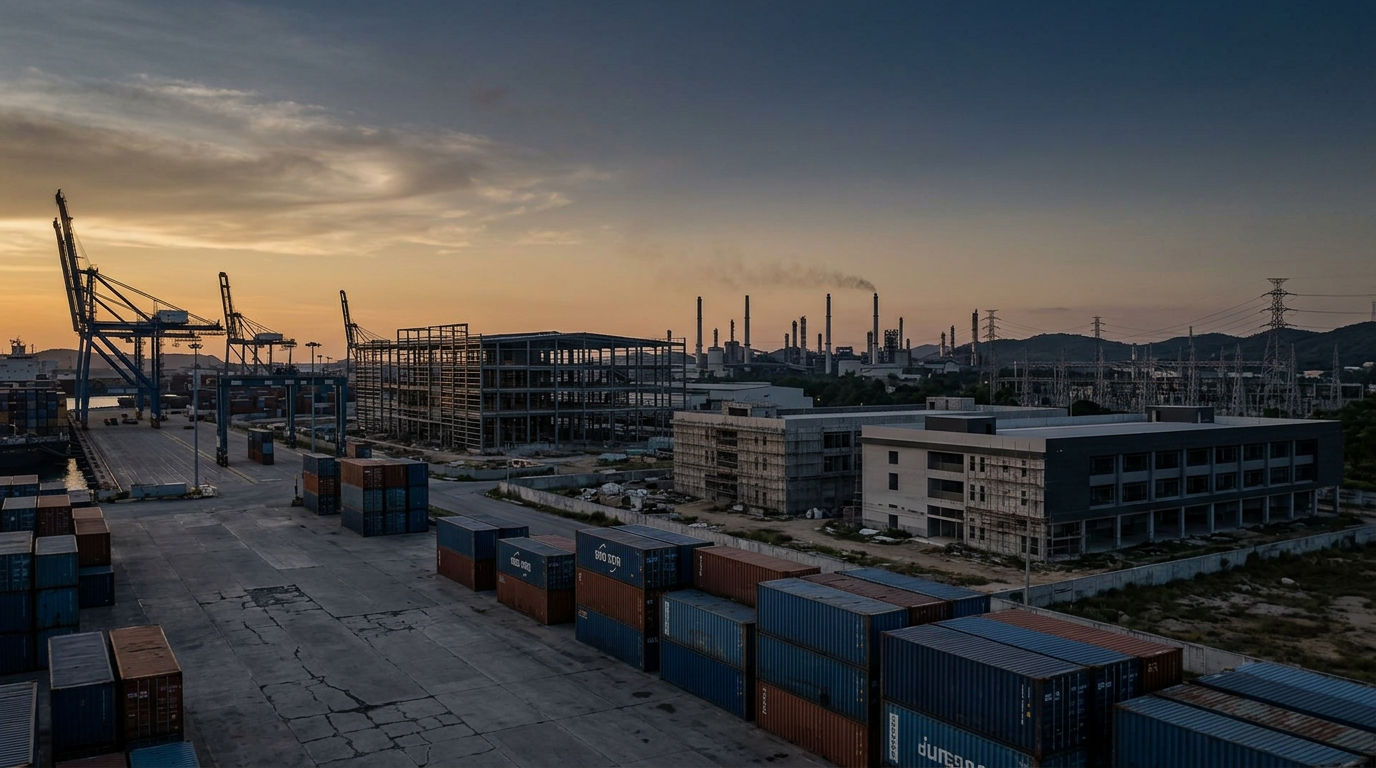
While Thailand's Eastern Economic Corridor has a long history of attracting automotive investment, the transition to EVs is a different undertaking. The fundamental constraints on industrial development do not disappear with a new technology. As the book "ASEAN Rising" notes, for any large-scale industrial plan, "realised flows depend on the slower work of land, permits, power and talent reaching the ground." Thailand's success will depend less on high-level announcements and more on the unglamorous work of project execution.
The Infrastructure Deficit
Thailand's energy infrastructure presents a significant execution risk for its EV ambitions. The country has a stated goal of producing 725,000 electric vehicles annually by 2030, which represents about 30% of its total automotive output. This target, while admirable, puts immense pressure on a power grid that is already facing challenges. The demand from charging stations and, more significantly, from battery and vehicle manufacturing plants, will require substantial upgrades to generation capacity and grid stability. Foreign investors in the automotive sector are sophisticated players; they will assess the reliability of the power supply before committing to large-scale capital expenditures. Announcements of new power projects are not enough. Investors look for a track record of timely and on-budget execution, an area where many large-scale infrastructure projects in the region have historically struggled. Without a credible plan to expand and modernize its energy infrastructure, Thailand risks turning its EV hub vision into a series of delayed or downsized projects.
The Trust Deficit
Beyond physical infrastructure, there is the matter of institutional trust. The frequent changes in government and industrial policy in Thailand can give investors pause. Long-term, capital-intensive projects like automotive plants require a stable and predictable regulatory environment. While the current government's EV subsidies and incentives are attractive, investors must weigh the risk that a future administration could alter or reverse these policies. This is a common theme across Southeast Asia, where the promise of scale is often undermined by institutional friction. Scale matters, but as noted in ASEAN Rising, it only becomes a true asset when backed by institutions that can convert it into "investable depth." Building this kind of trust takes time and a consistent, demonstrated commitment to the rule of law and policy stability. For automakers weighing a billion-dollar plant investment, a multi-year track record of consistent policy execution is more persuasive than any single incentive package. Thailand must prove that its commitment to the EV transition is durable and can outlast the current political cycle.
What to watch
The coming 18-24 months will show whether the Thai government can match its policy ambitions with on-the-ground execution. Investors will be watching for concrete progress in securing land for new factories, streamlining the permitting process for industrial and energy projects, and ensuring the power grid can handle the increased load. The flow of foreign direct investment into the EV sector will be the clearest indicator of whether Thailand is building the institutional and physical infrastructure needed to secure its place as a leader in the future of mobility.