Brunei
Brunei's Data Center Buildout Tests State Capacity
Brunei's recent announcement of a prefabricated data center power module is a step toward economic diversification. Its success will depend less on the technology itself and more on the institutional capacity to execute.
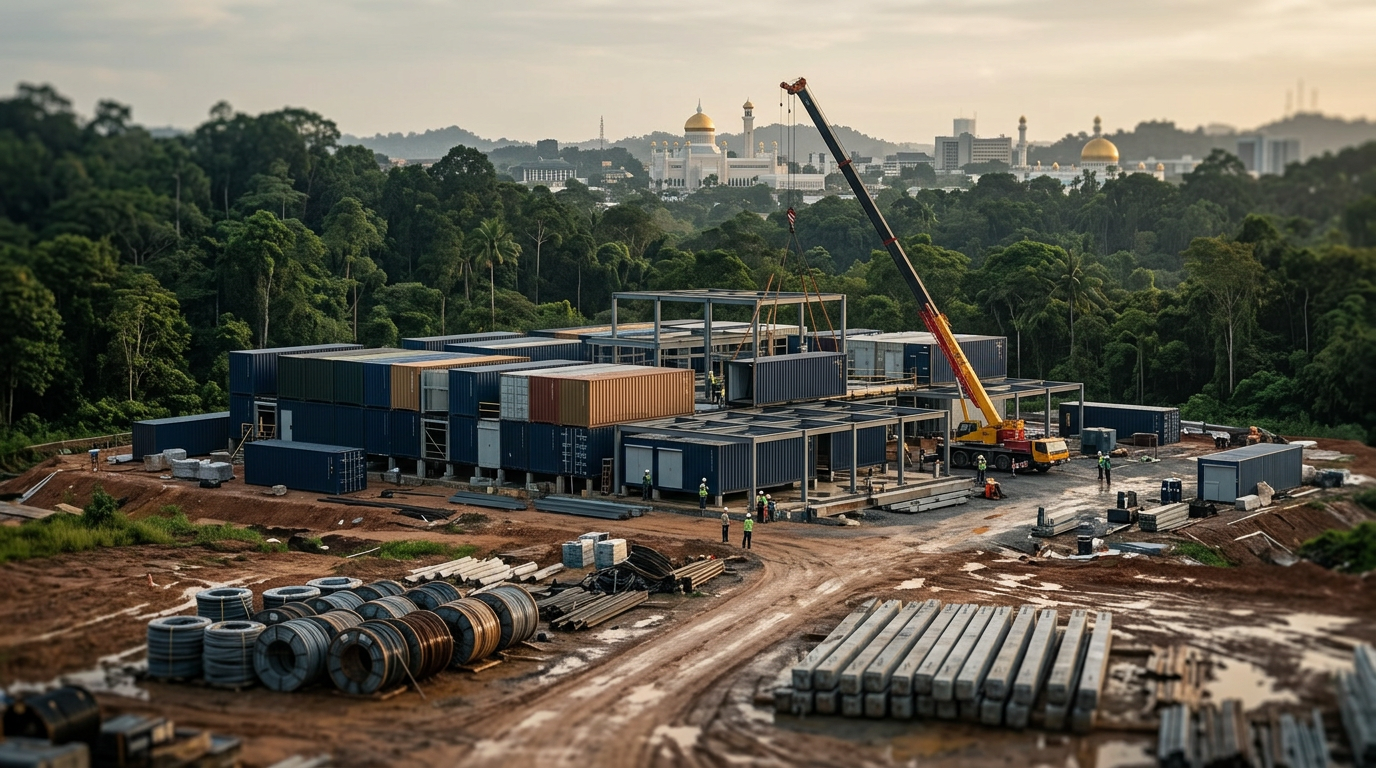
A recent announcement from Bridge DC, a Brunei-based data center operator, detailed the launch of a prefabricated power module for its new facility. As reported by Data Center Dynamics, this move is part of Brunei's broader strategy to establish itself as a regional hub for digital infrastructure, attracting investment and diversifying its economy away from oil and gas. The prefabricated module approach, which bundles essential hardware like transformers, power distribution, and cooling, is designed to accelerate deployment. While the technology is notable, the project's ultimate success will rest on the underlying strength of Brunei's state capacity and its ability to deliver a reliable operating environment.
Institutions and Execution
The project highlights a central theme from the book ASEAN Rising: the growing importance of institutional reliability in determining competitive advantage. The decision to use prefabricated modules is a technical one, aimed at reducing construction timelines and ensuring quality control. However, the larger challenge is not technical but institutional. For the data center to be commercially viable, it requires more than just a building with servers. It needs uninterrupted power, robust fiber optic connectivity, and a clear regulatory framework. These are all products of effective state institutions.
Brunei's stated goal is to develop a new economic pillar around technology and logistics. This data center project is a concrete manifestation of that ambition. The government's ability to coordinate between the state-owned telecom provider, the power utility, and various regulatory bodies will be the primary determinant of success. As the book notes, "Infrastructure that arrives on time signals more than infrastructure that is merely announced." The timely and on-budget delivery of this facility, fully integrated with national utilities, would send a powerful message to international investors about Brunei's capacity for execution.
Capital and Trust
Attracting the necessary capital for economic diversification depends on building trust with investors. Prefabricated construction can de-risk a project by making costs and timelines more predictable. This is a positive step. Yet, the long-term operational integrity of the data center is where investor trust will be won or lost. International clients, the primary target for a facility of this type, will assess the sovereign risk associated with Brunei. They will look for evidence that contracts are enforced, regulations are applied consistently, and that the state is a dependable partner.
This single project serves as a test case. If Brunei can demonstrate that it provides a stable and predictable environment for this high-value infrastructure, it will find it easier to attract capital for subsequent phases of its economic development plan. The physical infrastructure of the data center is less important than the "soft infrastructure" of laws, regulations, and reliable state services that support it. A successful execution builds a track record that is, itself, a valuable asset in the competition for global capital.
What to watch
Observers should monitor the project's adherence to its published schedule and its ability to secure anchor tenants, particularly from outside Brunei. The key indicators of success will not be the technical specifications of the power modules, but rather the smooth integration of the new facility into Brunei's national infrastructure grid. The government's handling of regulatory approvals, utility provisioning, and the cultivation of a skilled local workforce to operate the center will reveal the true extent of its state capacity and its readiness to compete for digital investment.