Brunei
ASEAN Plus Three: Labor Interdependence with China, Japan, and Korea
The recent ASEAN Plus Three Labour Ministers Meeting shows how regional cooperation on labor, reskilling, and social protection is deepening. For ASEAN, this is not just about managing relations with its northern neighbors, but about building a more resilient and integrated.
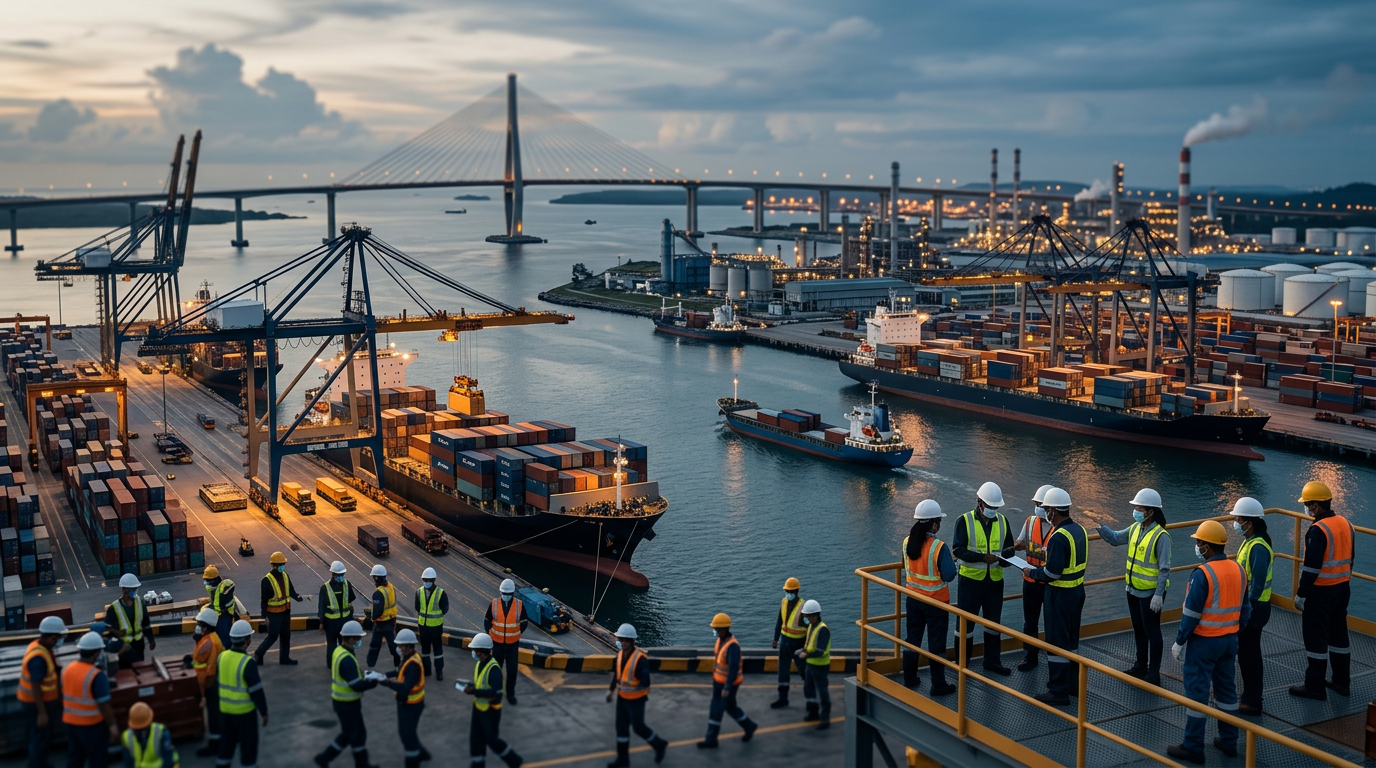
A recent meeting of the labor ministers of ASEAN, China, Japan, and the Republic of Korea signals a deepening of institutional links on employment and human capital. The joint statement from the Fourteenth ASEAN Plus Three Labour Ministers Meeting, held in Bangkok, focused on preparing the region's workforce for the future through technical and vocational training, reskilling, and a nod toward portable social security systems.
While the statement is framed in the customary language of cooperation, it points to a practical reality: the economies of Southeast Asia and Northeast Asia are intertwined, not just by trade in goods but by flows of people and know-how. The emphasis on strengthening labor market information systems and mutual recognition of skills suggests a long-term project to manage this interdependence more effectively.
The China Factor
The Plus Three format treats China, Japan, and Korea as a collective, but the underlying dynamics with each are distinct. For ASEAN, the relationship with China is the most significant in terms of scale and complexity. As the book ASEAN Rising notes, deep trade integration with China is now a permanent structural feature of the regional economy. The core task for ASEAN governments is managing this dependence while maintaining strategic flexibility. This meeting can be seen as one component of that management, shifting the focus from just trade in goods to the human capital that underpins production networks.
By engaging China in a multilateral framework that also includes Japan and Korea, ASEAN leaders can frame the conversation around shared standards and regional public goods, such as worker training and social protection. This institutional approach seeks to embed the immense scale of China's economic presence within a rules-based structure, turning a bilateral dependency into a more balanced, multilateral interdependence.
Institutions and Talent
The ministerial statement's focus on Technical and Vocational Education and Training (TVET) is not new, but its persistence on the ASEAN+3 agenda is notable. The joint commitment to "promote reskilling and upskilling of the workforce" reflects a shared anxiety across the region about automation and the changing nature of work. For ASEAN, building a skilled workforce is a matter of economic survival, allowing its members to move up the value chain and avoid the middle-income trap. For China, Japan, and Korea, a more skilled ASEAN workforce means more capable suppliers and more stable production networks.
This alignment of interests creates a solid foundation for institutional cooperation. The meeting advances the practical work of creating a more integrated labor market through initiatives like the ASEAN Guiding Principles for Quality Assurance and Recognition of TVET. While these are not binding treaties, they create common reference points for national policymakers and private sector training providers. They represent the slow, patient work of building regional institutions from the bottom up.
What to watch
The implementation of these high-level commitments will depend on national-level execution. Observe whether the joint pledges on reskilling and TVET translate into funded national programs and changes in curricula. Also, watch for progress on the mutual recognition of skills and qualifications, as this is a tangible measure of labor market integration. Finally, note how discussions around portable social security evolve, as this is a complex but necessary step for managing labor mobility in a deeply integrated region.