Brunei
Brunei, Data Centers, and the Value of Boring Infrastructure
Brunei has a credibility problem. The country has long announced its intention to become a smart nation and a digital hub. But announcements are not the same as execution, and data centers are a demanding asset class.
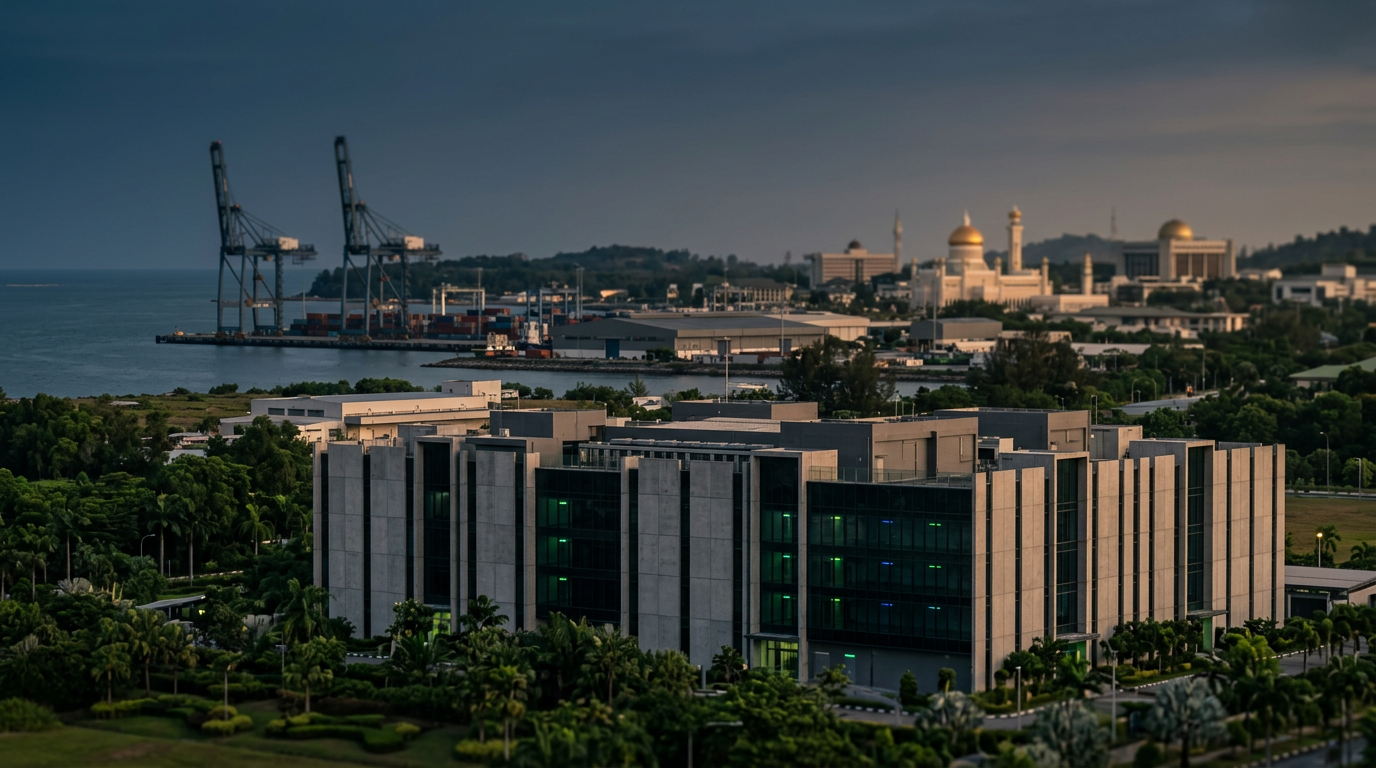
A recent sponsored article in Data Center Dynamics on the importance of "speed to power" for data centers offers a useful lens through which to view Brunei's long-stated digital economy ambitions. The article, which focuses on de-risking project timelines for hyperscale data centers, highlights the need for smart site selection and early partnerships with utilities. For a country like Brunei, which has for years signaled its desire to build a digital hub, these considerations are central. The global technology giants that build and operate hyperscale data centers are notoriously demanding tenants. They require not just land and tax incentives, but absolute certainty in the power grid, fiber optic connectivity, and the regulatory environment. More than grand visions, they seek dependable execution.
The Execution Gap
Brunei's national vision, Wawasan 2035, explicitly targets the development of a smart nation. This has been followed by a Digital Economy Masterplan and various announcements about positioning the country as a data center hub for the region. The logic is sound: leverage the country's political stability and access to international subsea cables to attract high-value digital infrastructure investments. However, the gap between ambition and reality has been significant. While plans are discussed, tangible, large-scale projects have been slow to materialize. The core of the issue often lies in what the book "ASEAN Rising" refers to as the immense value of a "usable state." Global investors in critical infrastructure are less impressed by exciting announcements than by the quiet competence of a government that can deliver on its promises. They are drawn to environments where institutional processes are clear, reliable, and efficient. The ability to navigate utility hookups, secure permits, and understand the long-term regulatory landscape without friction is a powerful magnet for capital. It is this operational predictability that has been lacking.
Infrastructure as a Signal
For data center developers, the availability and reliability of power is a primary gating item. The Data Center Dynamics piece underscores that planning for power needs to begin at the earliest stages of site selection, not as an afterthought. This involves deep collaboration with local utility providers and a clear understanding of the grid's capacity and future development plans. This is where announcements meet the unforgiving reality of engineering and project management. As "ASEAN Rising" notes, "Infrastructure that arrives on time signals more than infrastructure that is merely announced." When a state can consistently deliver complex projects on schedule, it sends a powerful signal to the international market about its capacity and reliability. This builds trust, which in turn lowers the perceived risk for investors. For Brunei, attracting a hyperscale data center would not just be an economic win; it would be a demonstration of state capacity that could unlock further investment in other advanced sectors.
The Price of Friction
Every delay, every unclear regulation, and every bureaucratic hurdle adds to the cost and risk of a project. In the competitive ASEAN landscape, where multiple countries are vying for the same digital investments, this friction can be the deciding factor that sends a project elsewhere. While Brunei has natural advantages, it has not yet proven that it can offer a frictionless environment for complex, fast-moving infrastructure projects. Building a data center is not like building a government office; the timelines are aggressive and the technical requirements are absolute. The country's institutions need to operate at the speed of the market, not at the pace of the bureaucracy. Until Brunei can demonstrate this capability through successful project execution, its digital hub ambitions may remain just that-ambitions.
What to watch
Watch for any announcements of specific, large-scale data center projects that move beyond the MOU stage and into construction. Pay close attention to the details of these projects, particularly the stated timelines for power availability and commissioning. The first company to successfully build and launch a hyperscale data center in Brunei will be a significant indicator of whether the country has finally bridged the gap between its digital vision and its institutional capacity to execute.