Philippines
The Price of Delayed Ambition in the Philippines
Recent analysis from ANZ Research warns that the Philippines risks a prolonged economic slowdown if infrastructure spending continues to lag. The gap between ambition and execution offers a clear lesson: a usable state is often more valuable than an exciting one.
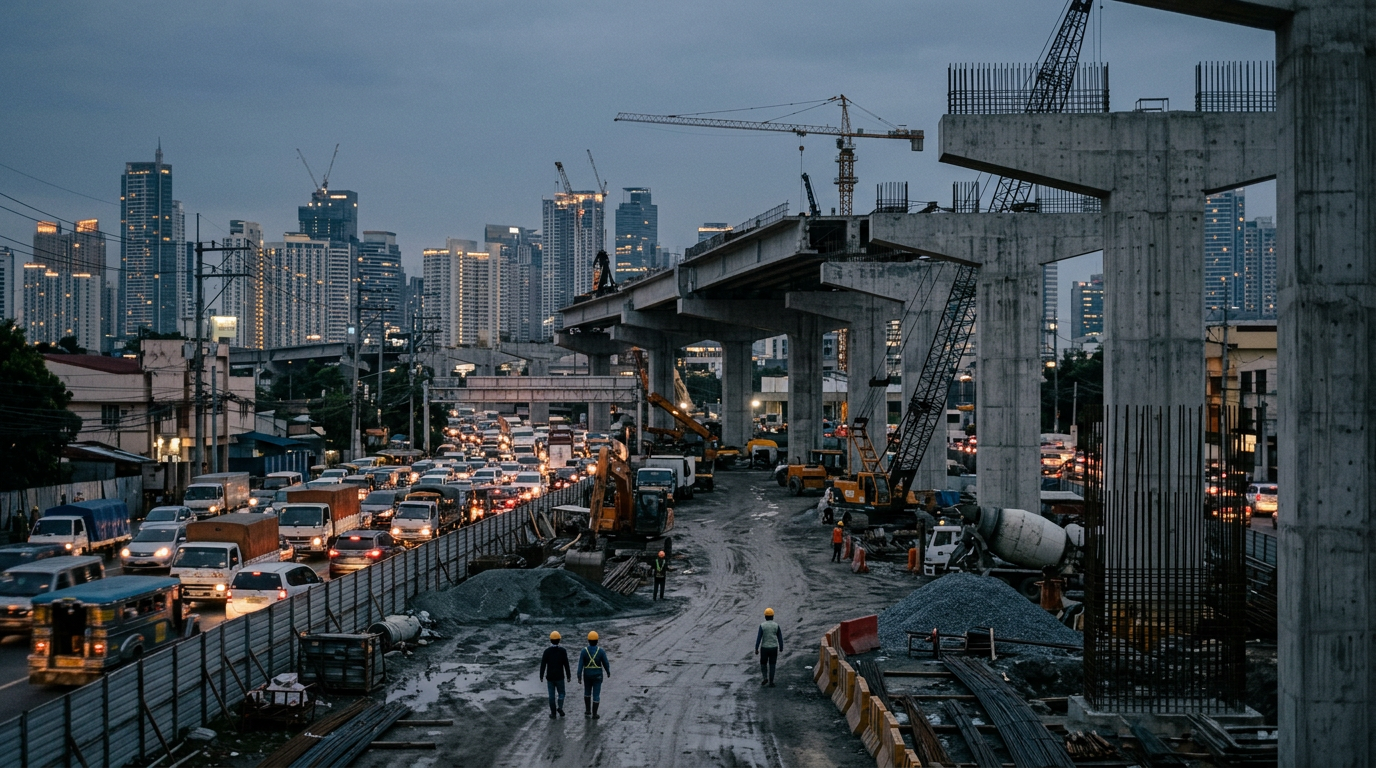
A recent report from ANZ Research warns that weak infrastructure spending could extend the Philippines' economic slowdown to 2027, as detailed in a philstar.com article. The analysis points to a government allocation for capital outlays that is smaller than historical averages, raising questions about the pace of the country's ambitious infrastructure agenda.
Execution Over Announcements
Ambitious infrastructure programs are a hallmark of modern economic policy in Southeast Asia. They signal a government's commitment to future growth and are essential for attracting long-term investment. The Philippines, with its "Build, Build, Build" and "Build Better More" initiatives, has been a prominent example of this forward-looking strategy. However, the capacity to execute these plans is a more telling indicator of economic health than the announcements themselves.
The core issue is the friction between stated goals and on-the-ground reality. As "ASEAN Rising" notes, consistent and predictable project delivery builds investor confidence. Delays, whether from budget shortfalls, regulatory hurdles, or other administrative weaknesses, create uncertainty. This friction raises the cost of doing business and can lead investors to favor markets with more reliable execution, even if the headline-grabbing projects are smaller in scale.
State Capacity and Competitive Advantage
The ANZ analysis underscores a fundamental aspect of development: state capacity. This refers not just to the government's financial resources, but to its ability to manage complex projects, from planning and procurement to completion and maintenance. Strong state capacity minimizes delays and ensures that public funds are translated into tangible assets that boost productivity.
In the competitive landscape of ASEAN, "institutional reliability has become part of comparative advantage." A country that consistently delivers infrastructure on schedule gains a reputation for dependability that attracts capital. The Philippines is competing not only with its own past performance but with neighbors who are also aggressively upgrading their infrastructure. A slowdown in spending, as the ANZ report suggests, could therefore have consequences for the country's relative attractiveness as an investment destination. The ability to build is a direct reflection of a usable state apparatus.
What to watch: Observers should monitor the Philippine government's budget allocations for capital projects in the coming fiscal cycles. Attention should also be paid to any administrative reforms aimed at accelerating project timelines and improving the efficiency of public spending. The government's response to the concerns raised by analysts will indicate its commitment to closing the gap between infrastructure ambition and its actual implementation.