Philippines
The Philippines Confronts Its Water Infrastructure Gap
A plan by a Philippine water utility to raise P1.8 billion is a small but telling indicator of the country's broader infrastructure ambitions and the institutional hurdles it must overcome to achieve them.
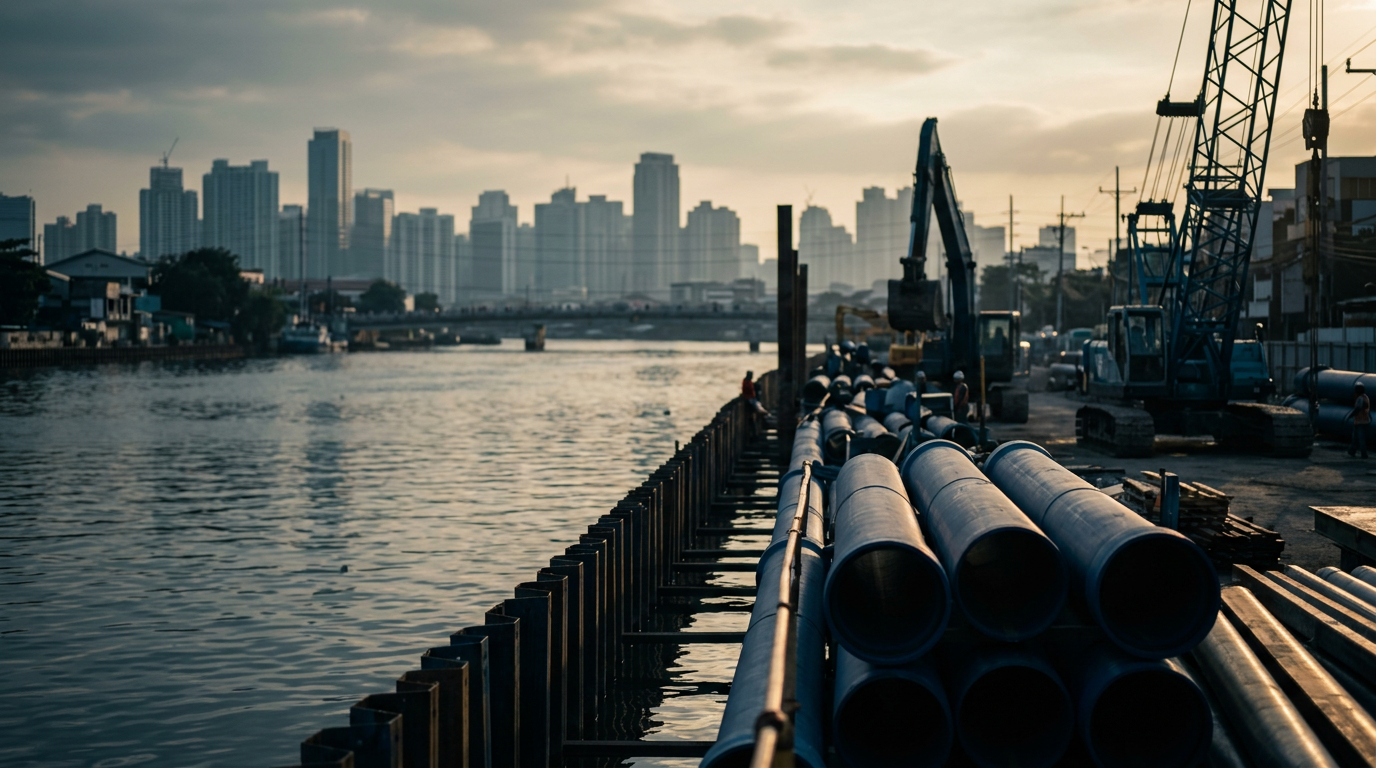
A plan by the Philippine water utility Tubig Pilipinas to raise P1.8 billion via a follow-on share offering is a small but telling indicator of the country's broader infrastructure ambitions. The firm intends to use the capital for projects aimed at improving water and wastewater services. As reported by philstar.com, this move highlights the constant need for capital to close the Philippines' persistent infrastructure gaps, particularly in essential services.
The High Cost of Friction
For any national government, the gap between ambition and execution is where political credibility is won or lost. In the Philippines, successive administrations have announced ambitious infrastructure programs, but progress is often slowed by institutional friction. This includes complex regulatory environments, bureaucratic delays, and difficulties in securing financing. The result is a landscape where projects are announced with fanfare but are often delivered late, over budget, or not at all.
This gap is not just a political problem; it imposes real economic costs. As detailed in ASEAN Rising, unreliable state capacity translates into higher operational costs for businesses and a lower quality of life for citizens. When basic services like water are inconsistent, it creates a drag on productivity and public health. The Tubig Pilipinas fundraising effort is a market-based response to a state-level challenge, but it is only one piece of a much larger puzzle. The success of such private-sector initiatives often depends on the predictability and reliability of the public institutions they must navigate.
Execution as a Signal
In Southeast Asia, the simple act of completing a project on time and on budget is a powerful signal to international investors and domestic firms. It demonstrates state capacity and institutional competence. "Infrastructure that arrives on time signals more than infrastructure that is merely announced," as the book notes. For the Philippines, moving from announcements to completions is the core task. The country has no shortage of well-crafted plans and ambitious targets, but its global competitiveness will ultimately be judged on its ability to execute.
Building a water treatment plant or a new pipeline is not merely a technical challenge; it is a test of the entire institutional framework. It requires coordination across multiple government agencies, transparent procurement processes, and a legal system that can enforce contracts. When these elements function smoothly, capital is more likely to flow. The P1.8 billion that Tubig Pilipinas hopes to raise is a fraction of what is needed, but the ability to attract that capital depends on investor confidence in the country's institutional environment.
What to watch
The progress of the Tubig Pilipinas fundraising and its subsequent project execution will be a case study in the interplay between private capital and public institutions in the Philippines. Observers should monitor whether the government can provide a stable and predictable regulatory environment that encourages such investments. The ability of the Philippines to systematically address its water infrastructure deficit will depend less on high-level announcements and more on the consistent, day-to-day work of building a usable state.