Philippines
 Water Infrastructure and the Value of a Usable State
A planned P1.8 billion share offer by a Philippine water company highlights the capital-intensive nature of infrastructure development and the value of reliable execution over mere announcements.
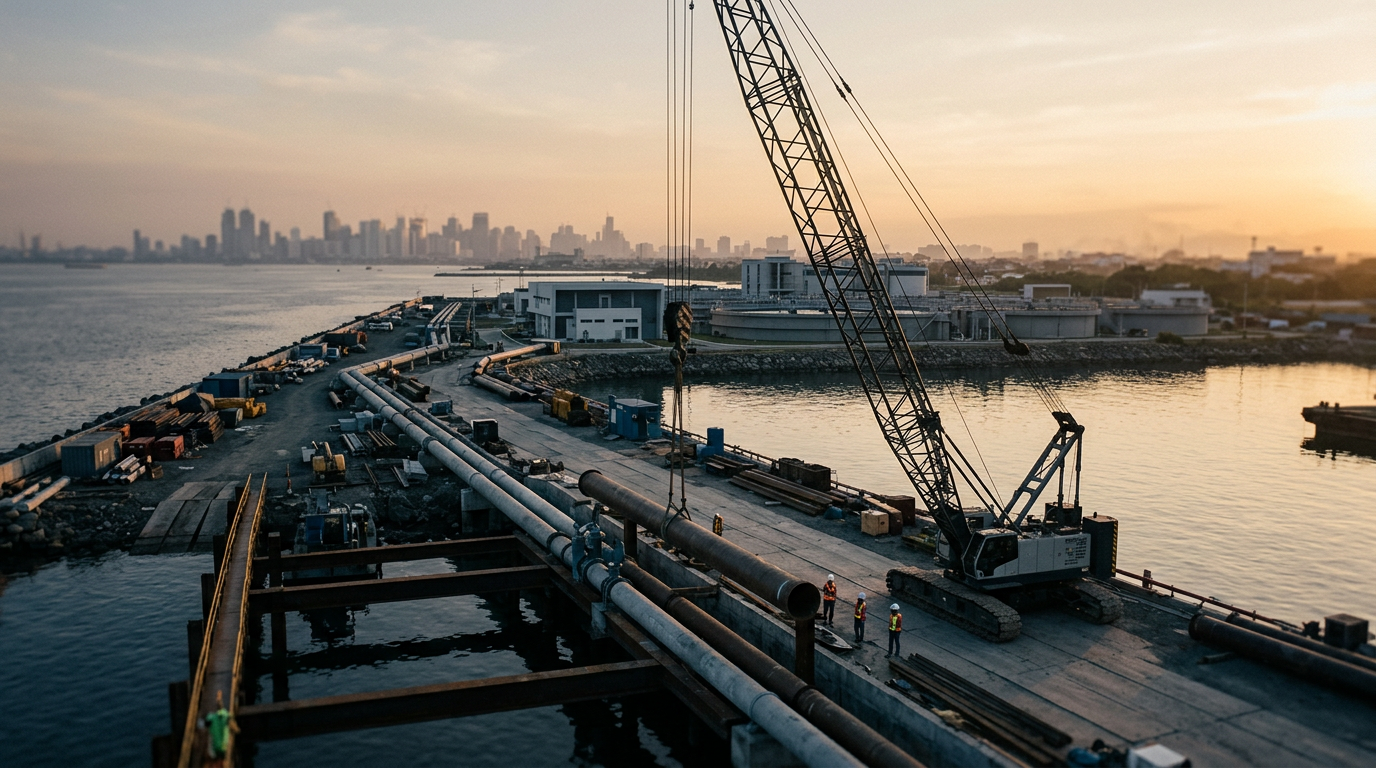
The Philippine water infrastructure company Tubig Pilipinas Holdings Inc. plans a follow-on share offer to raise P1.8 billion for project financing, as reported by philstar.com. This move to tap public markets reflects the substantial capital required to build and maintain essential services. It also puts a focus on the practical challenges of translating financial resources into tangible infrastructure, a core theme of development across Southeast Asia.
Capital and Execution
The P1.8 billion fundraising plan by Tubig Pilipinas is a conventional approach to financing capital-intensive projects. Water systems require significant upfront investment in pipes, treatment plants, and distribution networks. For a private operator, raising capital through share offerings is a standard mechanism to fund expansion and service improvement. The success of such an offering depends on investor confidence not just in the company's business model, but in the broader regulatory and economic environment.
Investors will assess the reliability of the institutional framework governing utilities. This includes the predictability of tariff adjustments, the enforcement of contracts, and the stability of the political landscape. The ability of a company like Tubig Pilipinas to attract capital is a direct reflection of the market's perception of institutional quality in the Philippines. A successful capital raise is an initial step; the subsequent challenge is to deploy those funds effectively to deliver the promised infrastructure and services to the public.
From Announcement to Delivery
Grand infrastructure plans are common in Southeast Asia, but their execution is uneven. The real measure of progress is not the announcement of a project or the securing of funds, but the actual delivery of services. As outlined in ASEAN Rising, the capacity to bring projects to completion is a critical element of state effectiveness. "Infrastructure that arrives on time signals more than infrastructure that is merely announced." The public experiences the benefits of governance not through press releases, but through reliable access to clean water, electricity, and transport.
This is where state capacity and institutional reliability become paramount. Efficient bureaucracies, clear regulations, and a stable legal environment reduce the friction that often delays or inflates the cost of major projects. For the Philippines, the ability to facilitate projects like those planned by Tubig Pilipinas is a measure of its institutional strength. It demonstrates a capacity to manage complex processes involving land acquisition, environmental permits, and technical standards. This is what makes a state usable for its citizens and attractive to investors.
What to watch: The market's reception to the Tubig Pilipinas share offer will be a near-term indicator of investor sentiment. Beyond the fundraising, the key metric for success will be the company's ability to execute its projects on schedule and within budget. Tracking the progress of these specific water projects will provide a granular view into the Philippines' broader capacity to deliver essential infrastructure and strengthen its comparative advantage through reliable institutions.