Philippines
The Philippines: Energy Security and State Capacity
The resumption of gas flows from the Malampaya field to the Ilijan power plant is a positive development for energy stability in the Philippines. However, it also brings into focus the persistent questions around institutional reliability and the long-term execution of vital.
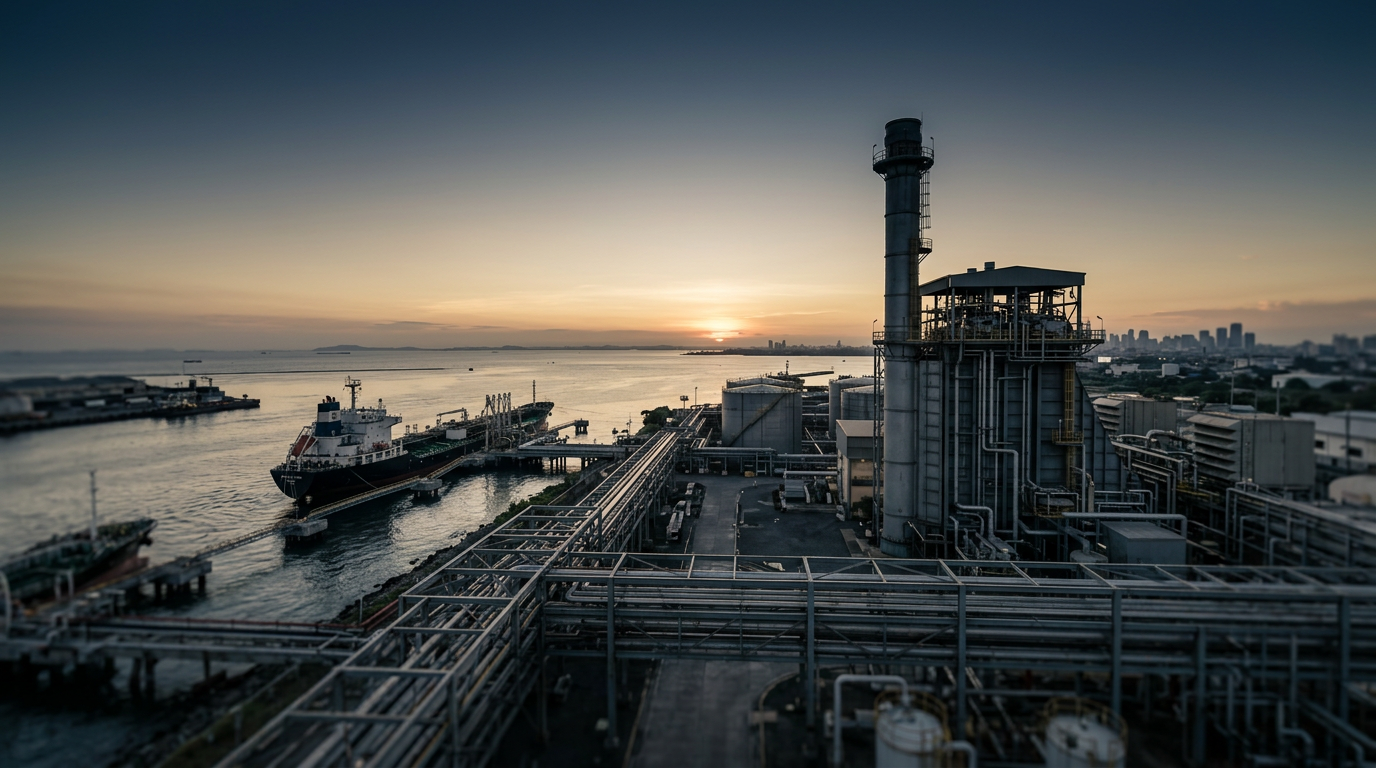
A recent report that the Ilijan power plant in Batangas is once again receiving natural gas from the Malampaya field is a welcome development for the Philippines, as detailed by philstar.com. The 1,200-megawatt plant is a significant component of the Luzon grid. This event, however, serves as a timely case study for the themes of institutional capacity and infrastructure governance discussed in "ASEAN Rising". The saga of the Malampaya-Ilijan connection is less about a single technical fault and more about the friction inherent in managing nationally significant assets.
Infrastructure and Institutions
The Malampaya gas field has been a cornerstone of Philippine energy security for years, supplying a substantial portion of Luzon's power needs. The interruption and subsequent restoration of supply to the Ilijan plant highlight the fragility of complex infrastructure systems. When critical assets are involved, the reliability of the institutions that govern them is as important as the physical infrastructure itself. The core issue is not just about a pipeline, but about the contracts, regulatory oversight, and commercial arrangements that ensure the gas flows predictably. "Institutional reliability has become part of comparative advantage," and the ability to execute on infrastructure commitments is a powerful signal to investors and markets.
The Cost of Friction
The dispute over gas supply and pricing that led to the Ilijan plant's temporary shutdown and subsequent reliance on more expensive alternative fuels demonstrates the real-world costs of institutional friction. These costs are not merely financial; they affect energy prices for consumers and businesses, and they introduce uncertainty into the investment climate. For a state to be effective, its institutional frameworks must be robust enough to resolve commercial disputes and enforce contracts without disrupting essential services. A predictable operating environment, free from sudden contractual or regulatory shifts, is a key determinant of a country's ability to attract the long-term capital needed for large-scale infrastructure development.
State Capacity on Display
Resolving the impasse and restoring the gas supply required intervention and arbitration that tested the capacity of the state's energy governance bodies. Successfully navigating these challenges demonstrates a level of functional capability. However, the fact that the dispute escalated to the point of interrupting supply points to underlying weaknesses. Building and maintaining a reputation for dependable governance is a long-term project. For the Philippines, ensuring that the Malampaya project continues to operate smoothly under its new operatorship, and that all contractual obligations are met transparently, is a practical test of its commitment to improving state capacity. As noted in ASEAN Rising, "a usable state is often more valuable than an exciting one."
What to watch next is how the Philippine government and its regulatory agencies manage the long-term decline of the Malampaya field and attract new investment for gas exploration. The handling of this transition will be a clear indicator of the country's institutional maturity and its ability to secure its energy future through reliable planning and execution rather than crisis management.