Singapore
's Talent Infusion Highlights a Regional Test
Singapore's reliance on foreign talent for key infrastructure projects illustrates a core ASEAN challenge: converting capital into assets requires a flexible, skilled workforce. While Singapore navigates this with policy, its neighbours face a tougher road.
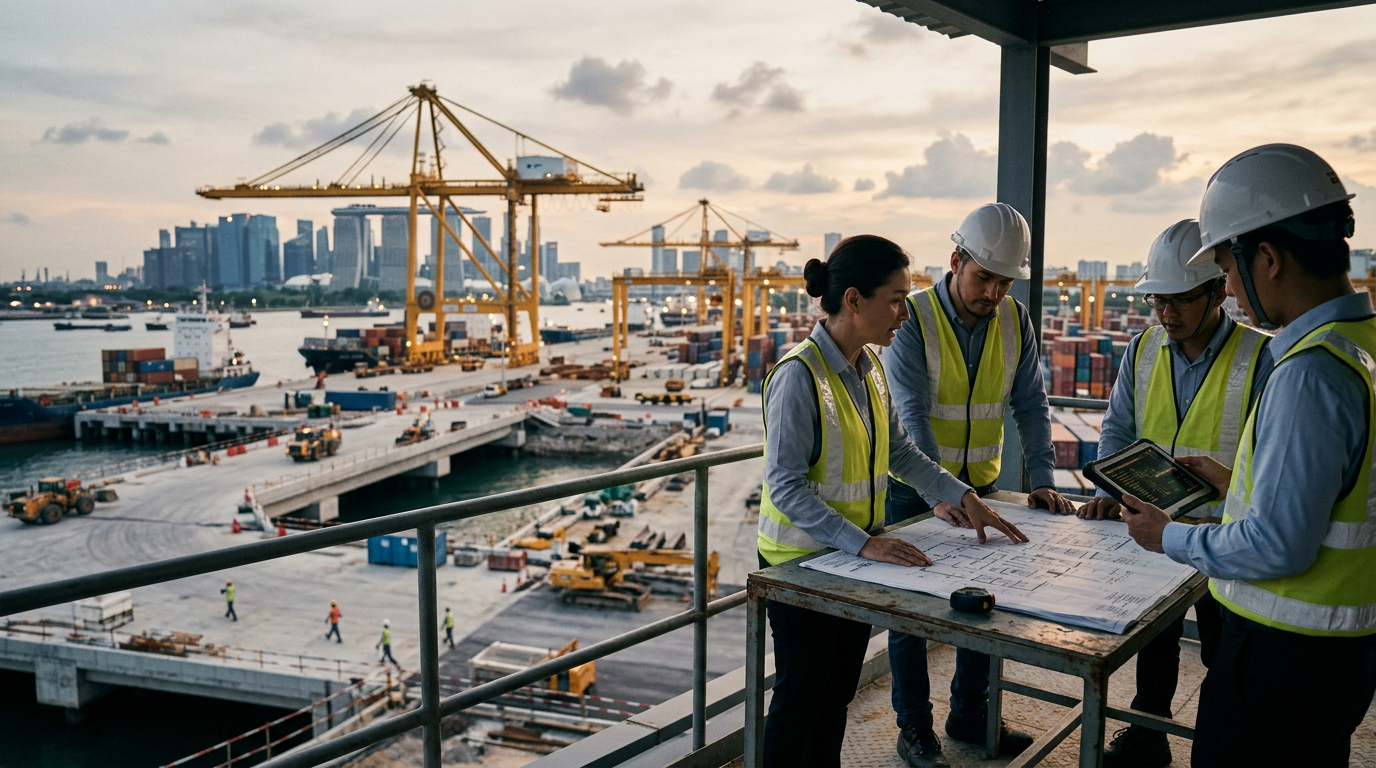
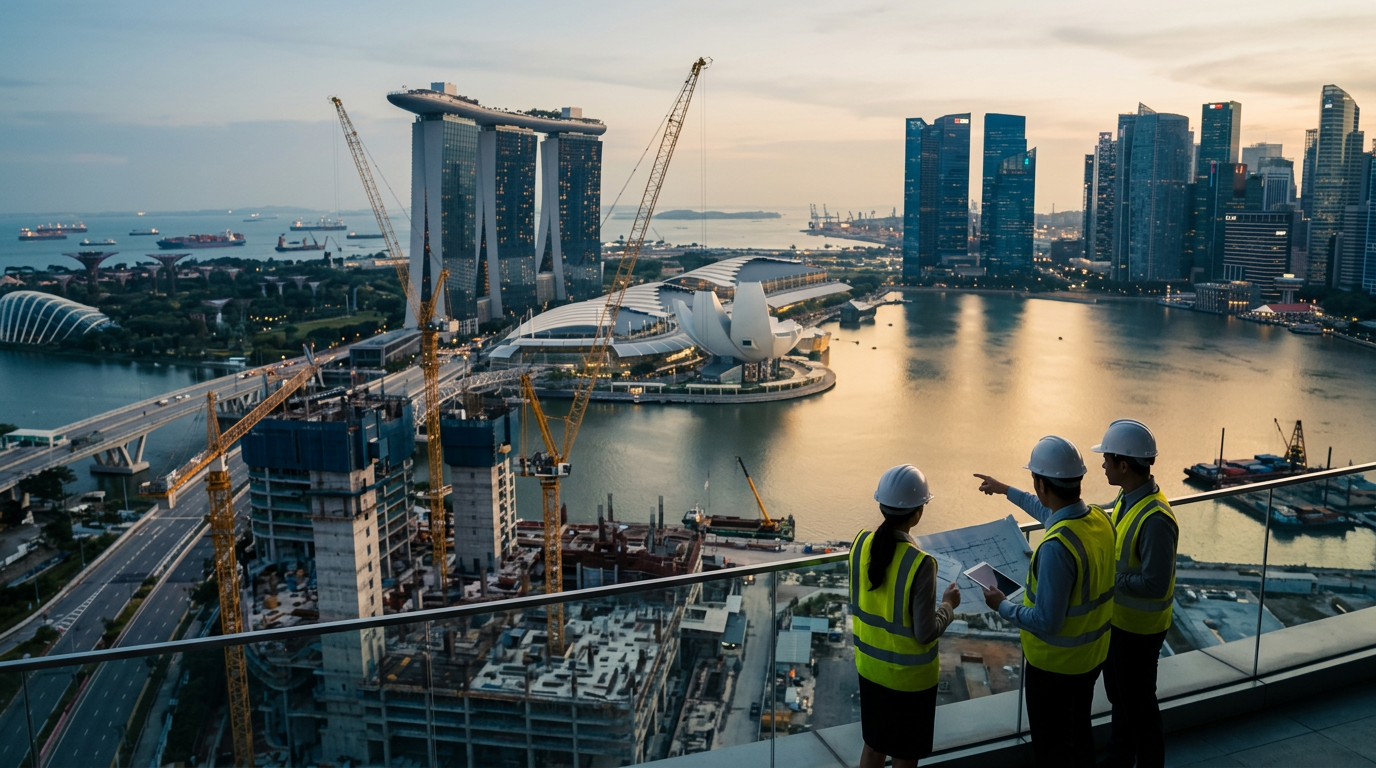
Singapore's population growth, driven by an influx of foreign workers for major construction, has been cast as a demographic headline. A recent Business Times report noted a 1.6% population increase, with much of that growth attributed to labor for transport infrastructure and landmark projects like Changi Airport's Terminal 5 and the Marina Bay Sands expansion. While this reflects Singapore's capacity to execute large-scale ventures, it also illuminates a fundamental challenge for the wider ASEAN region: the critical link between talent, capital, and infrastructure.
Institutions and Execution
Singapore's ability to attract and absorb the necessary workforce for its ambitious projects is a direct result of its institutional strength. The city-state's transparent regulatory environment, stable governance, and clear policy frameworks allow it to source talent globally to meet specific economic needs. This institutional capacity ensures that announced projects do not stall. The smooth execution of ventures like the Thomson-East Coast Line or airport expansion demonstrates a system that can align labor, land, and permits efficiently. This contrasts with the experience in other parts of the region, where bureaucratic hurdles and institutional weaknesses can delay or derail even the most promising foreign direct investment proposals.
Capital and Infrastructure
Across ASEAN, there is no shortage of capital seeking returns or infrastructure plans awaiting realisation. Yet, capital alone does not build an airport terminal or a metro line. As the book ASEAN Rising notes, the difficult work of execution is what turns investment announcements into tangible assets. The Singaporean case is instructive. The billions of dollars allocated to its infrastructure pipeline would be inert without the skilled and semi-skilled labor force to pour the concrete, wire the electronics, and manage the logistics. Singapore's reliance on foreign workers underscores that even one of the world's most advanced economies cannot source all necessary skills domestically for such concentrated, large-scale builds. This highlights a broader regional imperative to develop and mobilise human capital to effectively absorb investment.
The Talent Constraint
While Singapore uses policy levers to import talent, its neighbors often face a more complex picture. For countries like Indonesia or Vietnam, the challenge is not just about attracting foreign experts but also about cultivating a domestic workforce with the right skills. The scale of their development needs is immense, and reliance on outside labor is not always a politically or economically viable long-term solution. The phrase from ASEAN Rising that "realised flows depend on the slower work of land, permits, power and talent reaching the ground" is particularly relevant here. For the region to translate its demographic dividend and investment appeal into sustainable growth, developing a deep and adaptable talent pool is not just an advantage; it is a necessity. Without it, ambitious infrastructure goals will struggle to leave the blueprint stage.
What to watch
Watch how ASEAN governments outside Singapore address human capital constraints as they compete for investment. Policy shifts regarding technical and vocational training, immigration rules for skilled professionals, and public-private partnerships aimed at workforce development will indicate whether the region can build the institutional capacity required to turn ambitious infrastructure plans into reality. The success of these initiatives will determine the pace and quality of economic integration and development across Southeast Asia.

 Thailand