Malaysia
Penang LRT Signals a New Phase in Malaysia's Infrastructure Push
Penang's new LRT Mutiara Line shows how Malaysia is moving to execute complex transport projects. Institutional capacity, not just vision, is the core of the challenge.
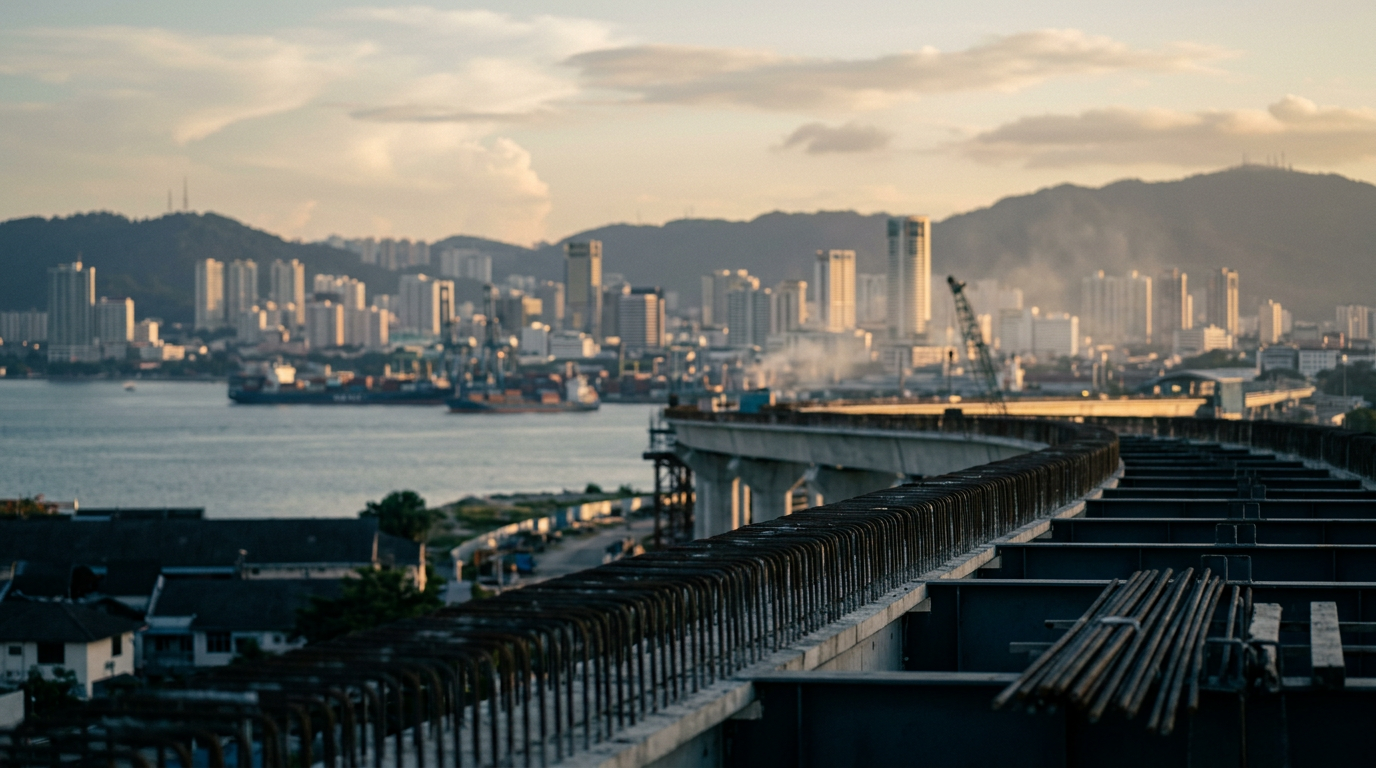
Drivers in George Town, Penang, will face intermittent lane closures on Jalan Sultan Azlan Shah until mid-November, as reported by Bernama. The traffic disruptions are a small but tangible sign of progress on a major public transport project, the LRT Mutiara Line. While any large infrastructure initiative causes temporary friction, these closures signal the start of substantive construction. This moves the project from the realm of planning and announcements to the more difficult stage of execution, a transition that tests the capacity of state institutions.
Execution Over Vision
Malaysia has a long history of ambitious infrastructure planning. The Multimedia Super Corridor, inaugurated in the 1990s, is a case in point. While it achieved some of its objectives, its full vision was never realized, a reminder that project announcements are easier than project completion. The real measure of success is not the grandeur of the plan but the government's ability to manage the complex, often disruptive, work of turning that plan into reality. The lane closures in Penang are a routine part of this process, requiring coordination between contractors, transport authorities, and the public. This daily work of managing traffic flow and construction schedules is where institutional effectiveness is truly demonstrated. As noted in "ASEAN Rising," a state that can deliver infrastructure on time is signaling its capability to investors and citizens alike.
The Cost of Friction
The traffic delays caused by the LRT construction are a direct, if minor, economic cost. They represent the friction inherent in building new things in dense urban environments. For ASEAN governments, the challenge is to minimize these costs through efficient project management and clear public communication. When managed well, the temporary inconvenience is accepted as a necessary trade-off for the long-term benefit of improved connectivity. However, when projects are plagued by delays, cost overruns, and poor coordination, this friction can escalate. It erodes public trust and can deter private investment. A predictable, reliable state apparatus is an economic asset. It ensures that the inevitable disruptions of construction do not spiral into a broader loss of confidence in the government's ability to deliver essential services.
Infrastructure and Advantage
For decades, ASEAN countries competed for investment based on low labor costs or natural resource endowments. Today, the basis of competition is shifting. As the book "ASEAN Rising" argues, "institutional reliability has become part of comparative advantage." A country that can build, maintain, and operate complex systems like the Penang LRT is demonstrating a high level of state capacity. This capacity is attractive to international capital, which seeks stable and predictable operating environments. The physical infrastructure itself is one benefit, but the demonstrated ability to build it efficiently is another, signaling a usable state that can be a reliable partner for business. The successful completion of the Mutiara Line will therefore do more than just improve transport in Penang; it will serve as a concrete signal of Malaysia's institutional strength.
What to watch
Beyond the physical progress of the LRT Mutiara Line, the key indicators to watch are related to project governance. Observers should monitor whether the project adheres to its stated timelines and budget. The government's ability to manage public communication around disruptions and to coordinate the multiple agencies and contractors involved will be a practical test of institutional capacity. The project's success will be measured not just by the final ribbon-cutting, but by the efficiency and predictability of its execution along the way.