Malaysia
's Data Centre Boom is a Test of Execution
Malaysia has attracted significant foreign investment into its data centre sector. Now comes the slower work of execution - turning announcements into operational assets through land, power, and talent.
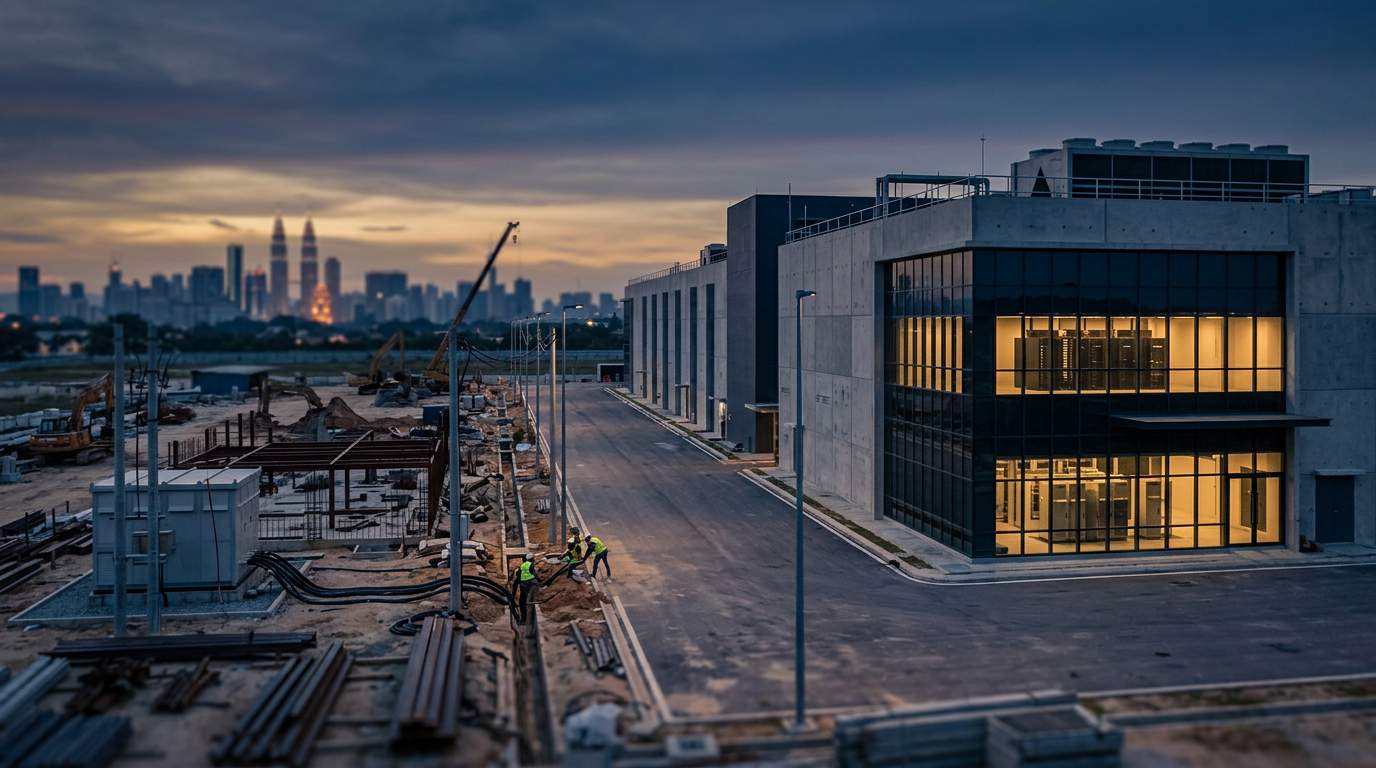
A recent S&P assessment, reported by Malay Mail, highlights the rapidly expanding data centre sector as a key driver for Malaysia's resilient economic outlook. The country has successfully positioned itself as a major destination for foreign direct investment in this area, attracting commitments from global tech giants. While these announcements are a strong signal of confidence, the focus now shifts from attraction to execution.
From Announcement to Asset
Foreign investment announcements generate positive headlines, but their real economic impact depends on the complex process of turning plans into operational facilities. As the book "ASEAN Rising" notes, "FDI announcements travel quickly. Realised flows depend on the slower work of land, permits, power and talent reaching the ground." Malaysia's challenge is to ensure the announced data centre projects, such as those in Johor's Sedenak Tech Park and Kuala Lumpur, are not delayed by implementation hurdles.
The development of large-scale data centres is a significant test of a country's institutional capacity. It requires the efficient coordination of multiple state and private-sector actors to secure suitable land, streamline permitting processes, and, most importantly, deliver the necessary infrastructure. Delays in any of these areas can stall projects, deferring the expected economic benefits and potentially damaging investor confidence.
The Power Constraint
Among the most pressing infrastructure needs for data centres is a stable and ample supply of electricity. Data centres are immensely power-intensive, and their concentration in specific zones can place a heavy strain on the existing grid. Malaysia's national utility, Tenaga Nasional, is central to managing this demand. The company is actively working to ramp up capacity to meet the needs of new industrial parks and data centres, but the scale of the required investment is substantial.
The long-term solution involves not just increasing generation capacity but also strengthening the grid and ensuring its reliability. This requires forward-looking capital investment in new power plants and transmission infrastructure. The speed and success of these electrical grid upgrades will be a determining factor in how many of the announced data centre projects come online and on schedule.
The Talent Equation
Beyond physical infrastructure, the operational success of data centres depends on a pool of skilled professionals. The demand for technicians, engineers, and cybersecurity experts to build, maintain, and secure these facilities is growing. While Malaysia has a foundation of technical talent, the specialised nature of data centre operations requires focused upskilling and training programs.
Meeting this demand involves a concerted effort between government, industry, and educational institutions to develop the right curriculum and vocational training. A failure to build a sufficient talent pipeline could create operational bottlenecks, forcing companies to rely on expatriate talent or face higher operating costs. This underscores the need for a holistic approach that pairs infrastructure investment with human capital development.
What to watch
Observers should monitor the rate at which announced FDI in the data centre sector converts to realised investment on the ground. Key indicators will include the progress of energy infrastructure upgrades by utility providers, the efficiency of the land acquisition and permitting processes in designated tech parks, and the growth of specialised engineering and technical training programs aimed at staffing these new facilities. The interplay of these factors will determine if Malaysia can translate its investment appeal into long-term economic depth.