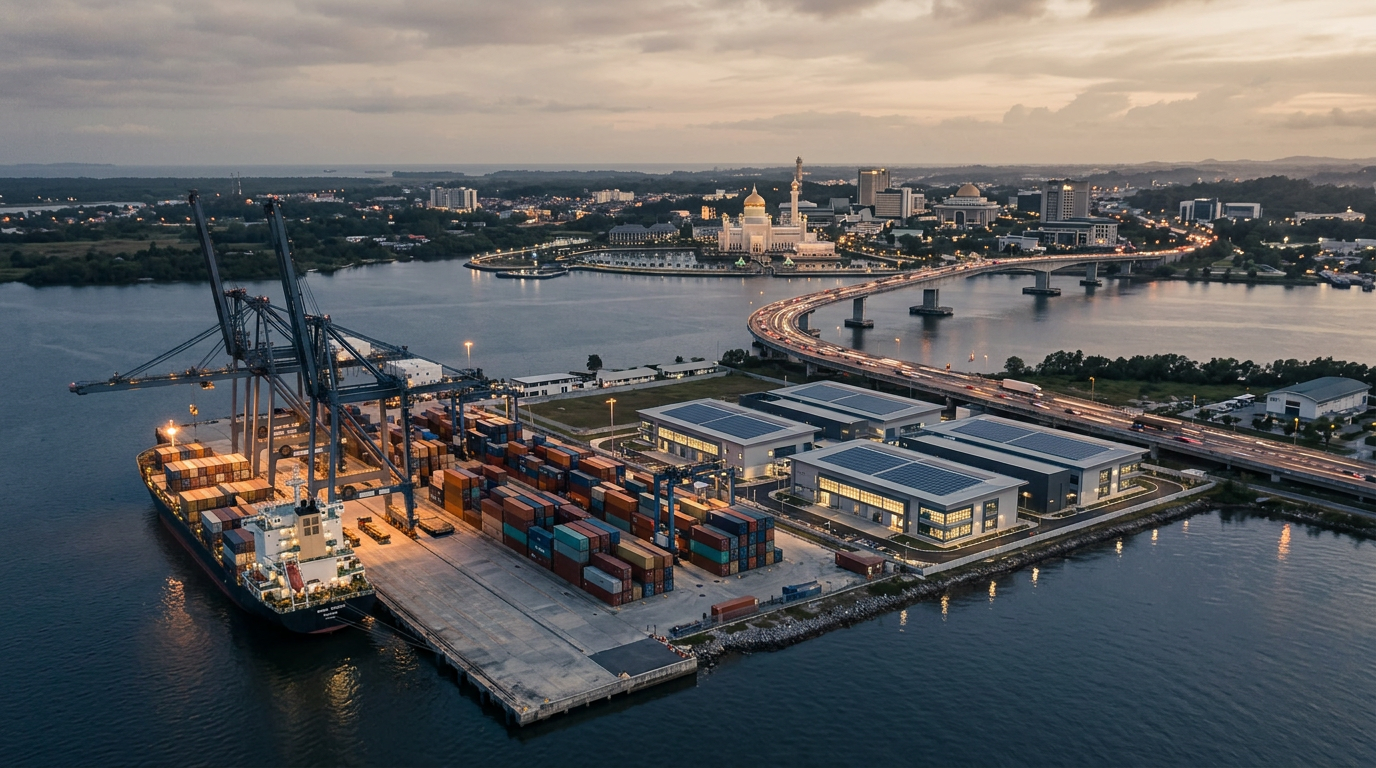
Brunei
ASEAN and Australia: Beyond Announcements
The recent ASEAN-Australia summit highlights a persistent theme in regional development: the gap between stated intentions and on-the-ground execution. For ASEAN, turning high-level agreements into tangible infrastructure and economic integration is the core task.

In a recent interview, ASEAN Secretary-General Dr. Kao Kim Hourn discussed the ASEAN-Australia partnership, focusing on deepening economic integration and practical cooperation. As reported by ASEAN.org, this conversation aligns with the outcomes of the ASEAN-Australia Special Summit held earlier this year, which produced a joint declaration and a AUS$2 billion Southeast Asia Investment Financing Facility.
While such high-level statements are a regular feature of regional diplomacy, they often obscure a more difficult reality. The gap between announced initiatives and their successful execution remains a significant variable across the ASEAN member states. This execution gap is a core theme of regional economic development.
Institutions and Implementation
The capacity of state institutions to deliver on promises is a central factor in converting diplomatic agreements into economic value. The ASEAN-Australia partnership, like many others, will be defined not by the size of the initial funding commitment but by the ability of member states to absorb and deploy that capital effectively. Projects must move from press releases to physical reality.
As the book ASEAN Rising notes, the reliability of institutions has become a component of national competitiveness. The ability to complete infrastructure projects on schedule and within budget provides a clearer signal to investors than ambitious announcements that fail to materialize. "A usable state is often more valuable than an exciting one," and this extends to the regional commons. The success of Australian-backed financing will depend on the institutional strength of the recipient countries.
From Capital to Concrete
The AUS$2 billion facility is designed to catalyze private and public investment in ASEAN infrastructure and clean energy. This injection of capital is welcome, but capital alone is insufficient. The primary constraint is not always the availability of funding, but the presence of bankable projects and the institutional competence to manage them.
Executing large-scale infrastructure requires a complex interplay of factors beyond finance. This includes transparent procurement processes, skilled project management, and a stable regulatory environment that gives investors confidence. Without these foundational elements, capital can be misallocated or, worse, remain un-deployed, stuck in bureaucratic inertia. The effectiveness of the new financing facility will be measured by the number of projects that break ground and are completed, not by the funds allocated.
The Role of Trust
Successful long-term partnerships are built on trust, which in the context of international development is forged through execution. When a partner country or a regional bloc demonstrates that it can effectively implement projects, it builds confidence among investors and diplomatic partners alike. Every project that is completed on time reinforces the perception of reliability and competence.
For the ASEAN-Australia relationship, the next phase will be about translating the goodwill from the recent summit into a track record of tangible achievements. Progress in areas like trade facilitation, digital economy standards, and green energy transition will depend on the administrative and technical capabilities of ASEAN institutions. This is where practical cooperation moves from a talking point to a measure of success.
What to watch: Observers should monitor the initial allocation of the AUS$2 billion facility, looking for the first one or two infrastructure or energy projects that get underway. The speed and transparency of this early implementation will serve as a bellwether for the overall effectiveness of the initiative and the capacity of regional institutions to deliver results, not just declarations.