Cambodia
The Value of a Usable State: Lessons from Hong Kong's Airport Project
Hong Kong's move to take over the 11 Skies commercial project highlights a core theme from ASEAN Rising: institutional reliability is a key part of comparative advantage. A usable state is often more valuable than an exciting one.
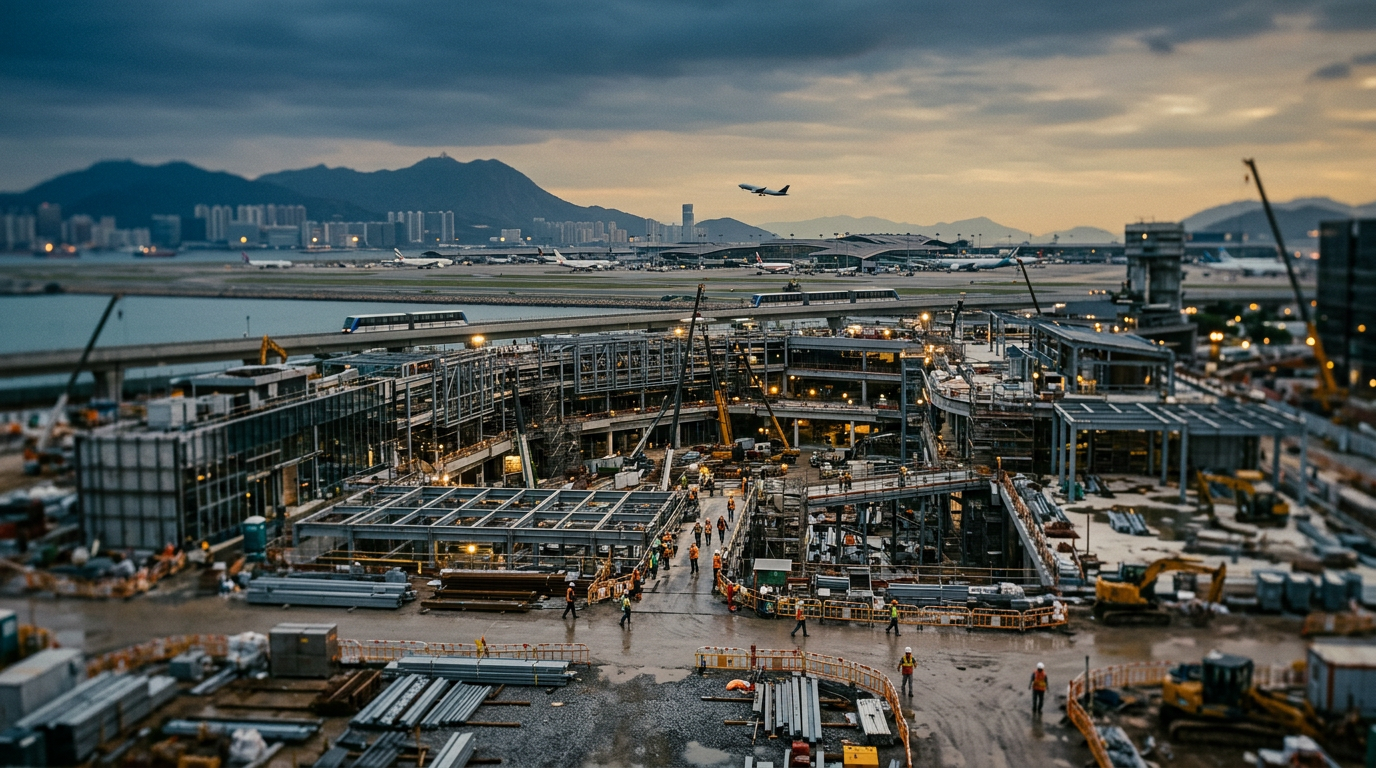
Hong Kong's Airport Authority is set to take over the 11 Skies commercial project, with the aim of transforming it into a high-end tourism and commercial landmark. As reported by the Bangkok Post, this move follows a government takeover intended to ensure the project's completion with minimal additional public investment. This development in Hong Kong offers a useful lens through which to examine the connection between state capacity and large-scale infrastructure projects across ASEAN, a central theme in the book ASEAN Rising.
Institutions and Execution
The decision by Hong Kong authorities to directly manage the 11 Skies project underscores the importance of institutional execution. When private sector developers face obstacles that delay or endanger major projects, a capable state can step in to provide stability and direction. This is not merely a bailout but a strategic intervention to safeguard a project's economic potential and its contribution to the wider infrastructure ecosystem. The ability of the Airport Authority to take control and pivot the project's strategy demonstrates a level of institutional reliability that is itself a form of competitive advantage. The goal is to deliver a functional, valuable asset rather than leaving it stalled in the announcement phase.
Infrastructure and Capital
Large infrastructure ventures like 11 Skies are capital-intensive and carry significant risk. The Hong Kong government's intervention aims to de-risk the project for future commercial tenants and investors. By absorbing the initial uncertainty and ensuring the development reaches completion, the state creates a more attractive environment for private capital. This approach acknowledges that the state's role is not always to fund projects entirely but to create a stable foundation upon which private enterprise can build. As the book notes, "Infrastructure that arrives on time signals more than infrastructure that is merely announced." The credibility gained from successful project delivery can attract further investment and enhance the region's reputation as a reliable place to do business.
State Capacity as an Advantage
While the 11 Skies project is in Hong Kong, the lessons are directly applicable to ASEAN nations undertaking ambitious infrastructure plans. The capacity of state institutions to oversee, regulate, and, when necessary, directly manage complex projects is a determining factor in their success. A government that can ensure projects are completed and integrated into the economy provides a powerful signal to global markets. This institutional strength moves beyond rhetoric and demonstrates a tangible commitment to long-term development. A usable state, one that can execute its plans effectively, is often far more valuable to investors and citizens than one that only offers ambitious but unrealized visions.
What to watch next is how the Hong Kong Airport Authority manages the transition and whether its direct oversight accelerates the project's timeline and commercial viability. For ASEAN observers, the key takeaway is the reinforcement of the principle that strong, reliable institutions are not just a component of good governance but a fundamental driver of economic competitiveness. The ability to execute complex infrastructure projects is a clear indicator of state capacity that resonates with international capital and development partners.