Cambodia
State Capacity on Display as Hong Kong Reworks Airport Project
Hong Kong's move to reshape a major commercial project at its airport is a live test of institutional reliability and state capacity in the face of shifting economic conditions.
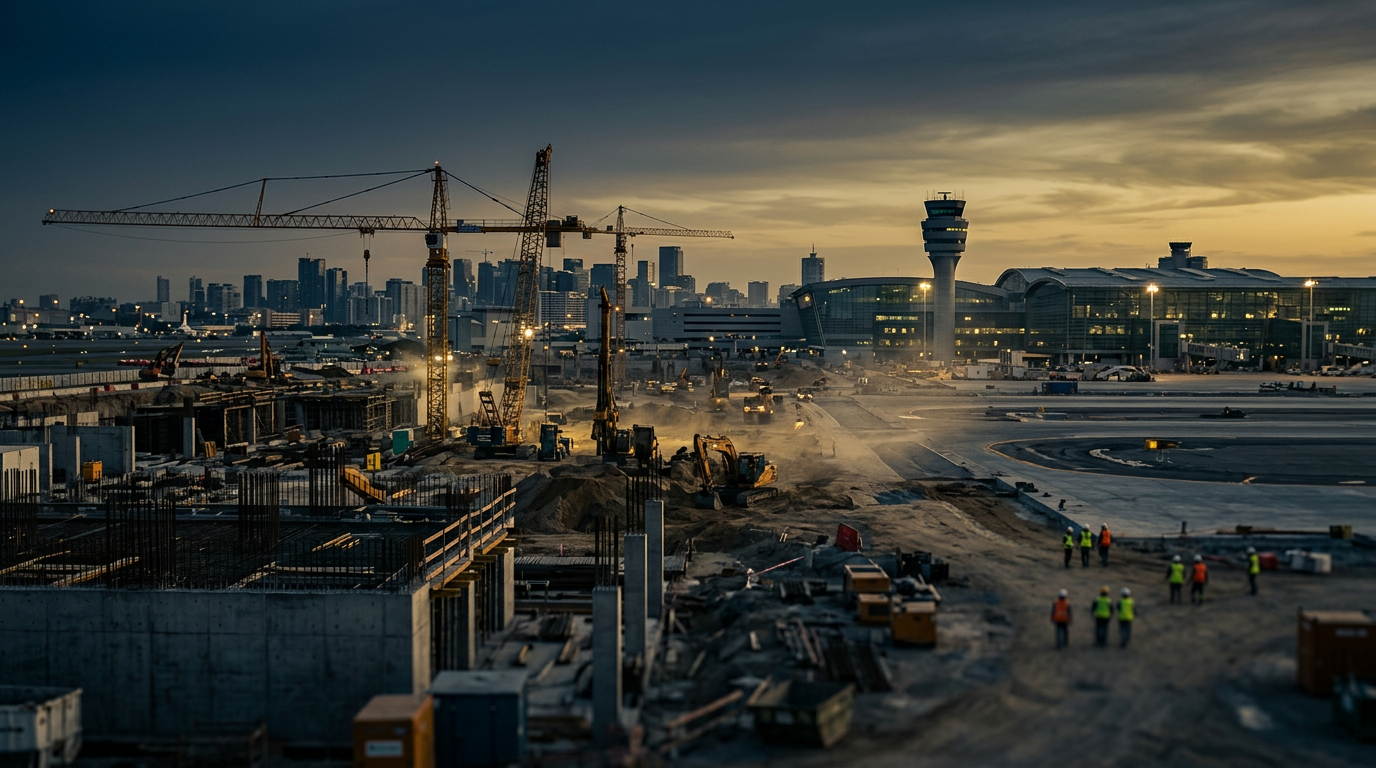
Hong Kong's government is stepping in to reshape the 11 Skies commercial project, a move that highlights the importance of institutional reliability in delivering complex infrastructure. The transport chief announced that the Hong Kong Airport Authority will take over and reposition the project as a high-end tourism landmark, according to a report in the Bangkok Post.
Execution Over Announcements
The decision to intervene reflects a pragmatic approach to a large-scale development facing headwinds. Rather than allowing the project to stall or fail, the government is leveraging the Airport Authority, a capable state-backed entity, to steer it in a new direction. This aligns with the principle that a state's ability to execute plans is a core component of its economic strength. As discussed in "ASEAN Rising", this demonstrates how a usable state, one that can effectively manage and deliver on its commitments, is often more valuable than one that simply makes ambitious pronouncements. The ability to adapt and see a project through to completion sends a powerful signal to investors and the market.
Infrastructure as a Signal
Large infrastructure projects are more than just concrete and steel; they are signals of a government's competence and its commitment to long-term economic strategy. The success of an airport, a port, or a rail line depends not only on its initial construction but also on the ecosystem of supporting commercial and logistical services around it. By ensuring the 11 Skies project is completed in a revised, high-end form, Hong Kong is working to protect and enhance the value of its airport, a critical hub for global trade and finance. This move is a practical application of the idea that "infrastructure that arrives on time signals more than infrastructure that is merely announced." It is a tangible demonstration of state capacity.
The Cost of Friction
The alternative to this kind of intervention is often a high cost of friction. A stalled or failed project of this magnitude would create uncertainty, deter investment, and potentially degrade the value of the surrounding airport asset. It would represent a significant waste of capital and planning resources. The direct intervention by the Airport Authority is designed to minimize this friction by providing a clear path forward, even if it deviates from the original commercial plan. This adaptability shows a focus on outcomes over rigid adherence to a previous strategy that is no longer viable, reducing the economic drag that can come from institutional paralysis.
What to watch
Observers will be watching how the Airport Authority manages the transition and finances the repositioning with minimal public investment, as stated. The project's final form and its successful integration with the airport's operations will serve as a case study in how state-backed institutions can navigate market shifts to deliver on strategic infrastructure goals. The ability to attract high-end tenants and tourists will determine the ultimate success of this revised vision and offer lessons for other governments managing similar large-scale developments.