Vietnam
Vietnam, the US, and the Trade Dependency Question
Recent US-Vietnam trade talks show a pattern of diversification across ASEAN. Deeper ties with Washington are a response to the structural reality of China's deep, and permanent, economic footprint in the region.
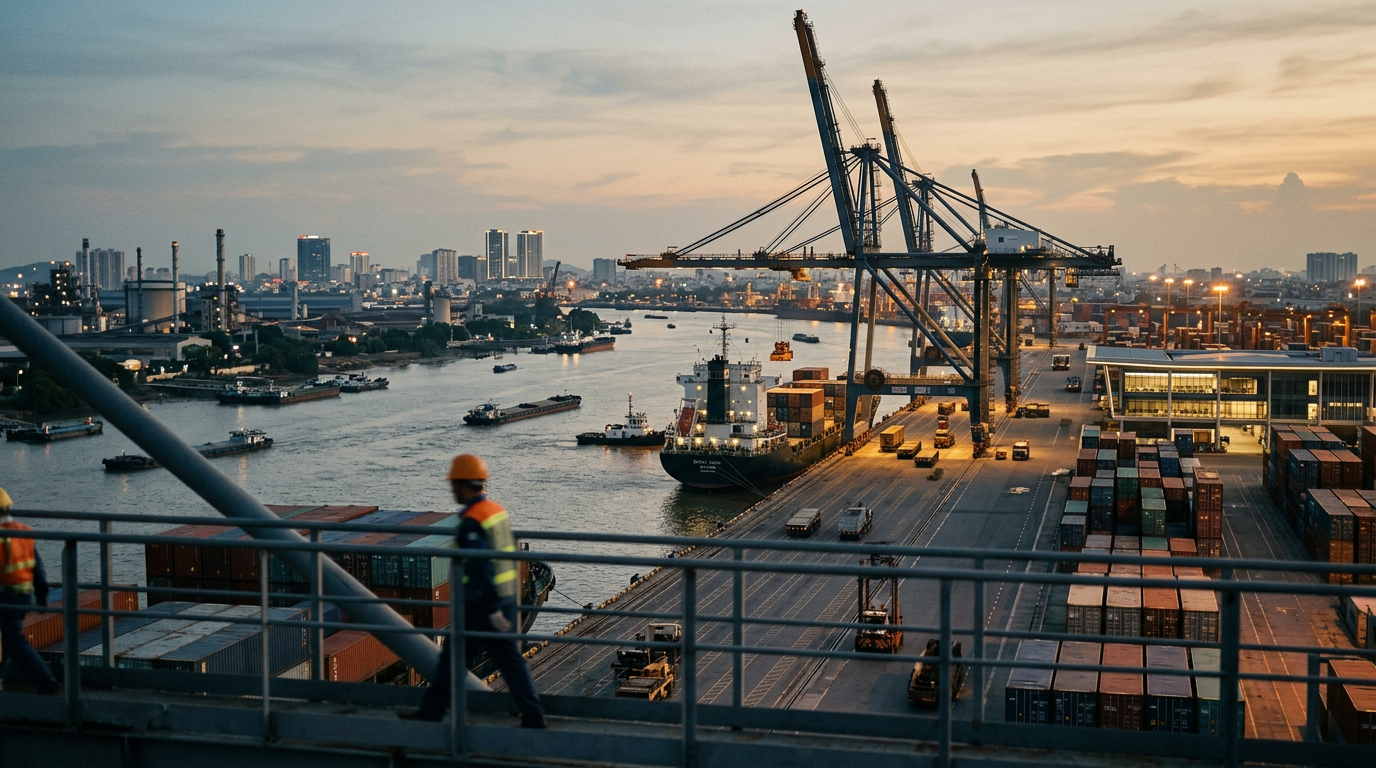
Recent US-Vietnam trade negotiations, as reported by Vietnam Investment Review, are a quiet but significant indicator of a broader trend across Southeast Asia. As Hanoi and Washington work to deepen economic cooperation, the underlying dynamic is not just about the bilateral relationship. It is about how an ASEAN member state navigates its relationship with a dominant regional power, China, while strengthening ties with the United States. This balancing act is a core theme in the region's economic strategy. The talks are not a pivot away from Beijing, but an exercise in building counterweights to its immense economic gravity.
The Gravity of a Structural Feature
Trade with China is a fundamental, structural aspect of every ASEAN economy. As outlined in ASEAN Rising, the key issue for governments is not whether to engage with China, but how to manage the resulting dependency. The book notes that for ASEAN, "trade depth with China is now a structural feature, not a cyclical one." This permanent reality shapes the region's strategic choices. It requires a sophisticated approach where economic policy is inseparable from foreign policy.
Vietnam, given its long border and complex history with China, is a clear case study. Beijing is a primary source of industrial inputs and a major market for Vietnamese goods. This integration is a source of growth, but also of vulnerability. Supply chain disruptions, trade disputes, or shifts in Chinese economic policy can have immediate and significant impacts. The negotiations with the US are a direct attempt to mitigate this by diversifying trade relationships and building resilience. It is a strategy of adding options, not subtracting them.
Diversification as Strategy
Vietnam's approach reflects a wider ASEAN pattern. From the Philippines to Malaysia, governments are actively pursuing trade and investment agreements with partners beyond China. This includes not just the United States, but also the European Union, Japan, South Korea, and India. The goal is to create a more balanced portfolio of economic partnerships. By doing so, they reduce the leverage any single partner can exert.
These efforts are not without challenges. Aligning regulatory standards, addressing non-tariff barriers, and building institutional capacity to manage multiple complex agreements require significant resources. Success depends on execution and the ability of domestic institutions to implement reforms. For Vietnam, the talks with the US are a test of this capacity. The outcome will signal how effectively an ASEAN state can build a multi-layered economic defense system, using institutional frameworks to manage the pressures of great power competition.
Capital and Trust
The deepening of the US-Vietnam relationship is also a function of capital and trust. American investment brings not just funding but also technology, management expertise, and access to global value chains. For Hanoi, attracting this type of high-quality capital is a strategic priority. It helps upgrade the country's industrial base and move its economy up the value chain. This is a long-term project that requires a stable, predictable policy environment.
Building trust is equally important. Consistent engagement, honoring agreements, and establishing reliable channels for dispute resolution are foundational. The ongoing trade talks are part of this process. They are a mechanism for building the institutional trust needed for a durable economic partnership. As Vietnam seeks to attract more sophisticated investment, demonstrating this reliability to partners like the US is as important as any specific trade concession.
What to watch: The final terms of the US-Vietnam trade agreement will be less important than the implementation that follows. Observers should monitor how the institutional mechanisms established by the agreement function in practice. The focus should be on whether the deal genuinely enhances Vietnam's economic optionality and serves as a replicable model for other ASEAN members looking to balance their own dependencies. The real measure of success will be in the quiet, consistent execution of the agreement over the long term, not in the initial announcement.