Vietnam
Vietnam's Urban Development Bets on Reliable Infrastructure
A new development in Ho Chi Minh City highlights a wider theme in Vietnam: the link between state capacity, infrastructure execution, and investor confidence. Success is measured not by announcements, but by delivery.
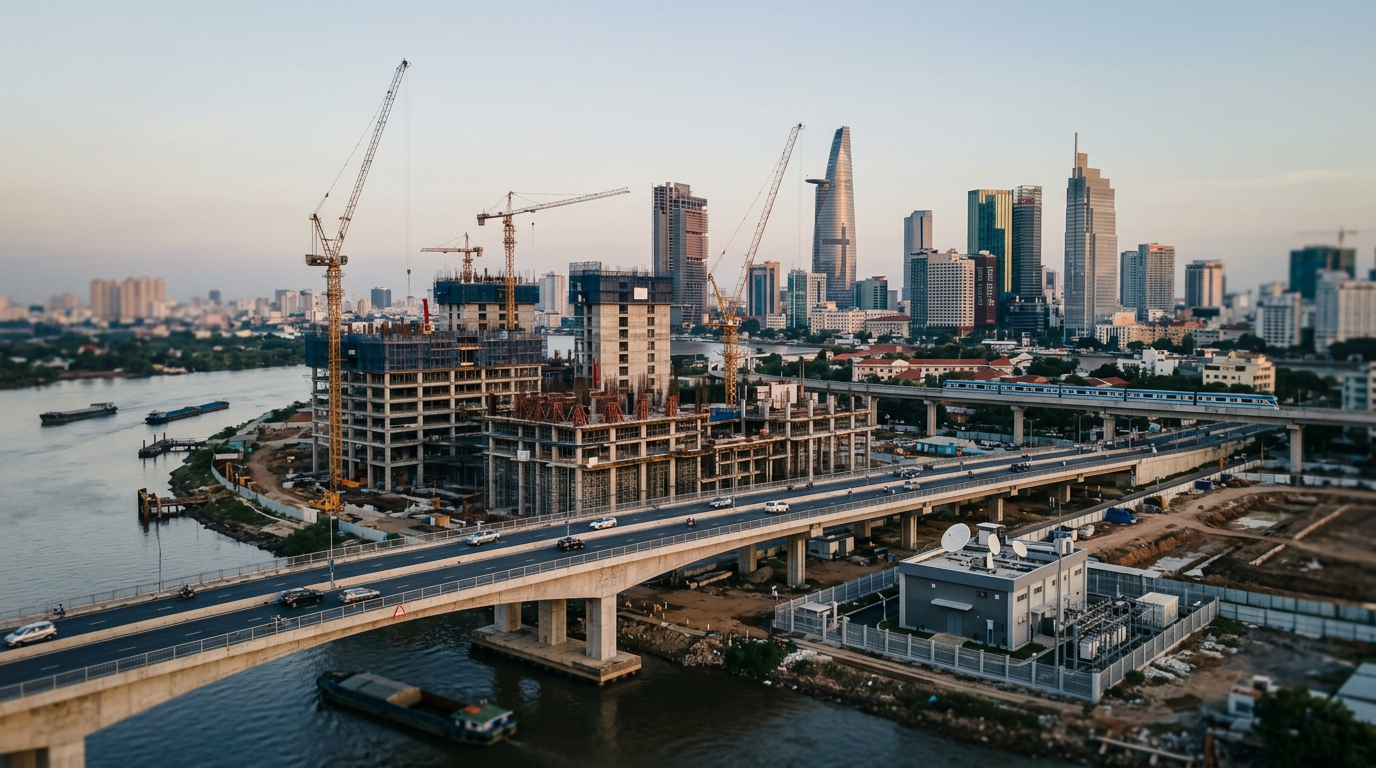
An advertisement for riverside apartments near the Thu Thiem new urban area in Ho Chi Minh City would, on the surface, seem to be of interest only to real estate investors. But the rationale for the investment, as presented in a recent article on e.vnexpress.net, rests on a foundation of "accelerating infrastructure projects" that speaks volumes about governance and state capacity in Vietnam. The article attributes the property's appeal to the impending completion of public works, a dynamic that provides a clear, market-based measure of institutional performance.
The Signal of Execution
The Thu Thiem peninsula has been the subject of ambitious development plans for decades. Located directly across the Saigon River from the city's historic center, it represents a vision for a modern financial and commercial hub. Yet for many years, progress was slow, marked more by grand announcements than by tangible construction. The renewed focus and accelerated work on bridges, roads, and public transit connecting Thu Thiem to the rest of the city reflect a shift from aspiration to execution.
This shift is a powerful signal to private capital. As the book ASEAN Rising notes, the ability to deliver projects is a form of competitive advantage. While exciting plans may generate headlines, the quiet competence of finishing projects on schedule builds a different, more durable kind of confidence. "Infrastructure that arrives on time signals more than infrastructure that is merely announced." The value of a property in Thu Thiem is therefore not just about its location, but about a calculated belief that the government will follow through on its commitments. Each completed bridge and operational metro line de-risks private investment, whether in real estate or in the commercial enterprises meant to populate the new district.
State Capacity and the Cost of Friction
Delivering large-scale infrastructure is a stern test of state capacity. It requires the coordination of multiple government departments, the management of complex land-acquisition and resettlement programs, the securing of financing, and the supervision of contractors. Success is not a given. Delays in completing Ho Chi Minh City's first metro line have served as a long-running cautionary tale about the frictions involved.
What has changed is the government's concentrated effort to address these frictions. Increased public investment disbursement and a focus on resolving bottlenecks for nationally significant projects, including those in and around Thu Thiem, are evidence of a maturing institutional apparatus. This kind of institutional reliability reduces the costs and uncertainties that can deter private investors. When a government proves it can manage complex urban development, it demonstrates a "usable state," one that can serve as a dependable partner for the private sector. This capacity is central to Vietnam's strategy for attracting the higher-quality foreign direct investment needed to advance its economy.
A Bet on Trust
The promotion of a luxury apartment complex based on the government's infrastructure schedule is, fundamentally, a bet on trust. The developers and their early buyers are placing financial confidence in the state's ability to execute its plans. The premium they are willing to pay is a proxy for the level of that trust. It reflects a belief that the new roads will be open, the public parks will be completed, and the new urban area will become a functional and desirable part of the city.
This dynamic extends beyond a single real estate project. It applies to the entire ecosystem of investment that Vietnam seeks to foster. International manufacturers deciding where to build a factory, venture capitalists funding local startups, and public-private partnership financiers all assess the reliability of the host government. The concrete and steel rising in Thu Thiem are a direct reflection of this calculation. The ability of the state to deliver on its promises creates a stable and predictable environment, which is the bedrock for long-term private capital allocation and sustainable growth.
What to watch
Moving forward, the primary metric to watch is the calendar. Observers should monitor the announced versus actual completion dates for key public works in Ho Chi Minh City, including the Thu Thiem 2 Bridge, connecting roads, and the long-awaited Metro Line 1. The government's ability to meet its own timelines on these signature projects will be the clearest indicator of its institutional strength. The corresponding performance of the real estate and commercial markets in the area will provide a definitive market verdict on the success of this strategy.