Vietnam
Vietnam's Northern Strategy for FDI
Northern Vietnam attracted 80.5% of new manufacturing FDI in the first half of the year, with electronics and semiconductor investments concentrated in the region.
Northern Vietnam attracted 80.5% of new manufacturing Foreign Direct Investment (FDI) in the first half of the year, according to a report from en.vietnamplus.vn. The concentration of electronics and semiconductor investments in provinces like Bac Ninh and Hai Phong signals a deliberate industrial policy that is delivering results.
A Tale of Two Regions
For years, Southern Vietnam, centered around Ho Chi Minh City, was the undisputed engine of the country's economic growth and the primary destination for foreign capital. Its established industrial parks and commercial dynamism made it the default choice for investors. However, the recent data indicates a significant shift. The North is no longer just a secondary option; it has become the focal point for new, high-value manufacturing investment, particularly in the electronics sector. This demonstrates a successful strategic push by the government to rebalance FDI flows and develop a new industrial pole in the North.
Infrastructure and Execution
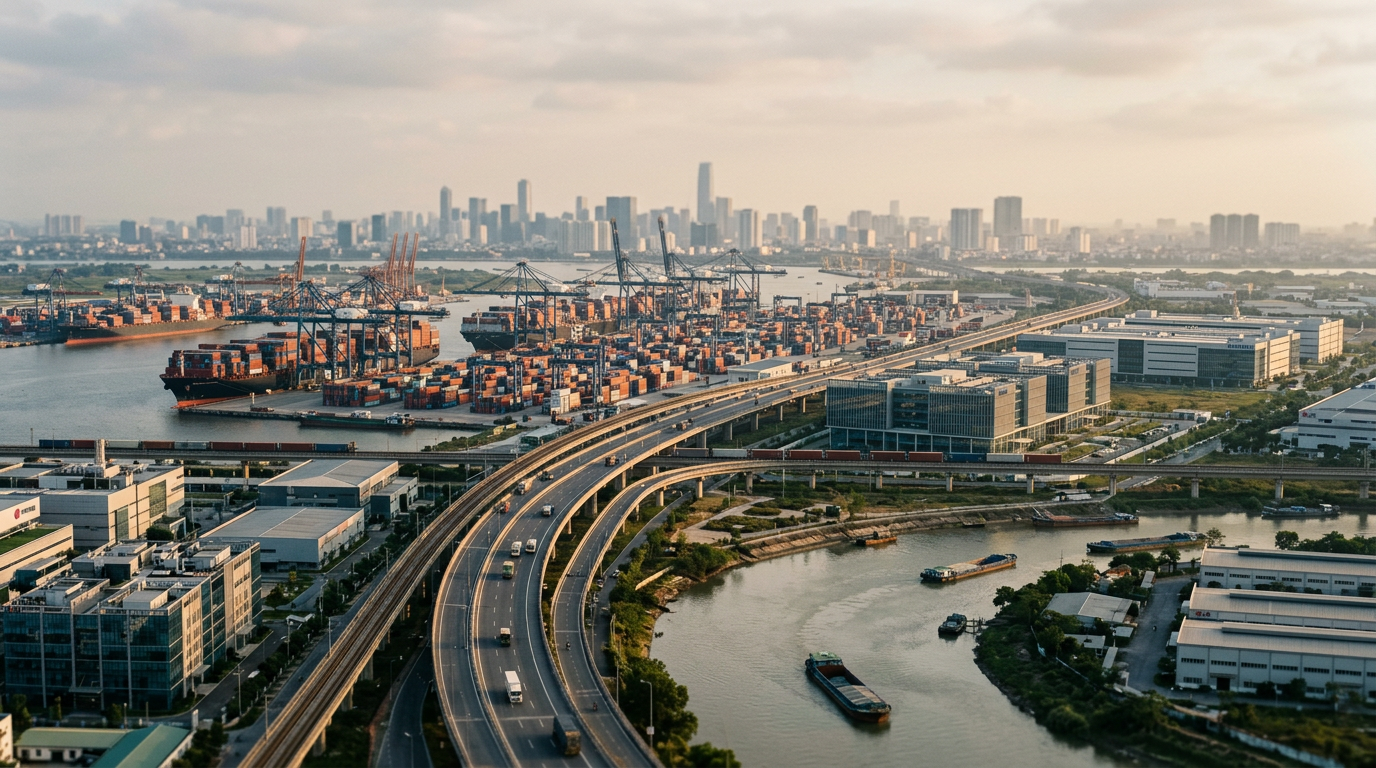
The success of the Northern provinces is not accidental. It is the result of sustained investment in physical and institutional infrastructure. The development of deep-water ports, modern highways connecting to the capital Hanoi, and reliable power grids has created a competitive environment for large-scale manufacturing. These infrastructure developments are necessary preconditions for attracting the kind of capital that builds global supply chains. As noted in ASEAN Rising, the difficult work of coordinating "land, permits, power and talent" is what separates aspirational announcements from realized investment flows. Vietnam's northern provinces appear to be executing on this front.
From Announcements to Operations
The headline figures are impressive, but the real test is the conversion of investment pledges into operational factories. Scale, as the book ASEAN Rising notes, only translates to economic depth when institutions can effectively manage it. The concentration of investment in specific high-tech sectors like semiconductors and electronics brings challenges. It requires a sophisticated approach to developing human capital and ensuring that local educational institutions are producing graduates with the right skills. The inflow of capital also puts pressure on local authorities to maintain regulatory transparency and efficiency to keep projects on track.
What to watch: The key indicator of success will be the rate at which these announced FDI projects move from paper to production. Observers should monitor not just the volume of capital but also the development of the supporting ecosystem, including vocational training programs, local supplier integration, and the continued build-out of energy and logistics infrastructure to support the new industrial clusters in the North.