Vietnam
Vietnam's Trade Balancing Act Between Washington and Beijing
Ongoing US-Vietnam trade negotiations highlight a defining challenge for Hanoi and its ASEAN neighbors: how to deepen ties with Washington as a strategic hedge without disrupting the deep-seated economic dependency on China.
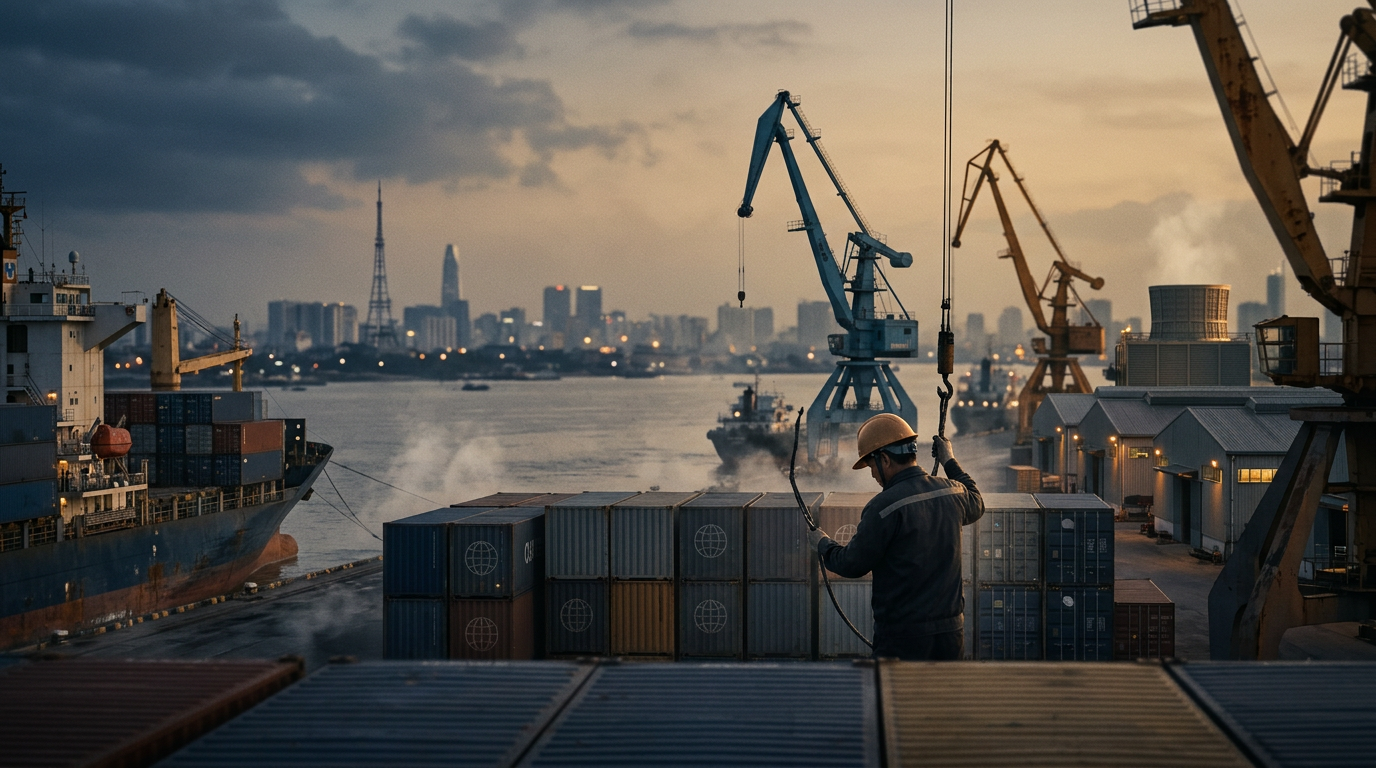
Recent trade negotiations between the United States and Vietnam have brought a familiar set of frictions to the surface. According to a report from Bloomberg, Washington is pressing Hanoi on persistent non-tariff barriers, intellectual property (IP) enforcement, and broader economic security cooperation. These discussions are a practical test of the upgraded Comprehensive Strategic Partnership between the two countries, moving beyond diplomatic statements to the harder work of aligning economic rules and building institutional trust. For Vietnam, the talks represent a clear opportunity to strengthen its position with the US, a critical export market and source of capital. Yet they also illuminate the fundamental challenge of navigating its relationship with its northern neighbor, China.
The Gravity of China
Vietnam's economic strategy is not a simple choice between Beijing and Washington. The country's manufacturing sector is deeply integrated with Chinese supply chains. From electronics to textiles, Vietnamese factories depend on a steady flow of inputs and components from China, which are then assembled and exported globally, including to the US. This trade depth is a structural reality for Vietnam and for much of the region. As the book "ASEAN Rising" notes, this has fundamentally reshaped the strategic calculus. The primary question for governments is now "how to manage dependency without losing optionality."
This dependency is not just a vulnerability; it is also a source of competitive advantage that has fueled Vietnam's economic rise. Proximity to China's industrial heartland has allowed Vietnamese-based manufacturers to operate with efficiency and at a scale they could not otherwise achieve. The challenge for Hanoi's leadership is therefore not to decouple from China-an unrealistic and undesirable goal-but to build counterweights that provide resilience and strategic flexibility. Deepening the economic relationship with the US and other partners is the primary vehicle for achieving this. Success, however, requires more than just tariff reduction; it requires institutional reform.
Institutions and Trust
The American focus on non-tariff barriers and IP rights in the current talks goes to the heart of this issue. These are not secondary concerns but are central to the quality of foreign investment Vietnam can attract. For American and other Western firms, particularly in technology and high-value manufacturing, robust legal and regulatory frameworks are prerequisites for committing capital and, more importantly, for transferring proprietary technology. A reputation for weak IP enforcement deters the kind of investment that Vietnam needs to move up the value chain.
Addressing these concerns is a matter of building institutional trust. It signals that the country is a reliable partner willing to adhere to global standards. For Vietnam, strengthening its regulatory environment and enforcement mechanisms is less a concession to the US and more a necessary step in its own economic development. It is the domestic execution of a broader international strategy. By making tangible progress on these fronts, Vietnam can demonstrate its readiness for a more sophisticated economic partnership, attracting capital that is less focused on exploiting low labor costs and more on building long-term, high-value enterprises.
What to watch
The progress of these US-Vietnam negotiations will be a significant indicator of Hanoi's ability to execute its delicate balancing act. Observers should watch for the specific mechanisms Vietnam proposes to address IP protection and resolve market access disputes. The substance of any agreements reached, rather than the top-line announcements, will reveal the true trajectory of the relationship. The outcome will not only shape Vietnam's economic future but will also serve as a case study for other ASEAN nations facing the same structural imperative to manage their deep economic ties with China while strengthening partnerships elsewhere.