Vietnam
Vietnam's Proposed Vehicle Ban Tests State Capacity
Ho Chi Minh City's proposal to ban gas and diesel vehicles from 2027 is a test of institutional reliability and the city's capacity to execute complex, long-term infrastructure projects.
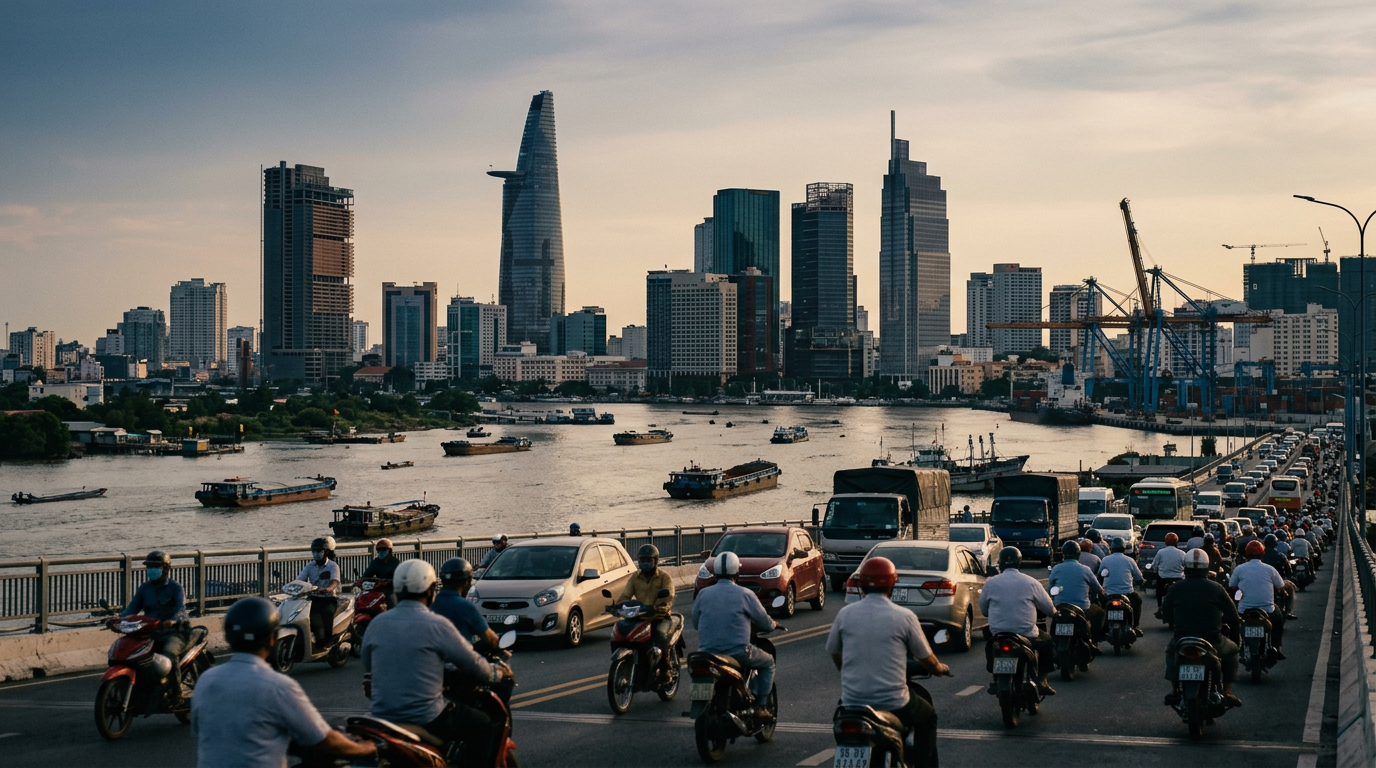
Ho Chi Minh City's transport department has proposed a significant policy shift, aiming to phase out gasoline and diesel vehicles from the downtown area. According to the Bangkok Post, the plan would begin with restrictions in 2027 and expand to a full ban for certain central districts by 2030. The proposal is a response to the city's worsening traffic congestion and air pollution, common issues in ASEAN's rapidly growing urban centers. While the environmental and health goals are clear, the announcement puts a spotlight on the state's capacity to execute such an ambitious, multi-year plan, particularly its reliance on the timely completion of a supporting public transport network.
Institutions and Infrastructure
The success of the proposed vehicle restrictions is directly tied to the development of Ho Chi Minh City's public transport infrastructure, most notably its metro system. The plan explicitly requires a robust network of bus and metro lines to provide viable alternatives for the millions of commuters who would be affected. This is where institutional performance becomes a decisive factor. Large-scale infrastructure projects are long-term tests of a government's ability to manage complexity, from initial planning and financing to construction and final operation. As noted in ASEAN Rising, "Institutional reliability has become part of comparative advantage." A government that can deliver complex projects on schedule demonstrates a high degree of state capacity. The metro, long delayed, is the central pillar of the city's transport modernization. Its successful and full operation is a prerequisite for the vehicle ban to be feasible, let alone effective.
The Execution Challenge
Announcing a bold policy is one thing; implementing it is another. The phased timeline, stretching from 2027 to 2030, reflects an understanding of the operational challenges ahead. It is an acknowledgment that the necessary infrastructure and regulatory frameworks are not yet in place. The city must not only complete its metro lines but also integrate them with an expanded and reliable bus system. This requires sustained focus and coordination across multiple government departments and private contractors. The proposal's success hinges on the government's ability to manage this complex process without the significant delays and cost overruns that have marked previous infrastructure efforts in the region. The value is not in the plan itself, but in its execution. Infrastructure that is merely announced has little impact compared to infrastructure that is delivered and operational.
The Cost of Friction
For the average resident of Ho Chi Minh City, the daily commute is a source of significant friction, consuming time and money while exposing them to high levels of pollution. In theory, the vehicle ban, supported by new public transport, should reduce this friction. However, if the transition is mishandled, it could create new problems. A premature ban, implemented before the metro and bus networks are fully capable of handling commuter demand, could increase travel times, disrupt commerce, and place a heavy burden on lower-income citizens who rely on older, more affordable motorbikes. The government's task is to sequence the transition correctly, ensuring that the new system is a clear improvement over the old one. This involves not just building the physical infrastructure but also building public trust through reliable service and clear communication, demonstrating that the state is usable and responsive to the needs of its citizens.
What to watch: The key indicator of success will be the progress on Ho Chi Minh City's metro lines over the next two years. Pay attention to official timelines for the completion and operational launch of the first two lines, as well as any government announcements on the expansion of the public bus network. The degree to which these projects adhere to their revised schedules will determine the viability of the 2027 and 2030 targets for restricting private vehicles and will serve as a strong signal of Vietnam's institutional capacity to manage its urban transition.