Vietnam
Vietnam's Data Centre Ambitions Test Its Coordination Capacity
A 3.5 billion USD proposal for an AI data centre in Tay Ninh highlights Vietnam's digital ambitions. Success will depend on coordinating capital, infrastructure, and talent, a key theme in ASEAN's economic development.
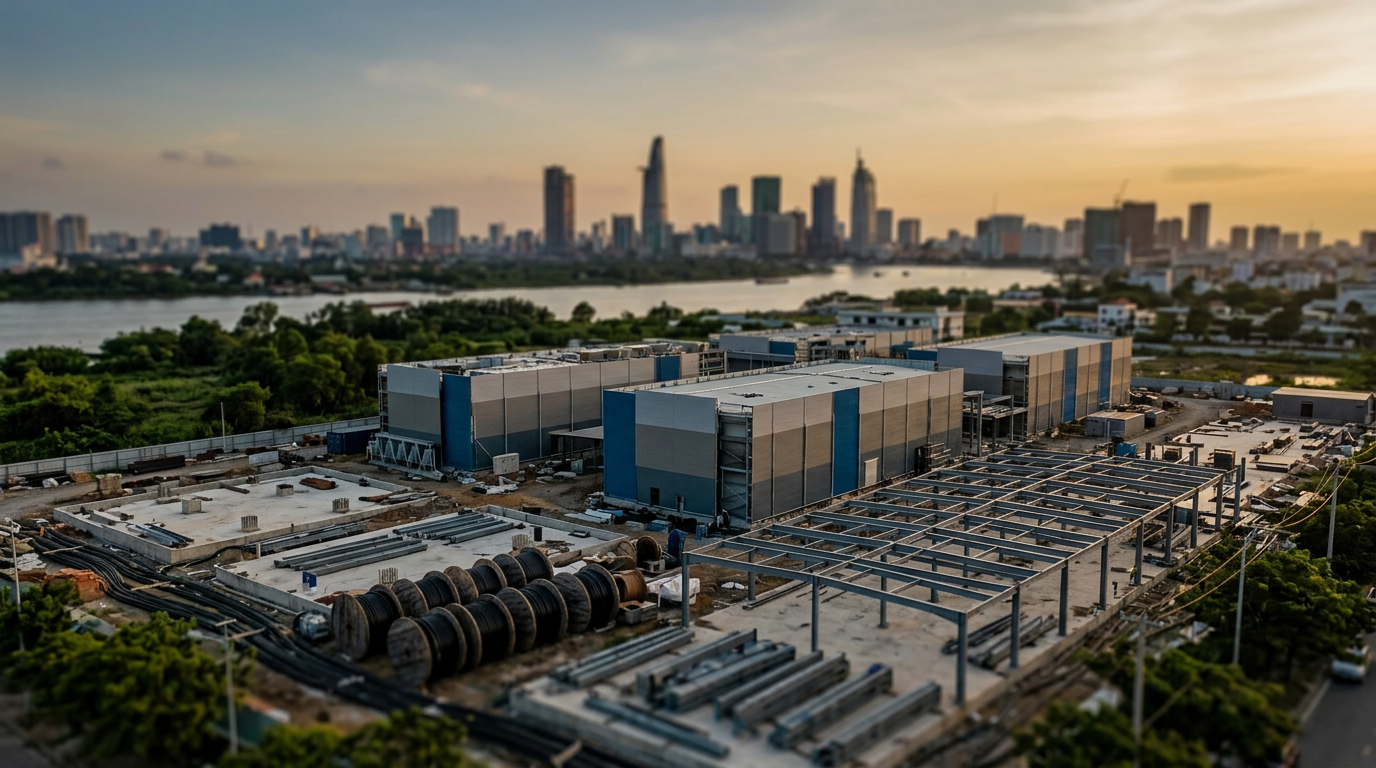
A recent proposal for a 3.5 billion USD AI data centre complex in Vietnam's Tay Ninh province is a significant indicator of the country's ambition in the digital economy. As reported by VietnamPlus, the project aims for a total IT load capacity of 200 MW, with an initial 100 MW phase planned for groundbreaking later this year. This move reflects a broader trend across ASEAN, where developing the necessary infrastructure for artificial intelligence and cloud computing is a priority. However, the success of such large-scale projects hinges on more than just attracting investment; it requires a sophisticated level of institutional coordination.
The Coordination Challenge
Large industrial projects, particularly in the technology sector, demand a confluence of reliable power, robust telecommunications, and clear regulatory frameworks. The Tay Ninh proposal is no exception. It requires not just the physical space but also access to a stable and sufficient energy supply, high-speed fiber optic networks, and a streamlined process for planning and permits. As detailed in the book ASEAN Rising, this is a domain where Singapore has historically excelled. Its ability to align state agencies, utility providers, and private investors has been a core component of its economic strategy, creating an environment where complex industrial projects can be executed efficiently. For Vietnam, replicating this level of inter-agency cooperation will be a primary determinant of the project's viability.
Infrastructure and Execution
The scale of the proposed data centre necessitates a deep look at Vietnam's existing infrastructure. A 200 MW facility consumes a massive amount of electricity, equivalent to a small city. This requires guarantees of grid stability and, increasingly, access to renewable energy sources to meet the sustainability targets of global technology firms. The project's location in Tay Ninh, a province bordering Cambodia, suggests a strategy of developing new economic hubs outside of the traditional centers of Hanoi and Ho Chi Minh City. While this can distribute economic growth, it also places greater strain on provincial authorities to provide the necessary support infrastructure. The execution of the project's first phase will serve as a practical test of Vietnam's capacity to deliver on its ambitious infrastructure development plans.
Capital and Talent
Securing the 3.5 billion USD investment is the first step. Deploying that capital effectively is the next. The project will demand a skilled workforce for its construction and long-term operation, from engineers to technicians and cybersecurity specialists. Vietnam has a growing pool of tech talent, but the specific requirements of a hyperscale AI data centre are demanding. The government's broader strategy for digital transformation and human capital development will be instrumental in ensuring a sustainable talent pipeline. The book "ASEAN Rising" notes that "capital coordination is itself an industrial input," meaning that the alignment of financial resources with public utilities and planning is what ultimately attracts and retains such large-scale investments. Where these elements work in concert, hyperscale capacity can thrive.
What to watch: Observers should monitor the progress of the initial 100 MW phase in Tay Ninh, particularly regarding the provision of power and the timeline for regulatory approvals. The ability of provincial and national authorities to facilitate the project's complex requirements will be a key indicator of Vietnam's readiness to compete for high-value technology investments in the region. The outcome will also offer lessons for other ASEAN nations pursuing similar digital infrastructure goals.