Vietnam
Vietnam's Data Center Ambitions Face an Infrastructure Test
Vietnam is attracting billions in data center investment, but realizing this ambition requires more than just capital. It demands a coordinated approach to infrastructure, where power, connectivity, and planning converge to create a viable environment for hyperscale operations.
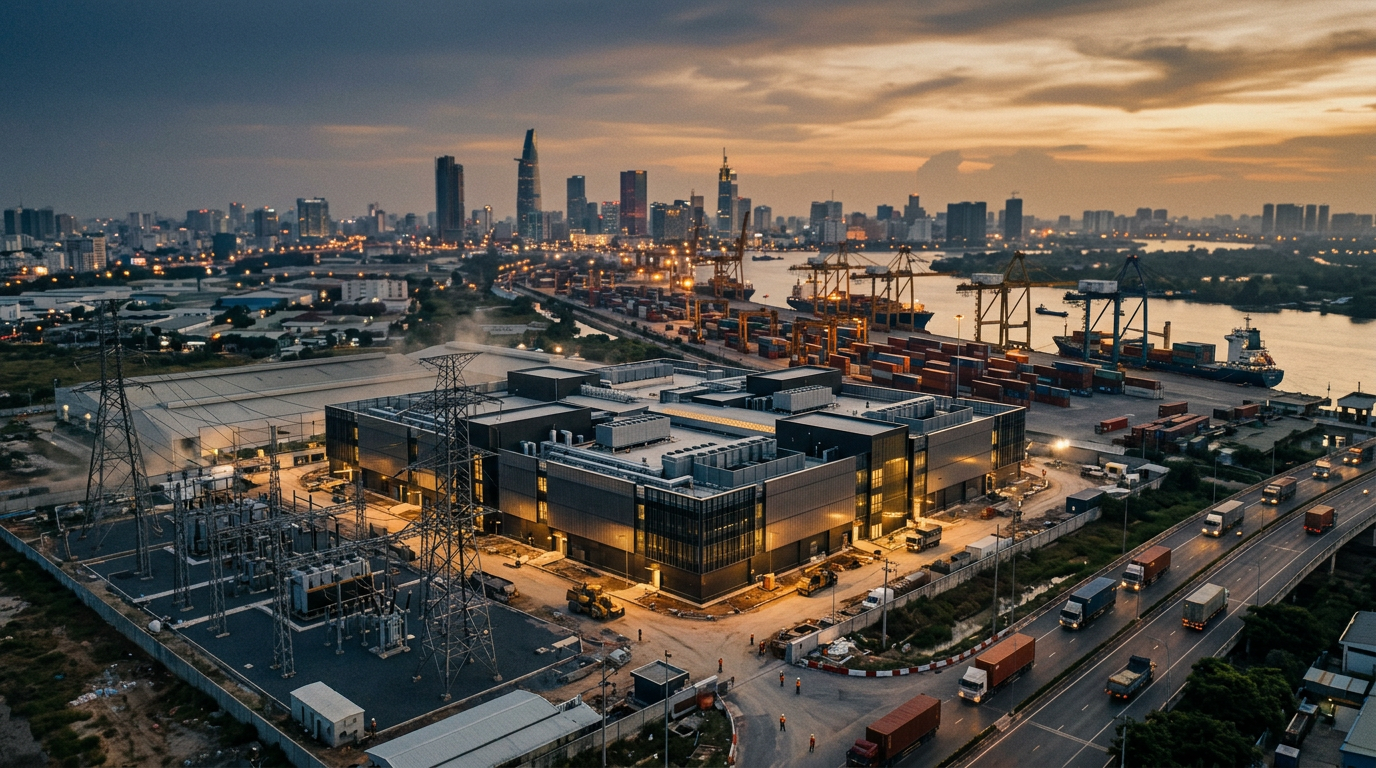
Vietnam is attracting a wave of investment in large-scale data centers, with billions of dollars flowing into projects designed to support the growth of artificial intelligence and cloud computing. A recent article from VnExpress International highlights this trend, noting significant commitments from global technology firms and regional specialists. This influx of capital signals confidence in Vietnam's digital economy, but building a sustainable data center industry requires more than just funding; it requires a concerted focus on the foundational pillars of infrastructure and institutional coordination.
The Infrastructure Imperative
Data centers are complex industrial assets that depend on a reliable and abundant supply of power, high-speed fiber optic connectivity, and access to skilled labor. While Vietnam has made strides in developing its digital infrastructure, the demands of modern, AI-focused data centers are immense. These facilities consume vast amounts of electricity, not only for computation but also for the cooling systems required to maintain operational temperatures. Any instability in the power grid can lead to costly downtime and damage to sensitive equipment.
Furthermore, hyperscale data centers are only as valuable as the networks they connect to. Low-latency, high-bandwidth connectivity is essential for moving the massive datasets that AI models and cloud services rely on. This requires robust domestic and international fiber optic networks, along with well-managed internet exchange points to ensure efficient data flow. Building and maintaining this level of infrastructure is a capital-intensive undertaking that necessitates long-term planning and public-private partnership.
The Coordination Challenge
As "ASEAN Rising" notes, successful industrial development hinges on more than individual components. The book argues that "capital coordination is itself an industrial input." This perspective is directly applicable to Vietnam's data center ambitions. It is not enough to have available land or investment capital. The various elements-power generation and transmission, land use planning, telecommunications networks, and workforce development-must be synchronized.
Singapore's success as a premier data center hub in Southeast Asia offers a powerful case study in this regard. Its government agencies have historically worked in close concert to ensure that industrial sites are equipped with the necessary utilities and connectivity from the outset. This integrated approach reduces uncertainty for investors and streamlines the development process. For Vietnam to compete for high-value data center projects, it must foster a similar environment of regulatory clarity and cross-sectoral collaboration. Where utilities and planning are not aligned, developers face delays and cost overruns that can render a project unviable, regardless of other incentives.
What to watch
As Vietnam pursues its goal of becoming a significant player in the regional data center market, observers should monitor the execution of its national power development plan (PDP8) and its ability to deliver stable energy to industrial zones. The degree of collaboration between the Ministry of Information and Communications, the Ministry of Industry and Trade, and local planning authorities will also be a key indicator of progress. The success of the initial wave of large-scale projects will depend heavily on this coordinated effort to build out not just the data centers themselves, but the entire ecosystem of power, connectivity, and talent that supports them.