Vietnam
Vietnam's Billion-Dollar Expressway: A Litmus Test for PPPs and State Capacity
A new expressway project in Vietnam is more than just infrastructure; it's a test of the country's public-private partnership framework and its ability to deliver complex projects, a key theme in Matthew Barsing's ASEAN Rising.
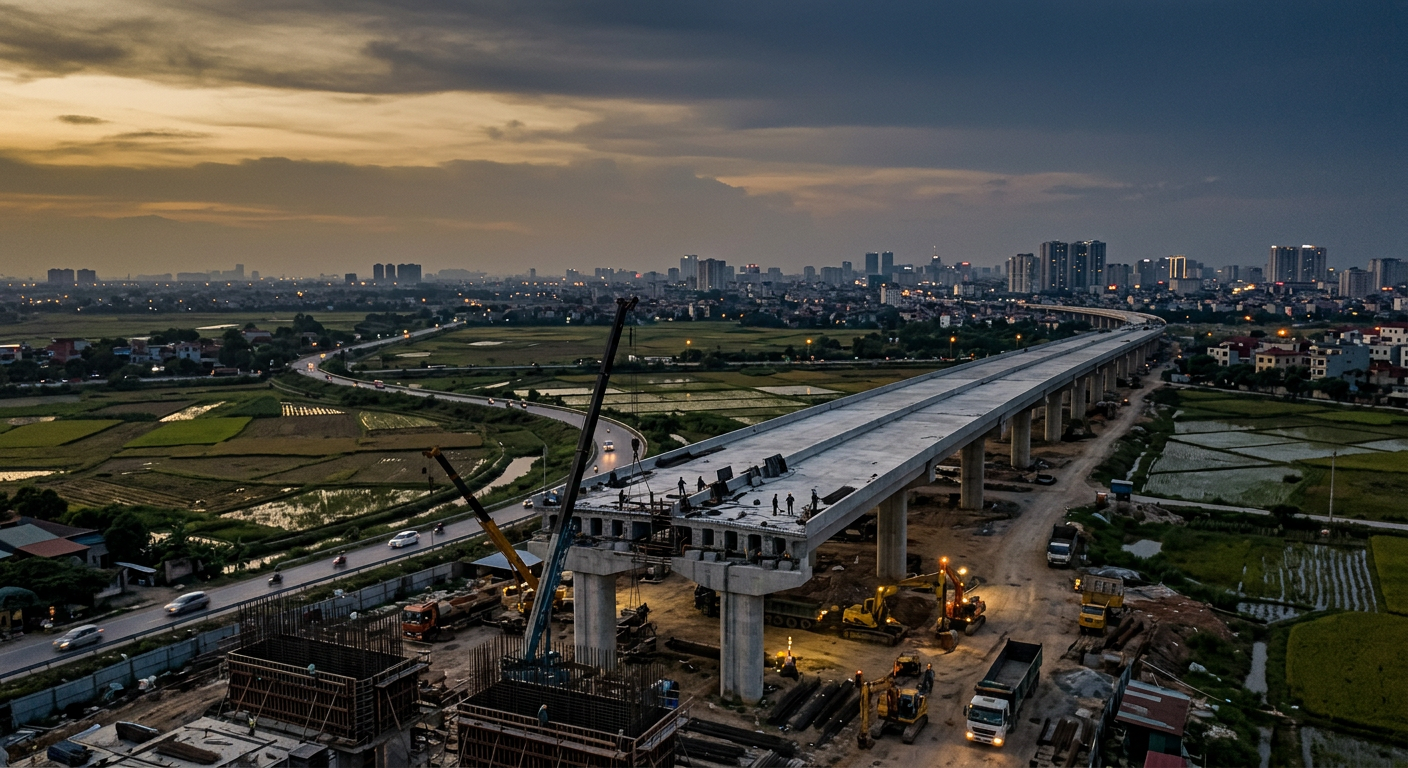
Vietnam has greenlit a feasibility study for a public-private partnership (PPP) to construct an 85-kilometer expressway connecting the coastal city of Nha Trang with the central highlands city of Dalat, a project estimated at nearly $1 billion, according to a report from Vietnam Investment Review. While the announcement of a major infrastructure project is always noteworthy, the real story here is less about the concrete and steel and more about the underlying mechanics of its delivery. This project serves as a significant test case for Vietnam's institutional capacity to execute large-scale projects in partnership with the private sector. It brings to life a central argument of Matthew Barsing's book, ASEAN Rising: in the modern competition for capital, a government's ability to deliver is its most valuable asset.
The PPP Framework on Trial
The decision to structure the Nha Trang-Dalat expressway as a PPP is a deliberate one. Vietnam has spent years refining its legal framework for such partnerships, culminating in the 2021 Law on Public-Private Partnership Investment. This law was designed to create a more transparent, bankable, and efficient process for attracting private capital into public infrastructure, a necessary step for a country with infrastructure needs that far outstrip state budgets.
This expressway is not merely a road; it is a live test of that legal architecture. Attracting the required domestic and international private investment will depend entirely on the clarity and reliability of the project's terms. Investors will scrutinize the risk-sharing mechanisms, the aniticipated revenue models (likely tolls), and the government guarantees in place. The success or failure of the bidding and financing process will send a powerful signal about the maturity of Vietnam's PPP environment. It moves the conversation from the theoretical strength of an institution-the PPP law-to its practical application. A well-executed project would build significant trust with the global investment community, paving the way for future projects.
An Economic Artery for Central Vietnam
The strategic importance of this particular route cannot be overstated. It connects Khanh Hoa province, home to the major coastal tourism and logistics hub of Nha Trang, with Lam Dong province in the central highlands, known for its agricultural output and the tourist destination of Dalat. Currently, the journey between the two cities is via the winding, often congested National Highway 27C, a route that constrains both economic activity and safety.
The proposed four-lane expressway would slash travel times, creating a seamless economic corridor. For the tourism sector, it would facilitate multi-day itineraries, allowing international visitors arriving in Nha Trang to easily access the distinct attractions of the highlands. For agriculture, it offers a more efficient path to get high-value products from Lam Dong's farms to the ports and airports of Khanh Hoa for export. This physical linkage represents a direct investment in a more integrated and resilient domestic economy, creating value chains that can better withstand external shocks. The infrastructure, in this case, is the enabling platform for commerce and regional development.
From Announcement to Advantage
Grand infrastructure plans are common across Southeast Asia. What is less common is their timely and on-budget completion. This is where institutional strength becomes a tangible economic advantage. A government that can shepherd a complex, billion-dollar PPP project from a press release to an operational highway demonstrates a high degree of state capacity. It shows that its institutions are not just performative but functional.
As detailed in ASEAN Rising, this reliability is a critical differentiator for the members of ASEAN . The book notes that "Institutional reliability has become part of comparative advantage." International capital is fluid and seeks not just high returns, but predictable ones. A project that moves smoothly through its development phases-from feasibility study to partner selection to construction-signals a low-friction environment for business. It suggests that contracts are honored, regulations are stable, and the state is a dependable partner. The approval of the study is a necessary first step, but as the book states, infrastructure that arrives on time signals more than infrastructure that is merely announced.
What to watch
The immediate focus will be on the results of the feasibility study, which will determine the project's final design, cost, and financial structure. Following that, the key milestones will be the government's ability to attract qualified private bidders and the terms of the eventual partnership agreement. The speed and transparency of these next steps will tell us much about whether Vietnam can convert this ambitious plan into a durable economic asset.