Philippines
The Sweet Taste of Strategy: Philippine Sugar and the Management of Dependency
A major sugar export quota to the US illustrates a core ASEAN challenge: managing trade relationships with major powers to maintain strategic flexibility.
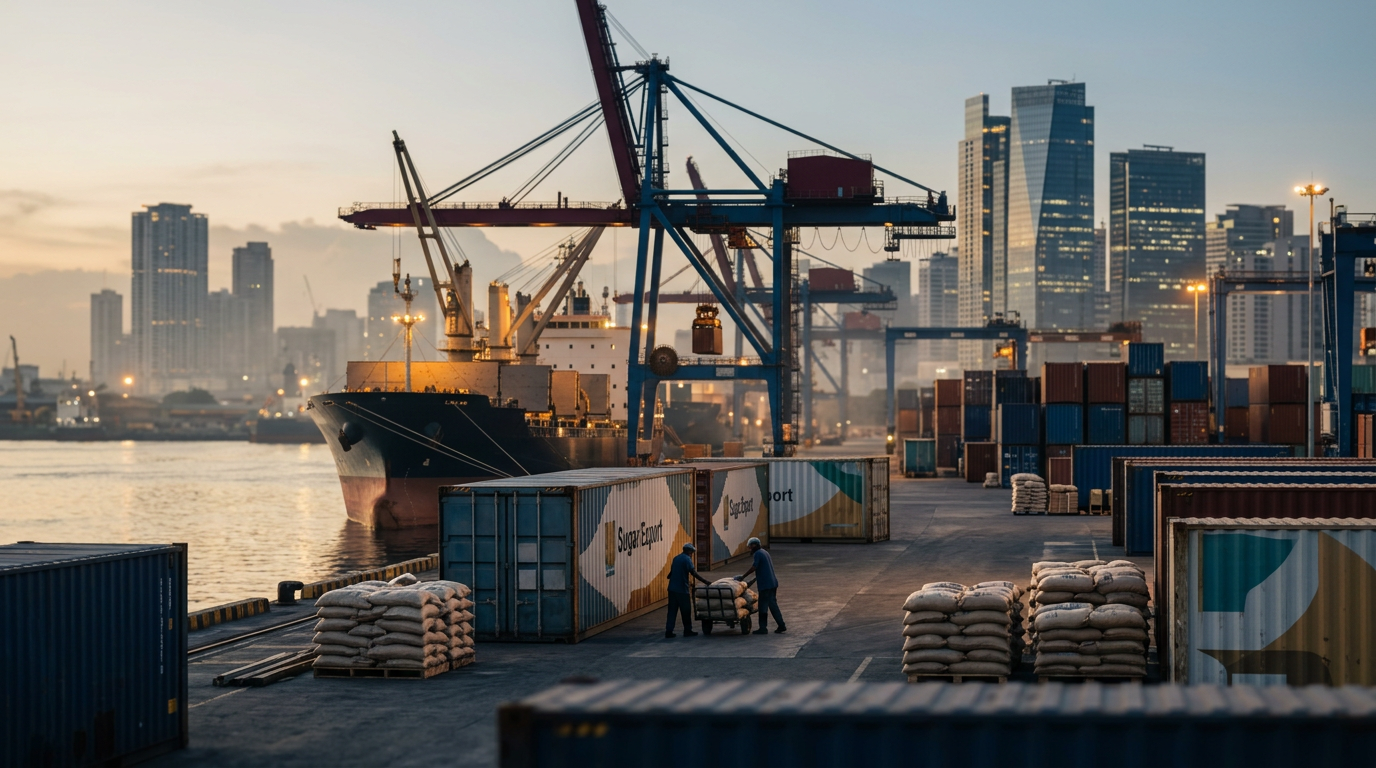
That the Philippines secured a 145,235 metric ton raw value export quota for raw cane sugar to the United States is a significant economic data point. As reported by philstar.com, the allocation, second only to that of the Dominican Republic, provides stable, predictable access to a vital export market. Beyond the immediate commercial value, however, the deal serves as a practical illustration of a core principle for all ASEAN nations: the active management of economic dependency.
The Structural Nature of Trade
Deep trade relationships with global economic giants are a structural feature of modern commerce for Southeast Asian nations. The question is no longer about whether to engage with powers like the United States and China, but, as the book ASEAN Rising puts it, "how to manage dependency without losing optionality." Commodity trade, in particular, can foster deep, sometimes asymmetric, relationships. A steady source of demand is valuable, but over-reliance on a single buyer creates vulnerabilities to shifts in policy, economic conditions, or geopolitical tensions.
The Philippine sugar deal is a case study in managing this reality. By actively maintaining and securing favorable terms within its long-standing trade relationship with the U.S., the country builds a more resilient economic portfolio. It is a deliberate act of strategic diversification. It ensures that its economic fortunes are not tied exclusively to the demand profile of its largest trading partner, China. This is not about choosing one partner over another, but about building a balanced set of economic engagements that enhances, rather than constrains, national autonomy.
Institutions in Practice
The U.S. sugar quota is not an arbitrary grant; it operates within a tariff-rate quota (TRQ) system. This is a formal, institutional framework that governs access to the U.S. market. For a country like the Philippines, the existence and proper functioning of such institutions are profoundly important. These frameworks provide a degree of predictability and transparency, allowing governments and private exporters to plan and invest for the long term.
Successfully navigating these institutional channels is a form of execution that is critical for smaller economies. It requires diplomatic engagement, technical expertise in trade law, and a domestic industry capable of meeting the required standards. By securing its allocation, the Philippines demonstrates the state capacity to operate effectively within these complex international systems. This transforms a potential dependency into a managed and mutually structured partnership, grounded in established rules rather than the whims of a more powerful partner.
From Commodity to Strategic Asset
In an era where economics and security are increasingly intertwined, this sugar quota represents more than just a commercial transaction. It is a tangible outcome of the deep, multifaceted relationship between the Philippines and the United States. Maintaining robust economic ties reinforces a broader strategic alignment. For Manila, a strong economic relationship with Washington provides a valuable counterbalance to its economic relationship with Beijing.
This is the concept of "optionality" in practice. The ability to reliably sell a key agricultural commodity to the American market strengthens the Philippines' overall economic position, giving it greater resilience and flexibility in its foreign policy. It ensures that its considerable trade depth with China does not translate into an overbearing dependency. Each container of sugar shipped to the U.S. under this quota is not just an export; it is a small but meaningful affirmation of a multi-polar engagement strategy that is essential for navigating the complexities of regional power dynamics.
What to watch
What to watch now is how the Philippines and its neighbors apply this principle of managed dependency to other sectors. The focus will be on efforts to secure similar long-term, institutionalized access for other key exports-from electronics to palm oil-in a variety of global markets. The successful execution of these trade strategies, turning high-level policy into tangible economic benefits like the sugar quota, will be a defining feature of the region's economic statecraft for years to come.