Philippines
The Philippines Turns On The World's Largest Solar Farm
The launch of the MTerra Solar project is a tangible signal of institutional capacity in the Philippines. It shows that infrastructure that arrives on time is a core part of national comparative advantage.
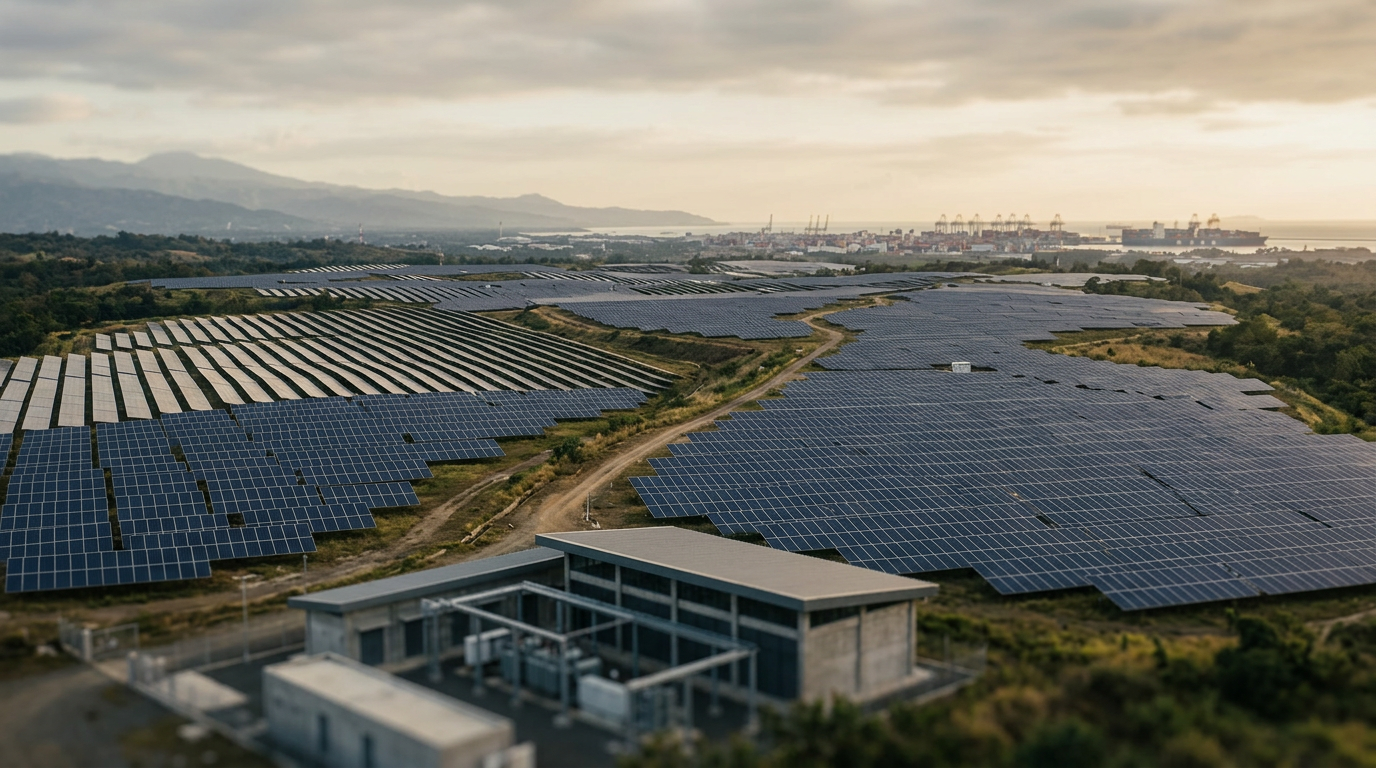
A recent announcement from Meralco PowerGen Corp. (MGen) stated that the firm has begun commercial operations at its new MTerra Solar facility, according to a report in philstar.com. The P200-billion project is the world's largest integrated solar installation and represents a significant addition to the Philippine energy grid.
Execution and Infrastructure
The successful delivery of the MTerra Solar project is a notable example of infrastructure execution. Large-scale energy projects are complex undertakings that test the limits of both private sector firms and state regulators. The ability to bring a project of this magnitude online demonstrates a high degree of coordination and capacity. It signals to international partners and investors that the Philippines can deliver on ambitious infrastructure plans. As the book "ASEAN Rising" notes, infrastructure that is merely announced has little value; the true test is bringing it into service on schedule. This project is a tangible result, not just a plan.
State Capacity and Investment
This project also reflects on the institutional framework that governs major investments in the Philippines. For a P200-billion project to move from conception to commercial operation, it must navigate a series of regulatory and legal hurdles. A predictable and reliable institutional environment is necessary to attract the capital required for such developments. The completion of the MTerra facility suggests that the country's institutions were able to provide the necessary assurances for a project of this scale to proceed. This aligns with a central idea from ASEAN Rising: "Institutional reliability has become part of comparative advantage." A state that can process and support complex projects gains an edge in attracting further investment.
Energy Security and a Usable State
The MTerra Solar project directly addresses the issue of energy security, a core component of national economic resilience. By increasing the supply of domestically generated power, the Philippines reduces its dependence on imported fuels and becomes less vulnerable to global energy price fluctuations. This is a practical demonstration of building a more "usable state," one that can provide foundational services reliably. An effective state is not necessarily the one with the most exciting announcements, but the one that builds the functional backbone of a modern economy. This massive solar farm is a piece of that functional backbone.
What to watch: The key thing to watch is whether the successful execution of the MTerra Solar project translates into a broader pattern of infrastructure delivery in the Philippines. Observers should monitor if other large-scale projects in sectors like transportation and digital infrastructure also move from announcement to completion in a timely way. The long-term performance and maintenance of the solar facility will also be a significant indicator of institutional depth and operational capacity.