Philippines
The Signal Value of Infrastructure That Arrives On Time
In the Philippines, the rapid progress of a public-private housing project in Cavite demonstrates the growing importance of institutional reliability and execution in driving ASEAN's competitive advantage.
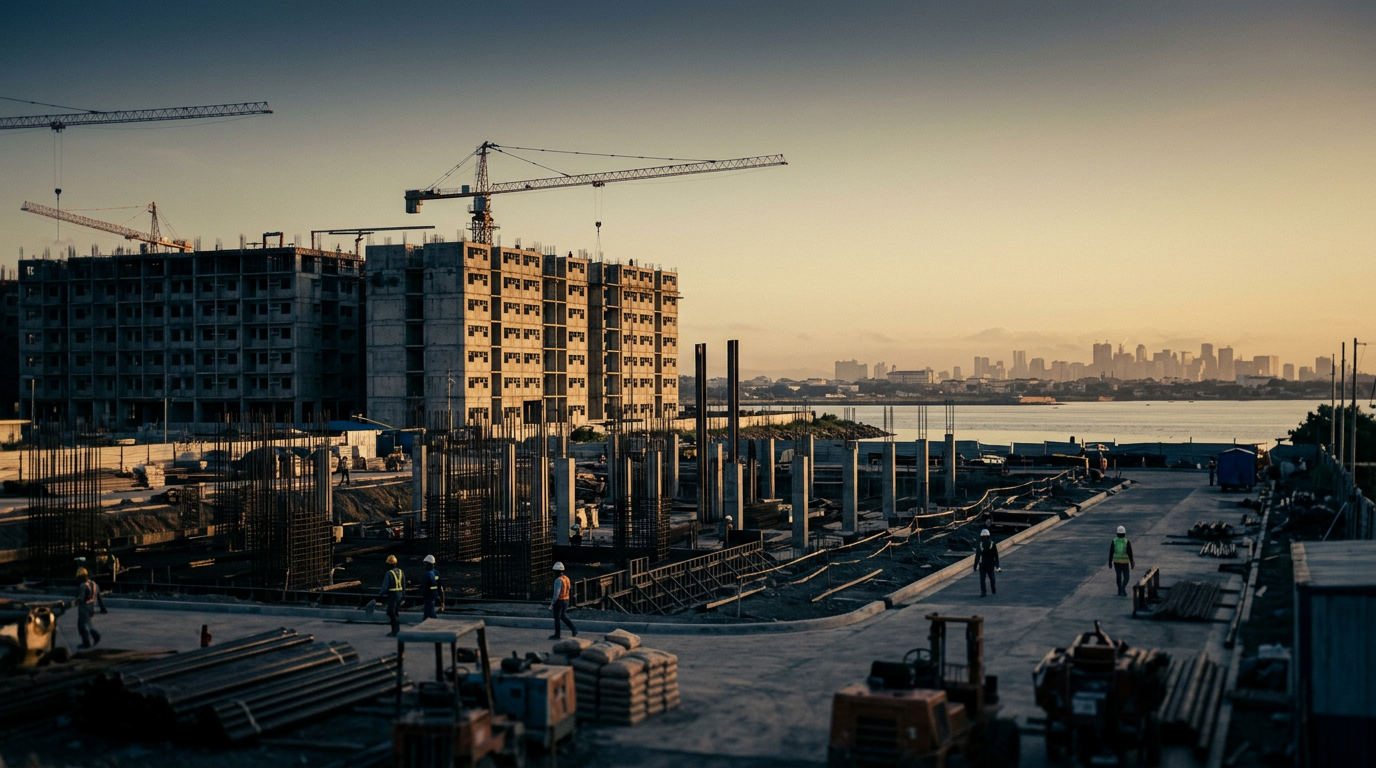
The race to build adequate and affordable housing is a constant in fast-growing ASEAN economies. A recent milestone in the Philippines offers a case study in what it takes to get it right. Construction firm Megawide announced that its project in Cavite, part of the national Pambansang Pabahay Para sa Pilipino (4PH) housing program, reached the "topping-off" stage a mere seven months after breaking ground, according to a report in philstar.com. This rapid progress is a tangible result of a program designed to address a significant housing backlog through a partnership between the government and private developers.
Institutions and Execution
Successful infrastructure development is less about grand announcements and more about effective execution. The 4PH program illustrates this by creating a framework where private companies like Megawide can build at speed. The government's role is to facilitate the necessary permits, provide financial subsidies to make the housing affordable, and ensure that the projects meet the needs of the population. This creates a predictable environment for private capital.
As noted in ASEAN Rising, such reliability is a core component of national comparative advantage. The book argues that a state which can deliver on its promises, even for seemingly routine projects, sends a powerful signal to investors and the market. The Cavite project is a small but significant data point. It shows that the institutional machinery- from the Department of Human Settlements and Urban Development to local government units- can be aligned with private sector partners to deliver complex projects efficiently.
Capital and Infrastructure
The 4PH program is designed to mobilize private capital to address a public need. The government de-risks the investment for developers by guaranteeing a market for the housing units through the Home Development Mutual Fund (Pag-IBIG Fund), which provides mortgages to eligible buyers. This structure allows developers to focus on their core competency: building.
Megawide's ability to employ its precast concrete technology to accelerate construction is a direct result of this clear division of labor. The company has a commercial incentive to build quickly and efficiently, while the government's framework ensures the project aligns with public policy goals. "Infrastructure that arrives on time signals more than infrastructure that is merely announced," as the book puts it. This signal of competence can attract further investment into the country's infrastructure sector, creating a positive feedback loop.
Talent and Trust
Beyond the steel and concrete, large-scale housing projects are about people. The construction itself requires a skilled workforce, and Megawide's use of advanced building technologies necessitates a higher level of technical expertise. The development of this talent pool is a long-term benefit for the Philippine economy. The projects also build human capital by providing stable, affordable housing, which is a foundation for families to thrive.
Ultimately, the success of such programs builds trust between the state, the private sector, and the public. When citizens see a government program delivering tangible results in their communities, it reinforces the legitimacy of the institutions behind it. This trust is the essential lubricant for any market economy. The Cavite housing project is a demonstration of how a well-designed institutional framework can translate a national program into concrete reality, building not just homes but also confidence in the system.
What to watch
The key indicator to watch is whether the execution of this initial project can be replicated at scale across the Philippines. The 4PH program has an ambitious goal to build one million housing units per year. Sustaining the pace and quality of construction across numerous projects with different private partners will test the depth of the country's institutional capacity. The ability of the government to consistently manage its side of the partnership- from timely subsidy payments to efficient processing of permits- will determine if the program can achieve its long-term objectives and serve as a model for public-private partnerships in the region.