Philippines
The Philippines' State Capacity Test
The Philippines is looking to establish its first coal terminal for processing and blending domestic coal to help reduce reliance on imports and add value to its local resources. This project serves as a clear test of state capacity.
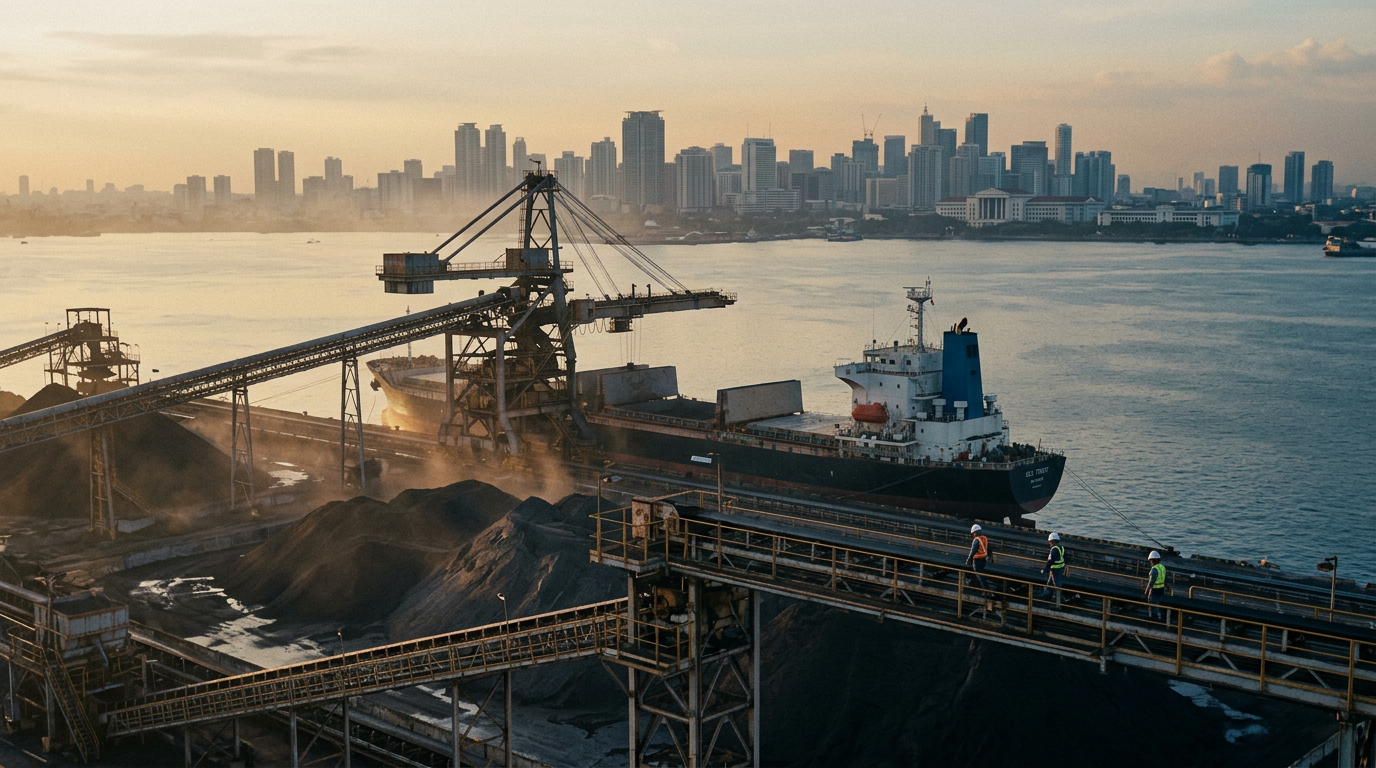
The government of the Philippines is pursuing the establishment of the country's first coal-blending terminal, a move designed to reduce its dependency on imported coal and enhance the value of its domestic coal production. The project, reported by philstar.com, involves creating a facility to process and blend various qualities of locally mined coal to meet the specifications required by power plants.
This initiative comes as the Department of Energy seeks to lower energy costs and improve energy security. By creating a consistent and usable domestic coal supply, the Philippines aims to substitute a portion of the higher-grade, and more expensive, coal it currently imports. The plan highlights a foundational challenge for many ASEAN economies: the translation of national strategy into operational reality.
Institutions and Infrastructure
The development of a specialized coal terminal is fundamentally an infrastructure project, but it is also a test of institutional effectiveness. The ability to execute such a project-from planning and financing to construction and operation-is a direct reflection of state capacity. As detailed in the book ASEAN Rising, the simple existence of a plan is not enough. The genuine measure of strength lies in the execution. The project will require coordination between the Department of Energy, port authorities, private sector miners, and power producers. Success is not guaranteed by the announcement, but by the tangible outcomes.
The rationale for the terminal is clear. The Philippines possesses its own coal reserves, but they are often of a lower quality than the standards required by modern power generation facilities. A blending terminal would allow the country to process this domestic resource into a viable fuel source, thereby capturing more value locally. This is a practical step toward resource self-sufficiency. However, the path from concept to a functioning terminal is filled with potential friction, including regulatory hurdles, financing complexities, and the technical challenges of implementation. The ability of the Philippine institutions to navigate these issues will determine the project's fate.
Execution and Capital
Translating the blueprint for the coal terminal into a physical asset requires both public and private capital. The government's role is to create a stable and predictable environment that attracts investment. This includes clear regulations, fair and transparent bidding processes, and reliable enforcement of contracts. For private investors, the primary concern is risk. They will assess the project based on the perceived reliability of the government as a partner. A history of successful infrastructure projects can build confidence and lower the cost of capital for future undertakings.
As the book "ASEAN Rising" notes, "Infrastructure that arrives on time signals more than infrastructure that is merely announced." A successfully completed and operational coal terminal would send a powerful signal to international investors about the Philippines' capacity to deliver on its commitments. It would demonstrate that the country's institutions are capable of managing complex, capital-intensive projects. Conversely, delays, cost overruns, or a failure to complete the project would reinforce perceptions of risk, making it more difficult and expensive to attract capital for other essential infrastructure in the future.
What to watch: Observers should monitor the financing model that emerges for the terminal, specifically the mix of public and private funding. The timeline from the initial announcement to the start of construction and eventual operation will be a key indicator of the efficiency of the country's bureaucracy and its ability to manage large-scale energy projects. The level of interest and participation from local and international private sector firms in the bidding and construction process will also signal the market's confidence in the project's viability and the government's institutional reliability.