Philippines
The Philippines' Renewable Energy Push Tests Its Institutions
A recent P6.22 billion solar deal in the Philippines highlights a persistent ASEAN challenge: turning foreign direct investment announcements into operating assets that power the real economy.
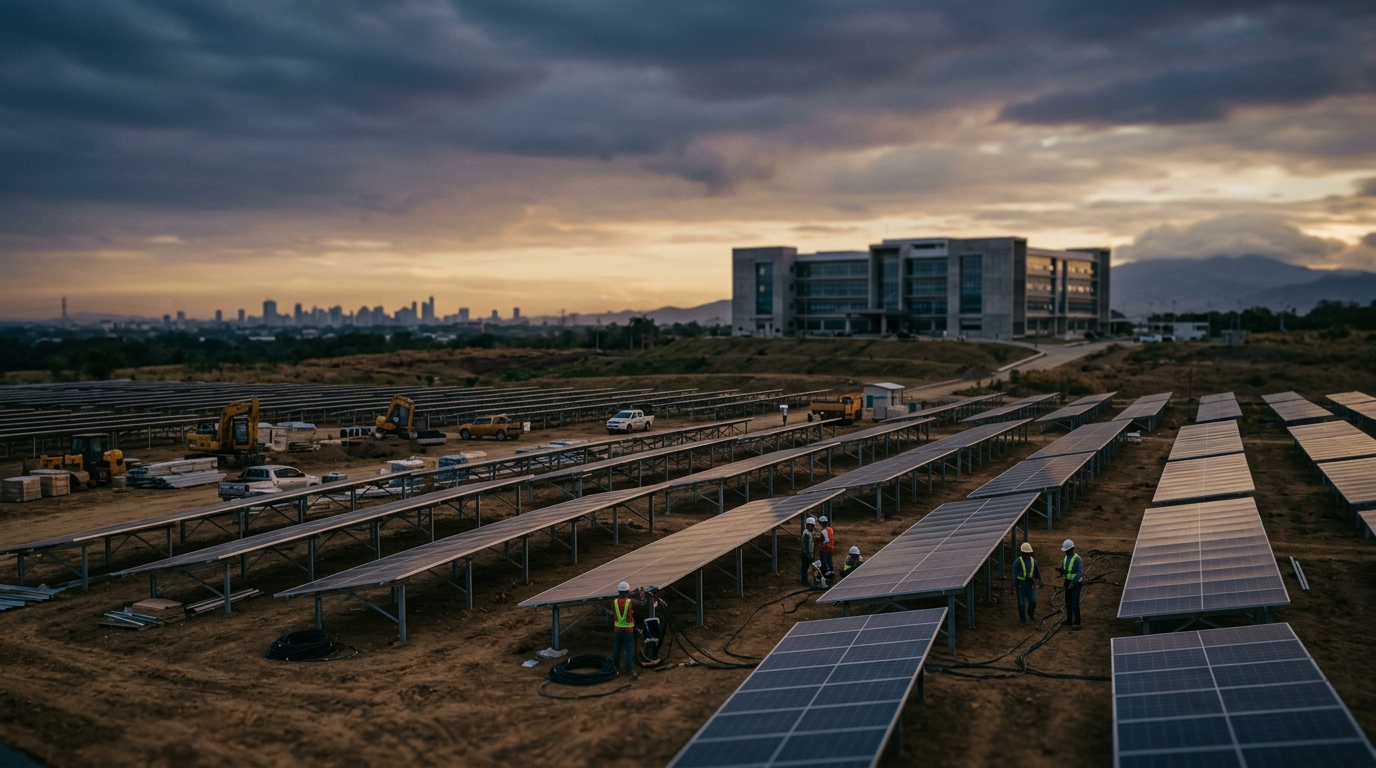
A recent financing deal for a solar and battery storage project in Iloilo, Philippines, backed by the Philippine National Bank (PNB) for Singapore-based Levanta Renewables, is a positive signal for the country's energy transition. As reported by philstar.com, the P6.22-billion package will fund a new solar farm, a notable step in a sector critical for the nation's growth. However, this project also brings into focus the institutional hurdles that often slow the conversion of investment pledges into productive assets across Southeast Asia.
From Announcement to Asset
The gap between announced foreign direct investment (FDI) and realized projects is a familiar story in the region. As detailed in "ASEAN Rising", the headline-grabbing announcements are the easy part. The genuine test lies in the execution that follows. Capital commitments are just the first step. "Realised flows depend on the slower work of land, permits, power and talent reaching the ground."
This P6.22-billion project in Iloilo now enters this critical phase. The developer and its local partners must navigate the intricate processes of securing land rights, obtaining all necessary permits, ensuring grid connection, and sourcing a skilled workforce. Each of these steps represents a potential point of friction that can delay or even derail a project. The success of this solar farm will depend heavily on the efficiency and transparency of the Philippines' regulatory bodies and the capacity of local infrastructure to support such a development.
Institutions and the Energy Transition
The Philippines has set ambitious targets for renewable energy, aiming to increase its share in the power generation mix to 35 percent by 2030 and 50 percent by 2040. Achieving these goals requires a massive influx of private capital, much of it from foreign sources. Attracting this capital is not the primary obstacle; the country's demographic scale and growth prospects are compelling. The real bottleneck is the institutional framework that governs such investments.
Investors require predictability. They need clear rules, streamlined bureaucratic processes, and confidence that contracts will be honored. The Iloilo solar project will serve as a case study for how well the Philippines' institutions are equipped to handle the demands of large-scale renewable energy projects. Success will build trust and attract further investment, not just in the energy sector but across the economy. Delays or failures, however, will reinforce perceptions of risk and deter capital that is essential for the country's development and its climate goals.
What to watch
Observers should monitor the Iloilo project's timeline, specifically its progress in securing final permits, completing construction, and connecting to the grid. The level of coordination between the national government, local government units in Iloilo, and the private sector developers will be a key indicator of the Philippines' institutional capacity to execute on its larger energy transition strategy. The ability to replicate this process efficiently for subsequent projects will determine if the country can translate its renewable energy ambitions into a reality.