Philippines
The Philippines' Infrastructure Push: A Litmus Test for State Capacity
The Philippine government's Pambansang Pabahay Para sa Pilipino (4PH) housing program is more than a construction project; it is a test of the state's ability to deliver complex infrastructure on schedule, a key determinant of national comparative advantage in a competitive.
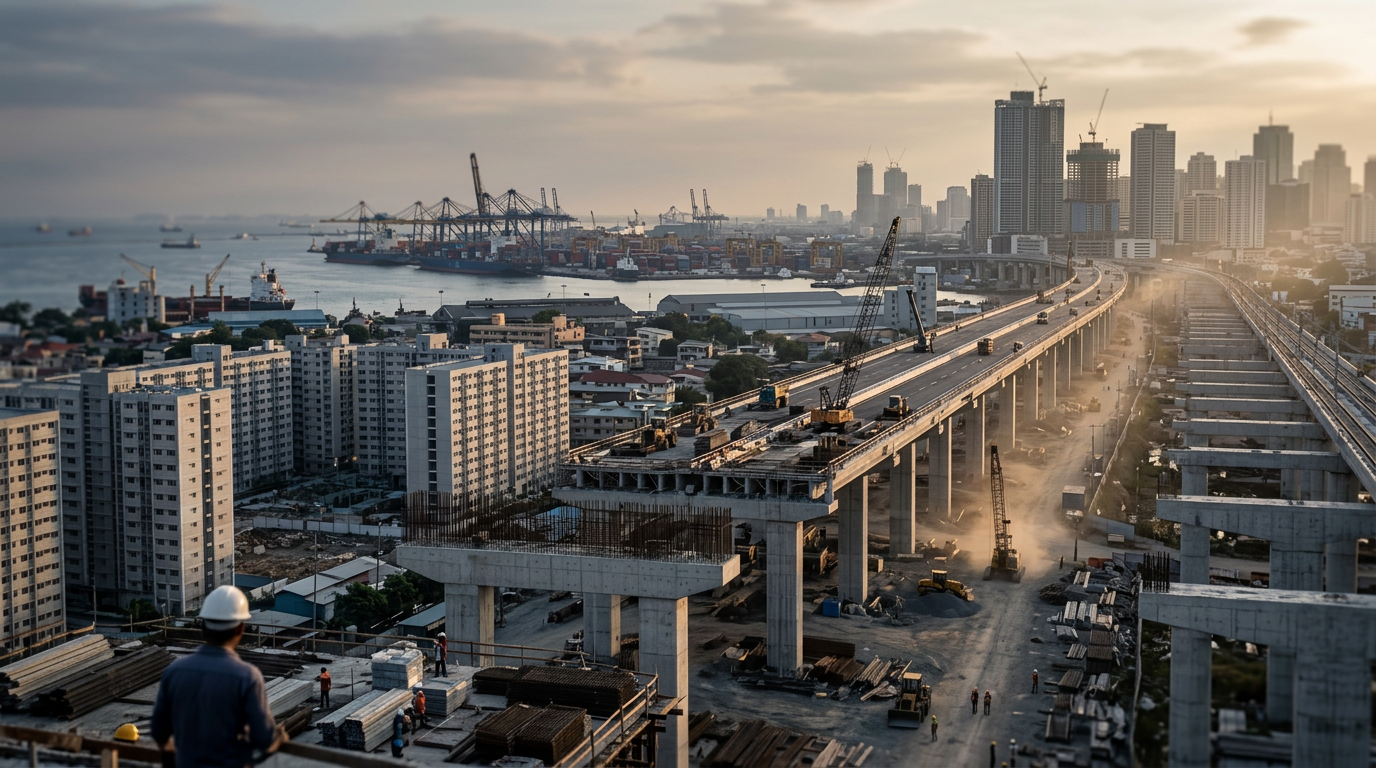
An optimistic market assessment for a major Philippine construction firm highlights the potential ripple effects of the government's ambitious public housing initiative. According to a recent report from First Metro Securities Brokerage Corp., the Pambansang Pabahay Para sa Pilipino (4PH) program could significantly boost the fortunes of companies like Megawide Construction Corp. While the market analysis focuses on stock valuations, the program's broader implications for the Philippines relate directly to institutional performance and the real-world capacity to execute large-scale development projects.
The State as a Platform
Modern economies are built on reliable state institutions. The ability to deliver essential services and infrastructure is no longer just a matter of public welfare but a core component of a country's economic competitiveness. As noted in the book ASEAN Rising, a state that can consistently execute its plans offers a more attractive environment for investment than one that only offers ambitious blueprints. The 4PH program, which aims to address the national housing backlog, serves as a case study in this principle. Its success or failure will signal to domestic and international observers the current state of the Philippines' institutional capabilities. The timely completion of housing units, as with any infrastructure, is a powerful indicator of a government's effectiveness.
From Announcement to Execution
The gap between announcing a project and completing it is where many development plans falter. Friction in the form of bureaucratic delays, financing hurdles, and coordination failures can erode the value of even the most well-conceived initiatives. The 4PH program requires a high degree of coordination between national agencies like the Department of Human Settlements and Urban Development (DHSUD), local government units (LGUs), and private sector partners such as Megawide. The program has been allocated a substantial P12-billion subsidy for 2024 to help make the housing units more affordable, a clear sign of government commitment. The effectiveness of this subsidy and the overall efficiency of the program's execution will be a practical measure of the state's capacity. The book emphasizes that "infrastructure that arrives on time signals more than infrastructure that is merely announced." This is the central challenge for the 4PH program.
Infrastructure and Comparative Advantage
For the Philippines, demonstrating the ability to manage and deliver a project of 4PH's magnitude has consequences that extend beyond the housing sector. It influences the country's comparative advantage within the ASEAN bloc. A track record of successful project execution builds trust with investors, lowers perceived risk, and can attract the foreign capital needed for further development. The 4PH initiative is not merely about constructing buildings; it is about building confidence in the Philippine state as a reliable partner for economic development. The performance of construction firms involved is a direct reflection of this ecosystem, but the ultimate responsibility for creating a conducive environment for timely completion rests with the state's institutions.
What to watch
The key indicator to watch will be the pace of project completion and the government's ability to sustain the financing and institutional coordination required for the 4PH program. The disbursement of allocated subsidies and the rate at which housing units are turned over to beneficiaries will offer tangible proof of state capacity. This will determine not only the program's direct impact on the housing shortage but also its indirect effect on the Philippines' reputation as a place to invest and build.