Philippines
The Philippines-Canada FTA as a Test of ASEAN Optionality
The ongoing trade negotiations between the Philippines and Canada are more than a simple bilateral exercise. They represent a tangible expression of a broader ASEAN strategic imperative: to build a diversified network of economic partners to manage the structural dependency on.
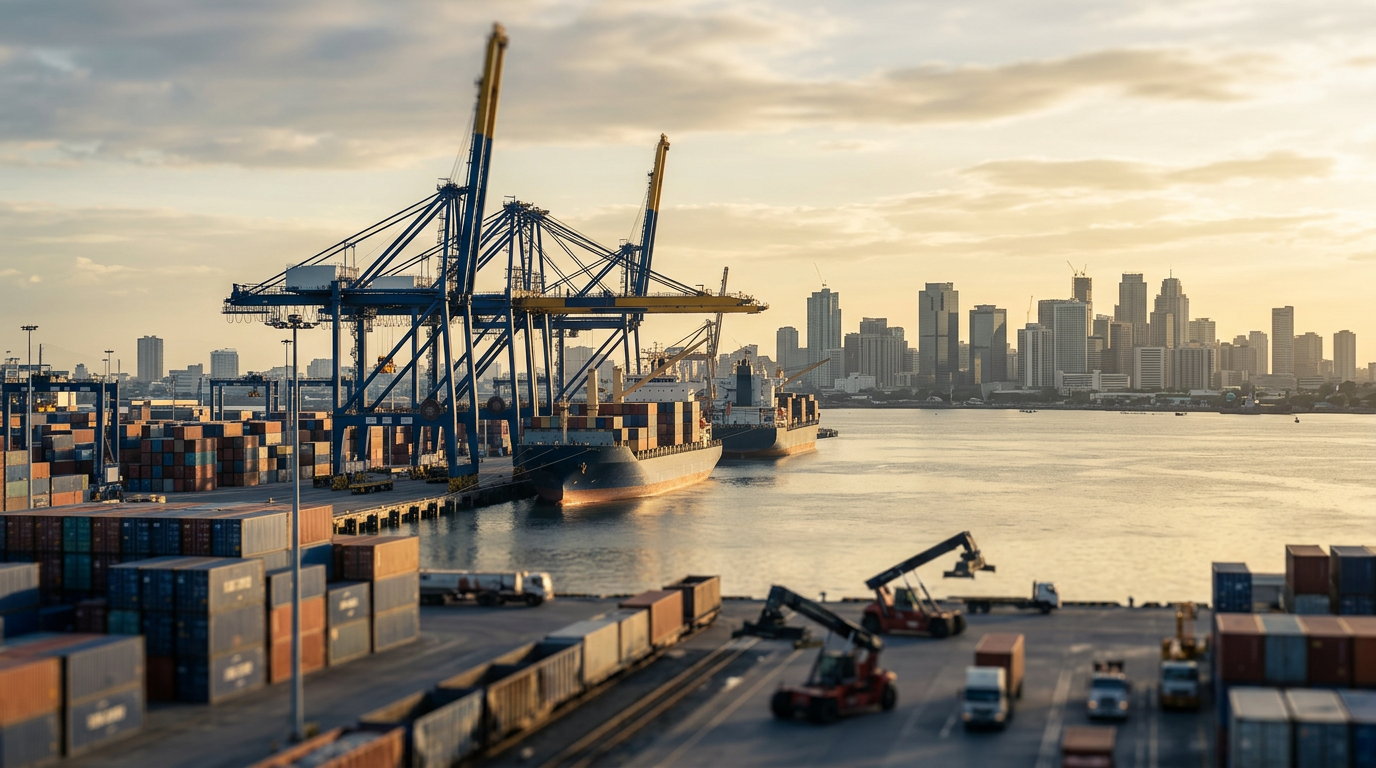
Officials from the Philippines and Canada are set to resume negotiations for a bilateral free trade agreement (FTA) this September, with a goal of concluding the talks before the year is out, according to a report from The Philippine Star. While any FTA is significant, this initiative is best understood in a wider regional context. It is a clear example of an ASEAN member state actively seeking to build new institutional bridges to diversify its economic relationships and manage its deep-seated trade integration with China.
Managing Dependency
The economic relationship between ASEAN and China is profound and permanent. As the book ASEAN Rising notes, deep trade with China is now a structural feature of the region's economy. The core strategic challenge for governments in Southeast Asia is therefore "how to manage dependency without losing optionality." The pursuit of an FTA with Canada is a direct response to this challenge. It is an exercise in creating options.
For the Philippines, a trade agreement with a G7 economy like Canada is not just about gaining preferential access for its exports. It is about building resilience. By embedding the bilateral economic relationship in a formal institutional framework, the Philippines aims to attract a different stream of capital and investment, one that operates under a different set of rules and standards. This diversification is not a rejection of China, which will remain a dominant economic partner, but a prudent strategy to avoid over-reliance on any single market or source of investment, thereby strengthening Manila's economic sovereignty.
Institutions and Execution
A modern FTA is a complex institution. The agreement with Canada will cover not only tariffs on goods but also rules on services, investment, intellectual property, labor, and environmental standards. For the Philippines, this presents both an opportunity and a test of its capacity for execution. Aligning domestic regulations with the standards of a comprehensive trade pact requires significant effort across multiple government agencies. It is a test of institutional readiness.
Success, however, is not measured by the signing of the agreement alone. The real work lies in its implementation. This involves helping domestic businesses, particularly small and medium-sized enterprises, understand the agreement's terms and take advantage of its provisions. It requires building the talent and infrastructure necessary to compete in the Canadian market. An FTA can provide the framework for deeper economic engagement, but it is effective execution that turns that framework into tangible gains in trade, investment, and job creation.
A Regional Pattern
The Philippines' engagement with Canada is not happening in a vacuum. It is part of a broader pattern across Southeast Asia. Other ASEAN members, such as Singapore and Vietnam, have also been proactive in securing FTAs with partners beyond the immediate region, including the European Union and the United Kingdom. These bilateral agreements collectively contribute to the entire bloc's strategic depth.
While an ASEAN-wide consensus on a single approach to third-country partnerships remains elusive, the cumulative effect of these national initiatives is the creation of a more varied and complex web of economic ties. This patchwork of agreements strengthens the region as a whole by providing multiple avenues for capital, technology, and trade. It reinforces the idea of ASEAN as a hub connected to all major global economies, rather than a region beholden to one.
What to watch
The progress of the Philippines-Canada talks will be a significant indicator of Manila's strategic economic direction. Observers should watch the specific contours of the agreement, particularly in sensitive sectors like agriculture, to gauge the depth of integration. The successful conclusion of this FTA could encourage other ASEAN members to accelerate their own negotiations with non-traditional partners. The ultimate measure of success will be the degree to which this new institutional link fosters meaningful trade and investment, proving that a strategy of diversification can provide a durable path to prosperity and stability.