Malaysia
The Mutiara Line and Malaysia's Infrastructure Test
Penang's Mutiara Line LRT project will require a 322-day traffic diversion. While a necessary step, it puts the focus on Malaysia's ability to deliver complex infrastructure projects on schedule and with minimal disruption.
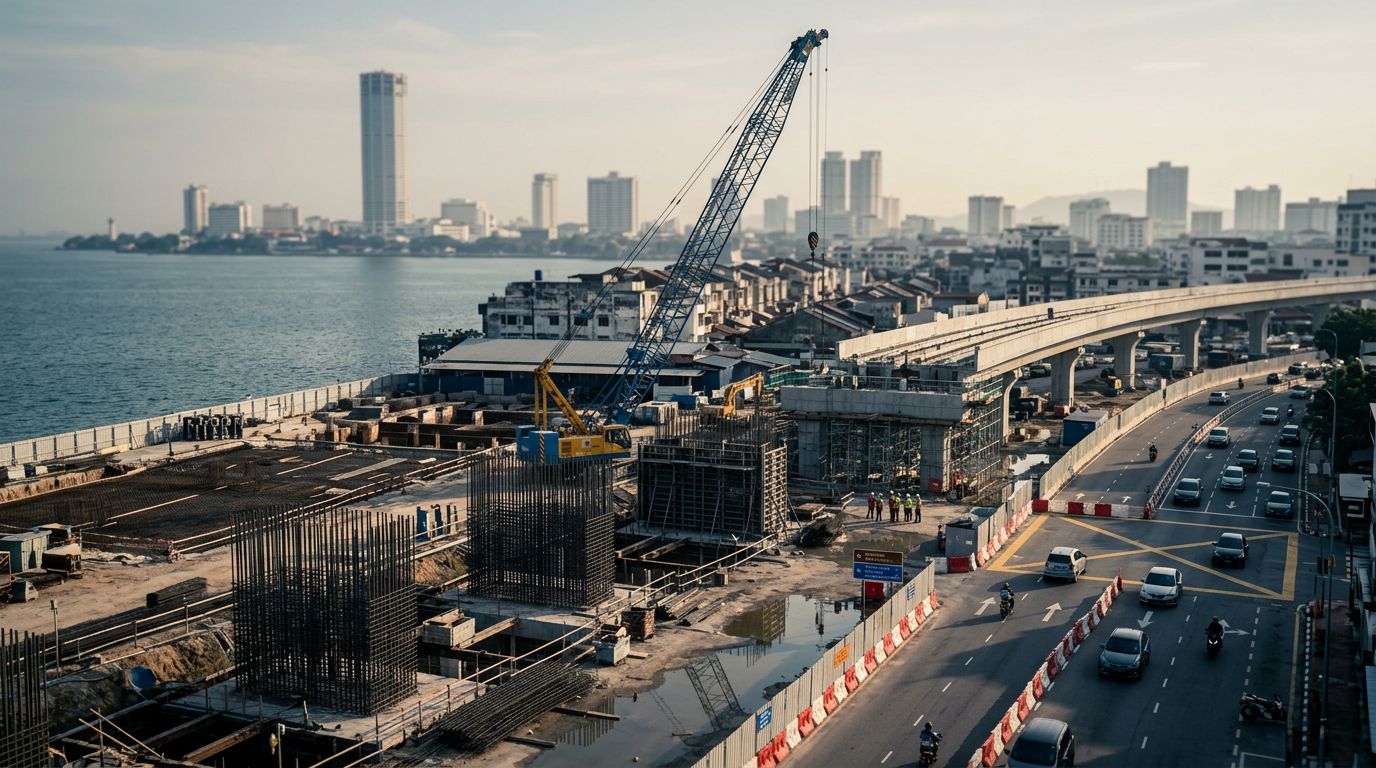
A 322-day traffic diversion on Jalan Sultan Azlan Shah in Penang is scheduled to begin in September 2026 to make way for the Mutiara Line Light Rail Transit (LRT) project. According to a report from Bernama, the extended road closure is necessary for construction, including piling and track work. While such disruptions are a common feature of major infrastructure development, the project places a renewed focus on the execution capacity of Malaysian institutions.
Execution and Trust
The effective delivery of public infrastructure is a core function of government and a tangible measure of state capacity. The Mutiara Line is a significant undertaking for Penang and a test of coordination between federal and state agencies, contractors, and the public. A project of this scale requires not just technical skill but also a high degree of public trust, which is built and maintained through transparent communication and the reliable execution of project timelines. Delays and disruptions are inevitable, but how they are managed is what defines a project's success in the public eye. As noted in the book ASEAN Rising, "Institutional reliability has become part of comparative advantage." Successfully completing the LRT on schedule would demonstrate this reliability.
The Cost of Friction
Large-scale infrastructure projects are magnets for friction, both literally in the form of traffic diversions and figuratively in the form of administrative and political hurdles. The 322-day timeline for the Jalan Sultan Azlan Shah works is an acknowledgment of the complexity involved. The costs are not just financial; they include the daily inconvenience for commuters and the potential for knock-on effects on local businesses. Mitigating these costs requires a usable state apparatus that can process permits, manage contractors, and address public grievances efficiently. The long duration of the diversion underscores the importance of minimizing any further delays that could compound these friction costs and erode public confidence.
What to watch
As the Mutiara Line project moves from the planning stage to active construction, the key indicator to watch will be adherence to the stated timelines. The government's ability to manage public communication and minimize the disruption inherent in a nearly year-long road closure will be just as important as the engineering itself. The project's progress will serve as a case study in Malaysia's capacity to deliver the next generation of infrastructure required for its economic ambitions.