Philippines
The Luzon Corridor: Capital is Here, but Execution is Everything
Foreign capital is flooding into the new Luzon Economic Corridor, but turning billions in commitments into a high-tech manufacturing hub will test the Philippines' institutional capacity and talent pipeline.
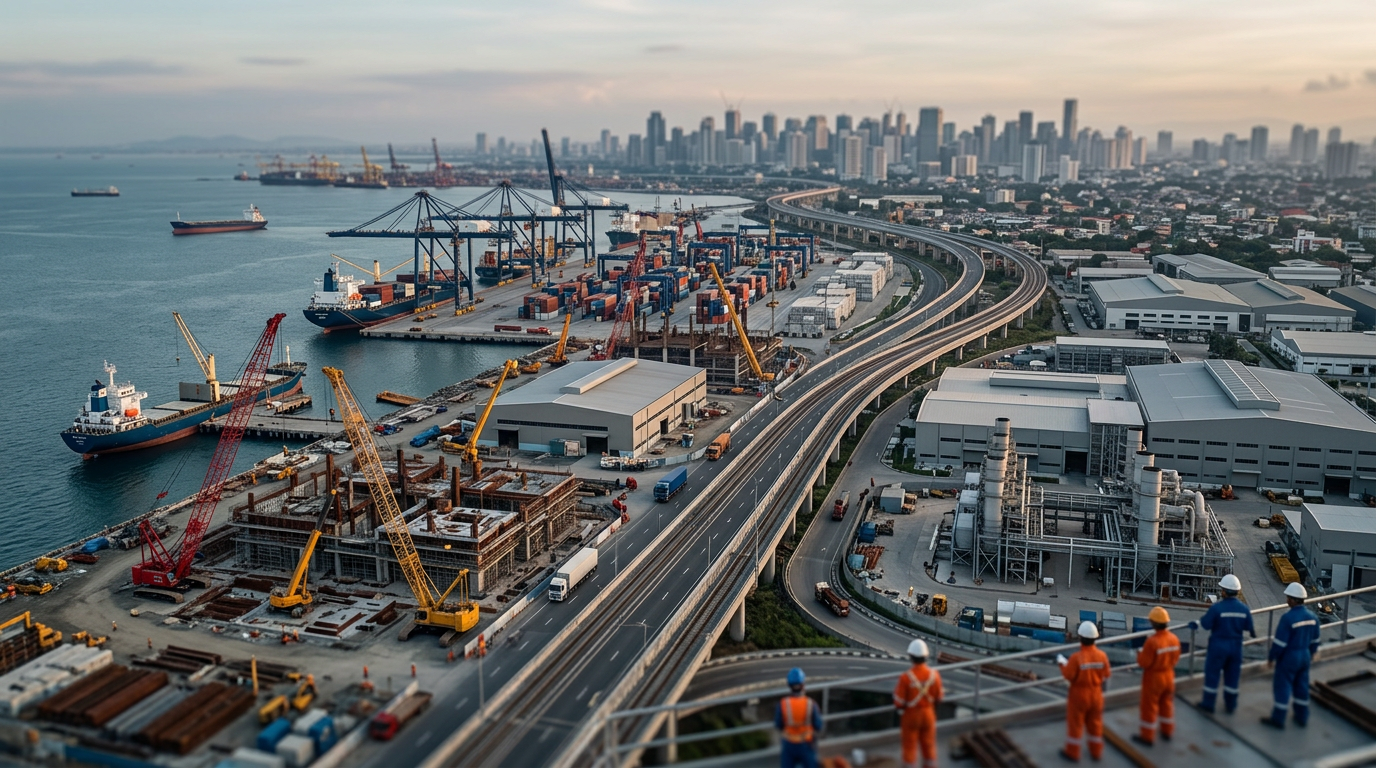
A recent report in Singapore's Business Times highlights the significant foreign capital being committed to the Philippines' nascent Luzon Economic Corridor (LEC). The project, a cornerstone of the G7's Partnership for Global Infrastructure and Investment, aims to transform a swathe of the country's largest island into a globally competitive hub for manufacturing and technology. With a US$6.8 billion UK export financing commitment and millions more in US-backed investments, the LEC is not short on financial backing. But as the foreign money lines up, the crucial question remains: can the Philippines leverage this opportunity to move up the global value chain? The answer lies less in the announced billions and more in the country's ability to execute.
Infrastructure and Capital Meet Ambition
The LEC is ambitious, aiming to link Subic Bay, Clark, and the Batangas region through a network of high-quality infrastructure, including ports, railways, and clean energy projects. This initiative represents a critical test of the "Build Better More" program under President Ferdinand Marcos Jr.'s administration. The capital influx is a strong vote of confidence, signaling that international partners see potential in the Philippines' strategic location and its demographic dividend.
The plan is to create a seamless manufacturing and logistics ecosystem that can attract high-value industries like semiconductors, clean energy, and digital services. Historically, the Philippines has struggled with infrastructure gaps and regulatory bottlenecks that have hampered its industrial potential. The LEC, backed by significant international funding, presents a chance to break this cycle. Success would not only modernize Luzon but also create a powerful new engine for the national economy, potentially rivaling established hubs in the region.
The Talent and Institutional Test
For the LEC to become more than just a collection of well-funded infrastructure projects, it must overcome the perennial challenges of talent development and institutional capacity. Building hi-tech factories is one thing; staffing them with a skilled workforce and managing a complex industrial ecosystem is another. The Philippines possesses a large, young, and English-speaking population, but there is a recognized gap between academic output and the specific technical skills required by advanced manufacturing.
This is where the less glamorous but more critical work begins. It requires a concerted effort between government, industry, and academia to build a robust talent pipeline. As detailed in "ASEAN Rising", long-term economic transformation hinges on the quality of human capital and the strength of public institutions. The commitments of capital are necessary but not sufficient. The real test for the Philippines will be in reforming technical education, streamlining business processes, and ensuring that the institutional framework governing the LEC is transparent, efficient, and stable. Foreign investors need to trust that the rules of the game will not change overnight and that projects will be managed to international standards.
Execution is the Final Frontier
The creation of the LEC is a bold statement of intent. It aligns with the national goal of becoming an upper-middle-income country by attracting the kind of investment that creates high-quality jobs and facilitates technology transfer. The foreign financing is a significant de-risking factor, providing the capital needed to build the physical backbone of the corridor.
However, the path from an investment commitment to a thriving industrial hub is paved with potential execution failures. The government's ability to coordinate across multiple agencies, manage large-scale construction projects effectively, and implement policies that support a hi-tech ecosystem will be paramount. The private sector, both domestic and foreign, will need to see clear, consistent signals that the Philippines is a reliable and competitive place to do business for the long term. The LEC is not just about building roads and ports; it's about building trust.
What to watch
The coming months will be critical. Watch for the translation of financial commitments into concrete project timelines and groundbreakings. More importantly, monitor the government's progress in creating the "soft infrastructure" needed for success: specific programs for workforce training, the simplification of business registration and permits within the corridor, and the appointment of capable technocrats to manage the LEC's development. The success of the Luzon Economic Corridor will be a key indicator of the Philippines' readiness to step up to the next level of economic development.