Philippines
The Limits of Digital Hype in the Philippines
Announced foreign direct investment is one thing; realised investment that builds on land, power, and talent is another. The Philippines' data center boom is a case in point.
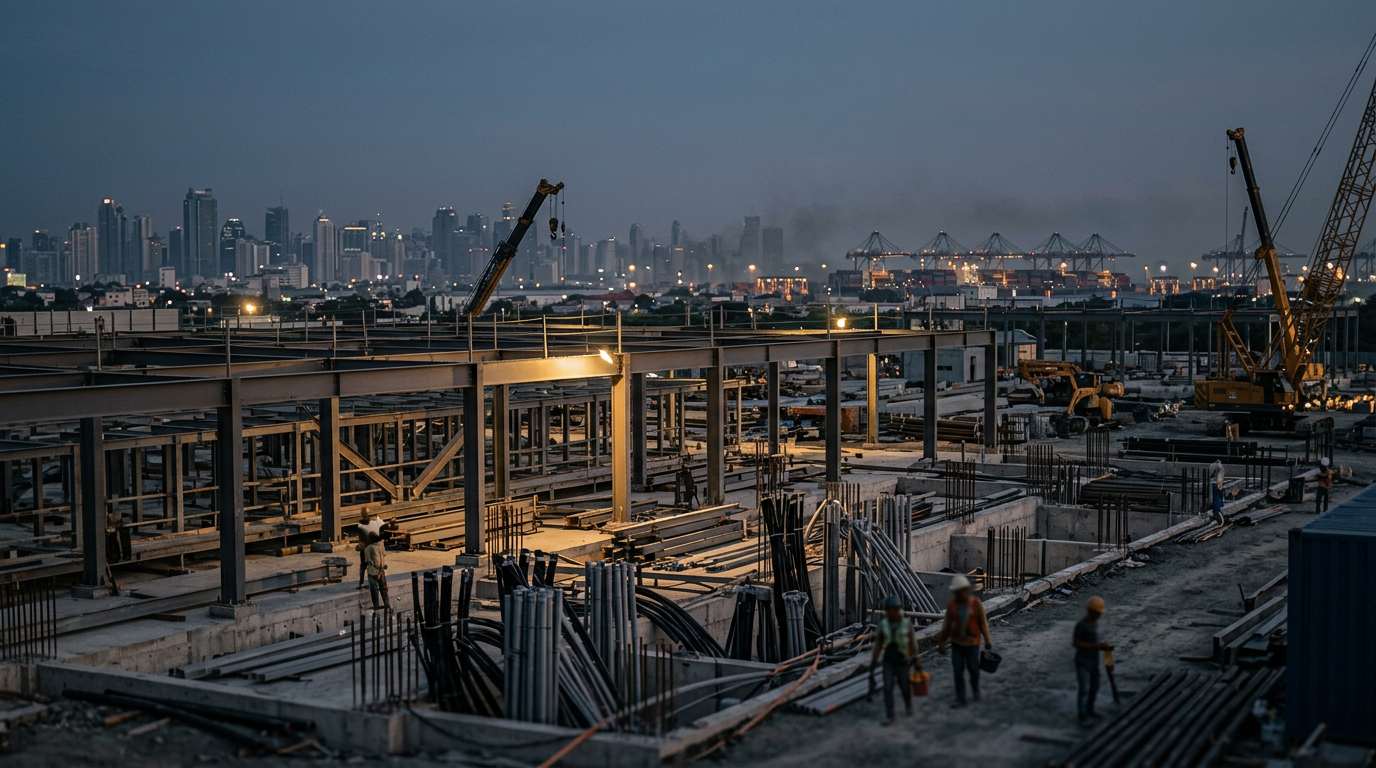
A recent Moody's Ratings report suggests that the Philippines may see only marginal economic benefits from its data center expansion through 2030, as noted by philstar.com. The analysis points to significant hurdles, particularly in power supply and energy security, which could impede the progress of these capital-intensive projects. This situation highlights a recurring theme across Southeast Asia: the gap between ambitious digital investment announcements and the on-the-ground reality of execution.
From Announcement to Execution
Foreign investment commitments often generate positive headlines, but their real economic impact depends on successful project implementation. As the book "ASEAN Rising" notes, the journey from a foreign direct investment announcement to a functioning enterprise is a long one. "Realised flows depend on the slower work of land, permits, power and talent reaching the ground." In the context of the Philippines' data center ambitions, the Moody's report serves as a timely reminder of these operational frictions.
Data centers are uniquely demanding. They require vast and uninterrupted power supplies, secure land tenure, and a workforce with specialized technical skills. While the Philippines has attracted interest from global hyperscalers, the underlying infrastructure and institutional frameworks are straining to keep pace. The report correctly identifies that without a reliable and competitively priced energy grid, the business case for these data centers weakens considerably. The risk is that announced projects are delayed, downsized, or even abandoned, leaving the anticipated economic benefits unrealized.
Institutions and Investable Depth
The challenge is not unique to the Philippines. Across ASEAN, turning national scale into what the book calls "investable depth" is a persistent governance challenge. This means having institutions that are capable of managing complex projects and creating a predictable environment for long-term capital. For data centers, this extends beyond the energy sector. It involves efficient permitting processes at both national and local levels, clear zoning regulations, and educational systems that can produce the necessary engineering and cybersecurity talent.
When these elements are not aligned, even a market with a large, young, and digitally-active population like the Philippines can struggle to absorb massive capital inflows effectively. The result is a mismatch between the digital economy's potential and the physical economy's capacity. The Moody's assessment reflects this concern, suggesting that the downstream economic multipliers from the data center buildout-such as job creation and the growth of ancillary digital services-may be smaller than forecasted if the foundational constraints are not addressed.
What to watch: Observers should monitor the pace of energy sector reforms in the Philippines and whether new power generation capacity comes online as scheduled. The ability of government agencies to streamline the approval process for data center construction and to collaborate with educational institutions on talent development will be the true determinant of whether the country can convert digital hype into sustainable economic growth.