Philippines
The Green Transition in ASEAN Automotive Manufacturing
The automotive industry is a pillar of ASEAN's industrial base. As global pressures for sustainability intensify, the region's manufacturers are adapting, but the road ahead requires significant investment in new technologies and infrastructure, with EV adoption presenting a.
An environmental summit hosted by Mitsubishi Motors Philippines Corp. in Laguna signals a growing trend within ASEAN's automotive sector, as reported by philstar.com. The event, which focused on sharing best practices for environmental sustainability, highlights how major manufacturers are responding to global pressures for greener production and supply chains. While the summit was a local initiative, it reflects a broader regional challenge: balancing industrial policy, economic growth, and the costly transition to more sustainable manufacturing, including the shift to electric vehicles (EVs).
Industrial Base and Export Orientation
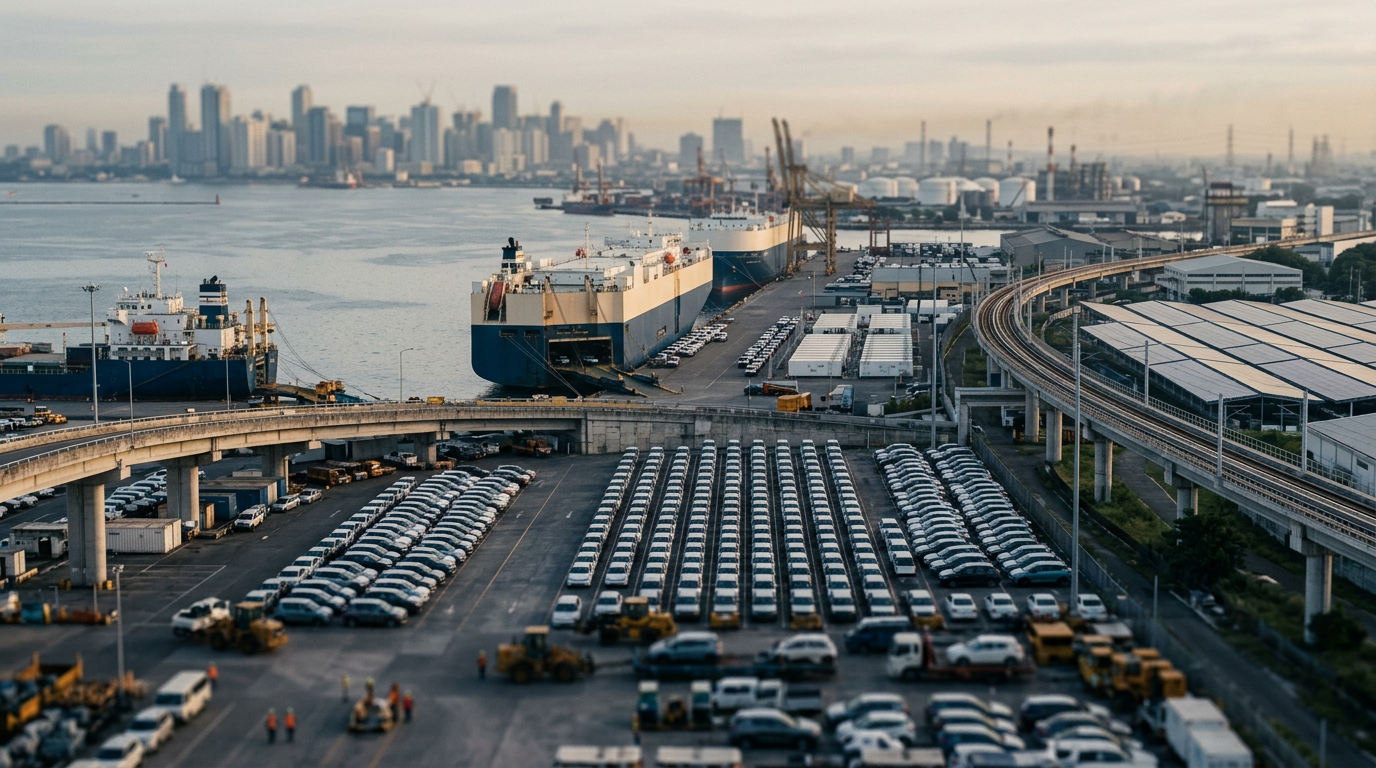
Automotive manufacturing is a cornerstone of the industrial economies of Thailand, Indonesia, and, to a lesser extent, Malaysia and the Philippines. For decades, the region has served as a production hub for Japanese, American, and European carmakers, building a deep ecosystem of parts suppliers and skilled labor. This export-oriented model has been highly successful, contributing significantly to GDP and employment.
However, the global auto industry is in the midst of a once-in-a-century transformation. The push toward EVs and more stringent emissions standards in developed markets is forcing a rethink of production strategies. ASEAN-based factories, traditionally focused on internal combustion engine (ICE) vehicles, must now consider retooling for EV production to maintain their position in global supply chains. This requires substantial capital investment in new assembly lines, battery production or sourcing, and charging infrastructure.
The China Factor in the EV Transition
The rise of China as a dominant force in the EV market adds another layer of complexity. Chinese EV manufacturers, having achieved massive scale and cost advantages domestically, are now aggressively expanding into Southeast Asia. Their affordable models are well-positioned for the region's price-sensitive consumers, presenting a direct challenge to the incumbent Japanese and Western brands that have long dominated ASEAN roads.
As the book ASEAN Rising notes, the region's deep trade relationship with China is a structural reality. For the automotive sector, this means navigating a difficult course. On one hand, Chinese investment and technology can accelerate the EV transition, providing components, platforms, and entire vehicles. On the other hand, a heavy reliance on Chinese EV technology could hollow out the existing domestic manufacturing base that was built around ICE vehicles. Governments must weigh the benefits of rapid, low-cost EV adoption against the long-term goals of maintaining a competitive and technologically independent industrial base. The question is "how to manage dependency without losing optionality."
Institutional and Infrastructure Hurdles
Beyond the factory floor, the EV transition depends on a supportive institutional framework and extensive public infrastructure. This includes government incentives to encourage consumer adoption, the establishment of reliable charging networks, and the development of a sustainable electricity grid to power these vehicles. While some ASEAN nations have rolled out policies to support EV adoption, progress is uneven.
The challenge is not just about building charging stations. It involves upgrading urban and rural power grids, standardizing charging technology, and creating a regulatory environment that gives private investors the confidence to fund infrastructure projects. Without coordinated government action and significant capital, the region risks a fragmented and slow transition, potentially falling behind other markets and weakening its attractiveness as a production hub.
What to watch
Observe how ASEAN governments structure their industrial policies in the coming years. Their ability to attract investment for factory retooling, build out charging infrastructure, and foster local talent in EV-related technologies will determine the future of the region's automotive sector. Also, monitor the market share of Chinese EV brands versus the legacy automakers to see how competitive dynamics evolve and how they influence local production decisions.