The G20 Data Center Debate and ASEAN's Hyperscale Future
The global push for more AI-ready data centers, a topic of debate at the G20, brings ASEAN's digital infrastructure strategy into focus. Success will depend not just on attracting investment, but on the complex coordination of power, connectivity, and regulation.
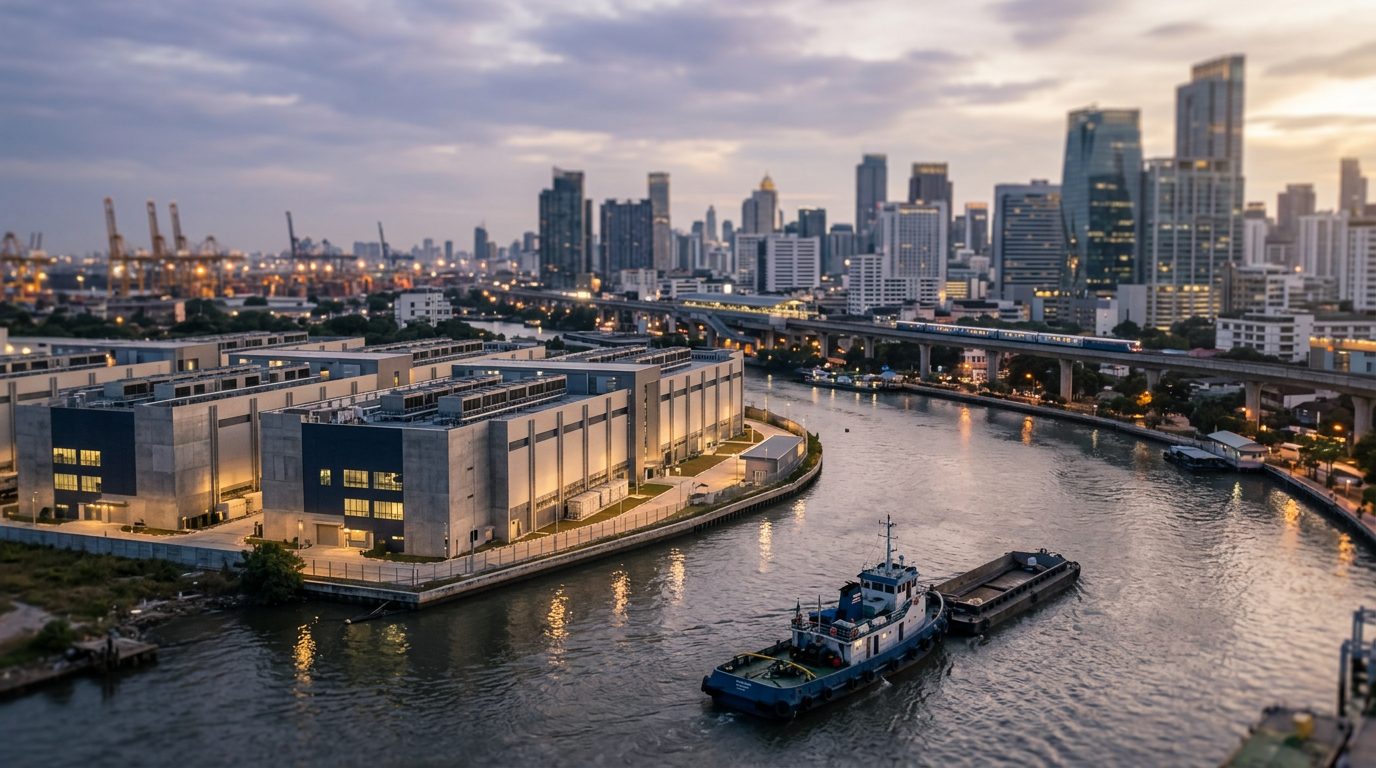
At a recent G20 meeting, tech executives urged governments to invest in the data centers that power artificial intelligence, framing them as essential national infrastructure. As reported by CNA, the discussion highlighted a growing global demand for computing capacity, alongside concerns about the environmental and community impact of these power-hungry facilities. For ASEAN, which is aspiring to become a globally integrated digital economy, this debate is not abstract. It goes to the heart of the region's infrastructure strategy and its ability to execute complex, capital-intensive projects.
Coordination as Infrastructure
The central challenge for developing hyperscale data centers is not just securing capital, but ensuring that all the necessary components are available in a coordinated way. A new data center requires a reliable power grid, high-speed fiber optic links, and a clear regulatory environment. As detailed in "ASEAN Rising," the successful development of this type of infrastructure hinges on the alignment of utilities, urban planning, and digital connectivity. Without this, projects can fail. The book notes that "where utilities, planning and connectivity move together, hyperscale capacity follows." This principle explains why some locations attract massive investment while others with seemingly similar advantages, like cheap land or power, fail to do so. It is the synchronized delivery of these inputs that creates a viable environment for development.
ASEAN's Differentiated Path
Within ASEAN, different markets are pursuing distinct strategies. Singapore, historically the region's data center hub, has been forced to manage its growth due to energy and land constraints. It is now prioritizing higher-value, more efficient data centers and encouraging some capacity to locate in neighboring markets. This has created openings for Malaysia and Indonesia, which offer more land and potentially cheaper power. Malaysia, particularly in Johor, is attracting significant investment by offering a combination of proximity to Singapore, developing infrastructure, and government support. Indonesia is leveraging its large domestic market to build out its own digital backbone. These diverging approaches reflect the varied economic priorities and resource endowments across the ASEAN bloc. The success of each will depend on their ability to execute on the complex task of infrastructure coordination.
The Role of Capital and Policy
Attracting the necessary international capital requires more than just a good story. Global investors in digital infrastructure look for stable policy, clear regulations, and a demonstrated ability to deliver complex projects. The G20 conversation shows that the world's largest economies are now treating data infrastructure as a matter of strategic national interest. For ASEAN nations, this means that the competition for capital will only intensify. Governments must do more than just signal their desire for investment; they must create the institutional frameworks that give investors confidence. This includes transparent and efficient processes for land acquisition, power purchasing agreements, and network access. The countries that can master this institutional execution will be the ones that capture the hyperscale opportunity.
What to watch: Observe whether ASEAN governments can move from high-level digital economy blueprints to the granular, cross-agency work of infrastructure coordination. The key indicator of success will not be the number of memorandums of understanding signed, but the speed and efficiency with which new data centers are connected to power and fiber. Pay attention to how countries like Malaysia and Indonesia manage the strain on their power grids and whether they can build out renewable energy sources to meet both sustainability goals and the demands of hyperscale tenants.