Malaysia
The Durian Test: Managing ASEAN's Structural Dependency on China
A surge in China's demand for durians provides a case study for the structural economic dependency ASEAN nations must navigate, a central theme explored in the book "ASEAN Rising".
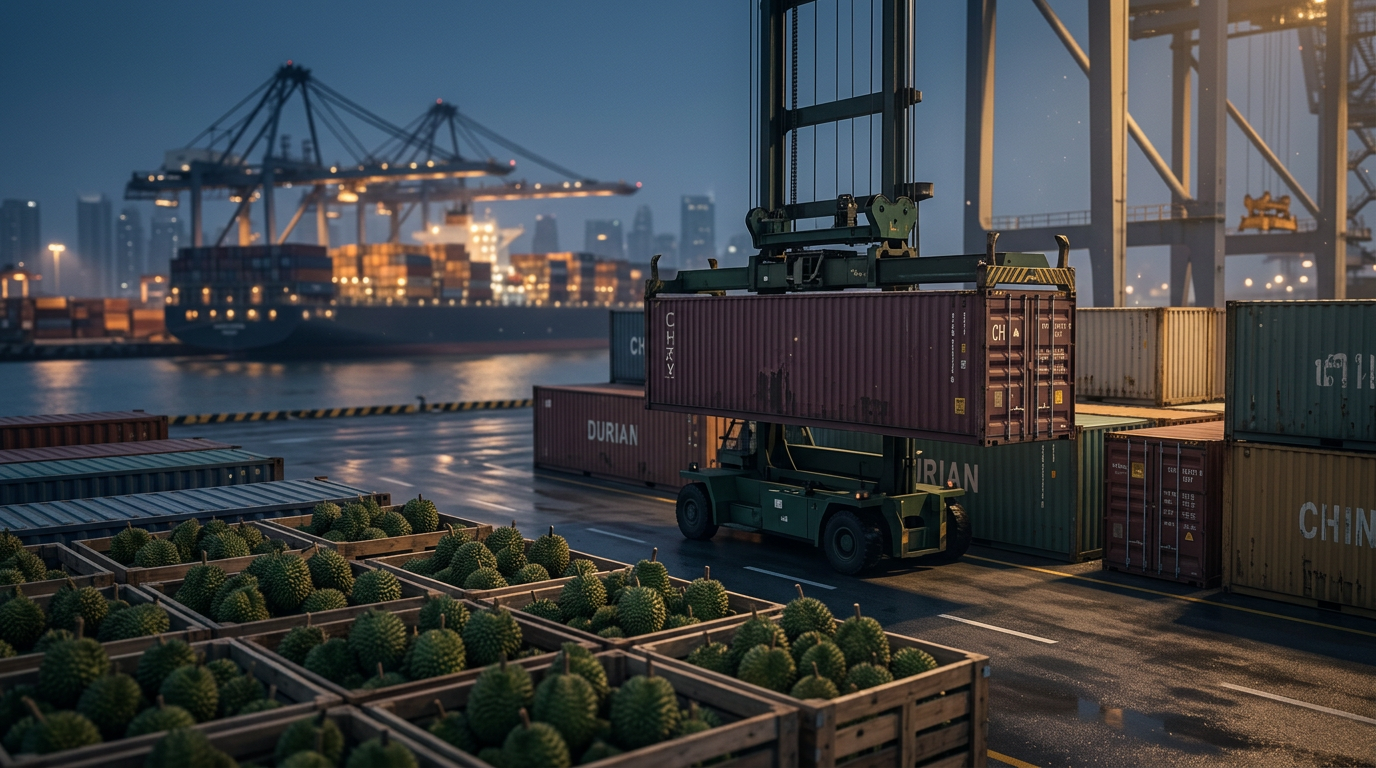
A recent surge in China's appetite for durian has lifted exports from Thailand and Malaysia, with Chinese imports of the fruit increasing by 47% year-over-year in the first half of 2026. As reported by VnExpress, Southeast Asian exporters capitalized on this demand to move excess supplies following a price slump. While a boon for agricultural producers, this durian boom is a potent example of the deep, structural economic relationship between ASEAN and China, and the complex questions it raises for the region's future.
The New Trade Reality
The flow of durians to China is a small part of a much larger story. The intense trade relationship with China is a permanent feature of ASEAN's economic environment. As the book "ASEAN Rising" notes, this integration is no longer a cyclical trend but a structural one. The core task for governments in the region is to determine "how to manage dependency without losing optionality." The durian trade illustrates this perfectly. The Chinese market offers an invaluable outlet for absorbing agricultural surplus, providing a direct economic benefit. Yet, this reliance also creates vulnerability. What happens when Chinese consumer tastes shift, or if logistical bottlenecks or a diplomatic disagreement suddenly closes the market? This is the central dilemma: balancing immediate gain against long-term strategic resilience.
Infrastructure and Capital
This trade is not accidental; it is built on a foundation of targeted investment and infrastructure development. The ability to move a perishable product like fresh durian from farms in Malaysia and Thailand to consumers in Chinese cities, quickly and efficiently, depends on a sophisticated cold chain. This includes refrigerated transport, modern packing facilities, and streamlined logistics. Much of the capital for this infrastructure comes from Chinese sources, both public and private, and is often tied to broader initiatives like the Belt and Road Initiative. The China-Laos railway, which is being extended through Thailand, is a primary example of how new infrastructure directly enables and accelerates this trade integration. While this investment is welcome, it further embeds ASEAN economies into a China-centric network, making diversification a more complex task.
Institutions and Execution
The durian trade also highlights the importance of institutional frameworks and effective execution. Trade agreements like the Regional Comprehensive Economic Partnership (RCEP) have lowered tariffs and standardized some rules, smoothing the path for goods. However, the most detailed work happens at the bilateral level, through the negotiation of phytosanitary protocols that allow specific agricultural products to enter China. Gaining this access is a significant undertaking for any government, requiring scientific evidence and extensive negotiation. Once access is granted, the private sector must execute, meeting China's stringent standards for quality and safety. This institutional process, while creating market access, also hardwires the standards of the dominant buyer into the production processes of the sellers, reinforcing the asymmetrical nature of the relationship.
What to watch
Looking ahead, the key indicator to watch is not just the volume of trade with China, but the progress of ASEAN's diversification efforts. Observe whether governments and firms in the region actively develop new, large-scale markets for their key products, or if the economic gravity of China proves too strong to resist. Monitor the development of ASEAN-native logistics and financial platforms that could give exporters more control over their supply chains. Finally, pay attention to how this deep economic codependence fares when political or strategic friction arises between Beijing and ASEAN member states, as this is where the true test of managed dependency will play out.