Malaysia
Malaysia's Mutiara Line and the Value of a Usable State
A temporary road closure in Penang for the Mutiara Line LRT project highlights a core theme from ASEAN Rising: institutional reliability is a key part of comparative advantage.
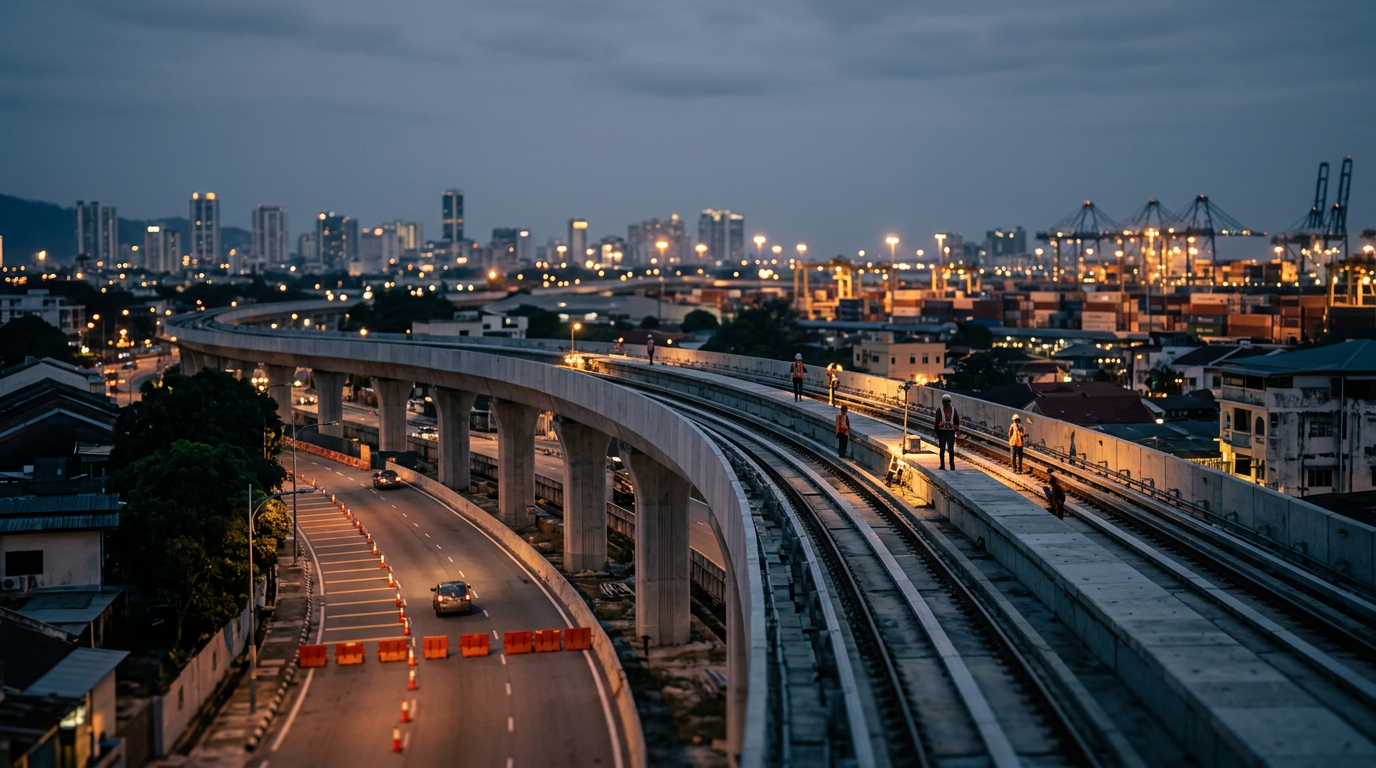
A temporary, three-day road closure on Gat Lebuh Cecil in Penang, Malaysia, marks a small but tangible step in the construction of the Mutiara Line Light Rail Transit (LRT) project. As reported by Bernama, this closure is for piling and utility piloting works, a routine but necessary part of a major infrastructure undertaking. While minor traffic disruptions are seldom celebrated, this event points to a deeper theme in Southeast Asia's development: the steady, practical execution of complex projects is a powerful signal of state capacity.
Execution over announcements
Large-scale infrastructure projects are a familiar feature of economic planning in Southeast Asia. National and regional master plans are filled with ambitious transport, energy, and digital connectivity goals. The Mutiara Line itself is a component of the larger Penang Transport Master Plan, designed to alleviate traffic congestion and improve public transport in one of Malaysia's most economically significant states.
However, the gap between announcement and completion can be wide. As the book "ASEAN Rising" notes, there is a crucial distinction between plans on paper and infrastructure on the ground. The real measure of a state's effectiveness is not the boldness of its vision but its ability to execute. Small, well-managed disruptions for construction are indicators of progress. They demonstrate that a project has moved from the drawing board into the physical world, backed by the capital and institutional coordination required to manage logistics, secure land, and redirect traffic. It signals a commitment to getting things done.
The comparative advantage of reliability
For foreign and domestic investors, predictability is a valuable commodity. The ability to build and maintain infrastructure on schedule reduces uncertainty and lowers the cost of doing business. It creates a more attractive environment for the capital needed to fund further growth. The book argues that in the context of global competition, "institutional reliability has become part of comparative advantage." A government that consistently delivers on its infrastructure promises is one that businesses can trust.
The Mutiara Line project, if it continues to proceed with such methodical steps, can enhance Penang's reputation as a stable and well-managed investment destination. It shows a state that is not just exciting in its ambitions but, more importantly, usable and reliable in its functions. This capacity for execution is a quiet but firm source of strength, signaling to the world that the foundational systems for commerce and connectivity are not just planned but are actively being built. It is this nuts-and-bolts capability that ultimately underpins long-term economic resilience.
What to watch
The progress of the Mutiara Line LRT and other major infrastructure projects under Malaysia's national plans will be a key indicator of the country's institutional capacity. Observers should watch for the timely completion of project milestones, the management of public-private partnerships, and the government's ability to deliver these complex undertakings on budget. The steady, systematic execution of these plans will be more telling of the nation's economic trajectory than any high-level announcement.