Thailand
's infrastructure reuse is a sign of institutional strength
Thailand's reuse of oil and gas platforms points to a growing sophistication in its industrial base. This is a sign of institutional reliability, which has become a source of comparative advantage in Southeast Asia.

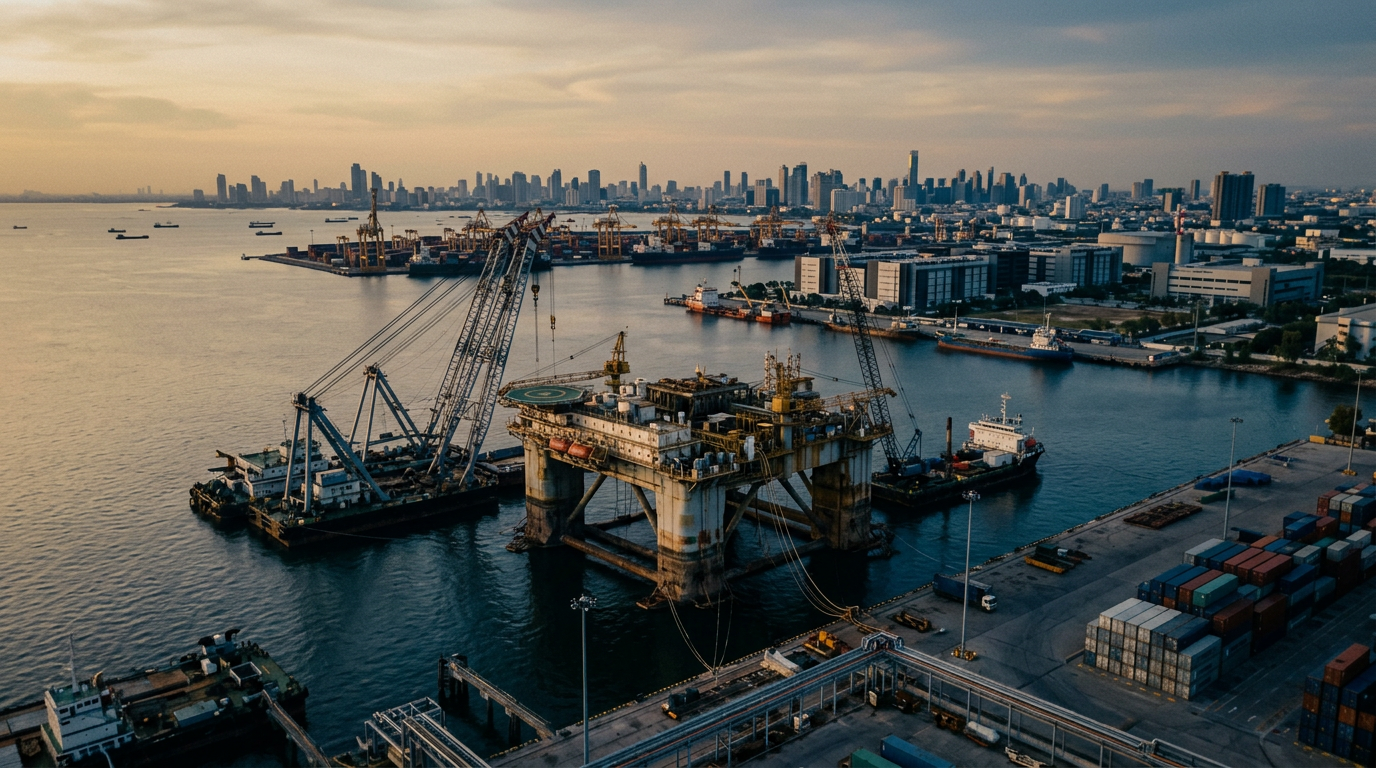
Chevron Thailand's recent award for its Total Wellhead Platform Reuse project is a useful indicator of the country's growing industrial capacity. As reported in the Bangkok Post, the project was recognized for its innovation in the petroleum exploration and production industry. While seemingly a niche industrial achievement, it points to a deeper theme explored in the book ASEAN Rising: the quiet but steady accumulation of institutional capacity that allows for more complex and efficient industrial operations.
From Decommissioning to Reuse
Historically, aging offshore oil and gas platforms were simply decommissioned and removed at great cost. The Thai project points to a different model: capturing residual value by reusing these platforms. This involves sophisticated engineering, rigorous safety standards, and a regulatory framework that can accommodate such complex undertakings. It is a practical example of the circular economy, but more than that, it is a signal of a maturing industrial ecosystem. The ability to execute a project like this suggests a reliable network of local suppliers, skilled engineers, and state agencies that can manage and oversee such an operation effectively. It demonstrates that the country's capacity extends beyond basic assembly or resource extraction into higher-value industrial processes.
Advantage Beyond the Blueprint
The reuse of infrastructure is a tangible example of the principle that "institutional reliability has become part of comparative advantage." A country's ability to deliver complex projects on schedule and to specification is a powerful draw for investment. It suggests that the state is usable and predictable, which is often more valuable to long-term investors than headline-grabbing announcements of ambitious but unrealized mega-projects. The Chevron award is not just for an idea, but for a completed project. This execution is where real value is created. It shows a system that works, not just one that is planned. This nuts-and-bolts success story is a testament to the steady, incremental improvements in state capacity and technical skill within the Thai economy.
The Value of a Usable State
The success of the platform reuse program reflects a state that is functional and effective. It manages to align regulatory oversight with commercial incentives and technical feasibility. This is the kind of practical statecraft that builds durable economic strength. While less dramatic than a major new industrial policy announcement, this type of project builds confidence among investors and industry participants. It proves that the local environment has the depth and skill to handle complex, long-term asset management. This is the bedrock of a modern industrial economy, where value is derived not just from new builds but from the intelligent management and adaptation of existing assets. This capacity for reuse and adaptation is a sign of a mature and reliable industrial landscape.
What to watch: Observers should monitor whether this model of industrial asset reuse is adopted in other sectors of the Thai economy, such as transportation and manufacturing. The extent to which regulators and private companies can collaborate on similar circular economy projects will be a strong indicator of the country's institutional depth. Success in these areas would confirm a broader shift from a linear "build and discard" model to a more sophisticated, sustainable, and economically efficient approach to infrastructure.