Thailand
Chevron Thailand's award-winning wellhead platform reuse project is a small but telling indicator of the institutional capacity that separates advanced and developing economies.

Signal from noise
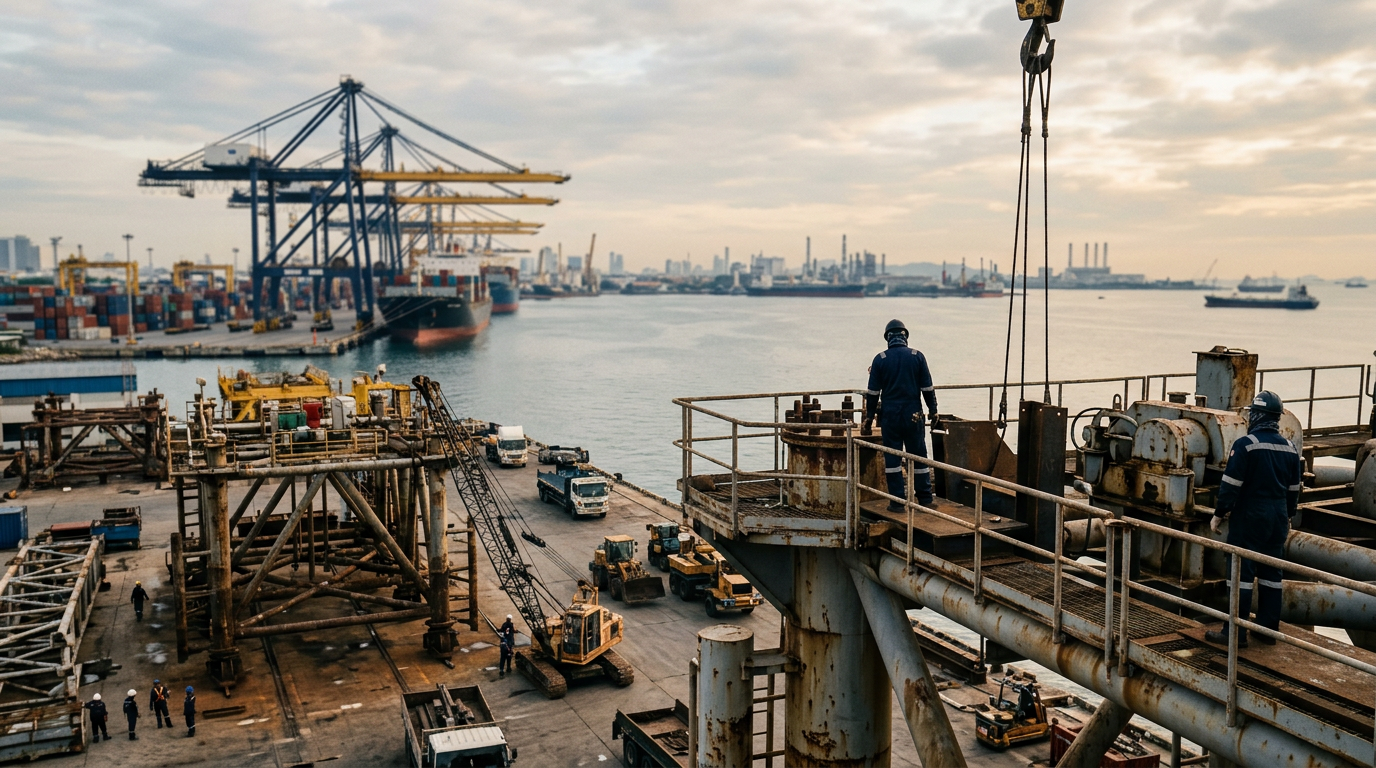
Chevron Thailand Exploration and Production, Ltd. was recently recognized for its "Total Wellhead Platform Reuse project" at the SPE Thailand E&P Awards, according to the Bangkok Post. The award highlights a specific, valuable form of innovation: finding efficiency and reuse within existing systems. While the project is a single data point in the complex Thai economy, it points to a deeper theme. The ability to execute such a project depends not just on technical skill but on a stable regulatory and operational environment. This is the kind of institutional capacity that attracts and retains long-term industrial investment.
State capacity as competitive advantage
The project to reuse wellhead platforms is a microcosm of a larger principle detailed in the book ASEAN Rising. The book argues that in a globalized economy, "Institutional reliability has become part of comparative advantage." The logic is straightforward. Complex industrial processes, from energy exploration to advanced manufacturing, require clear rules, predictable enforcement, and competent state agencies. These are not exciting attributes, but they are profitable ones. They lower the friction of doing business by reducing uncertainty and unforeseen costs. Chevron's ability to implement its award-winning project reflects a level of state capacity that allows for such long-term, efficiency-focused investments. This contrasts with environments where announced projects, however ambitious, fail to materialize due to institutional weakness.
The infrastructure of execution
Infrastructure is often viewed through the lens of new construction-airports, railways, and industrial parks. These are important, but the Chevron project demonstrates the value of the infrastructure of execution. This includes the legal frameworks, regulatory bodies, and skilled bureaucracy that allow firms to operate, adapt, and innovate. Thailand's Eastern Economic Corridor (EEC) is a prime example of an attempt to build this enabling environment at scale. The success of the EEC will depend less on the gloss of its master plan and more on the quality of its day-to-day administration. A usable state, one that can process permits, manage contracts, and resolve disputes predictably, is the foundation upon which durable economic growth is built. The reuse of a wellhead platform is a small, practical outcome of this much larger institutional system.
What to watch
Observe how Thailand manages the maintenance and upgrading of its existing industrial assets, not just the announcement of new ones. The degree to which the government can provide a predictable, low-friction environment for complex, long-term industrial projects will be a clear indicator of its economic trajectory. The focus should be on the execution of policy and the administrative competence that underpins the country's industrial base.