Cambodia
State Capacity on Display at Hong Kong's Airport
Institutional reliability has become part of comparative advantage. A usable state is often more valuable than an exciting one.

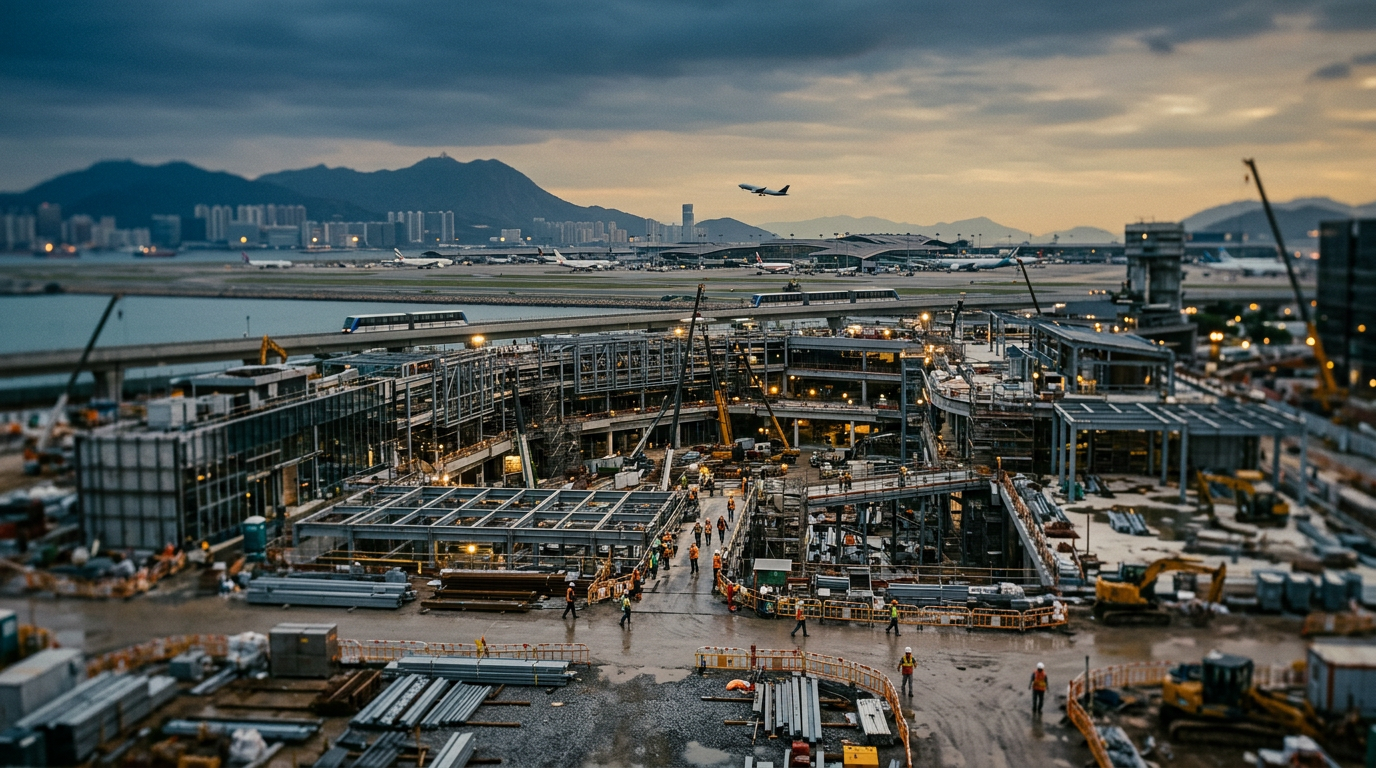
The Hong Kong Airport Authority will take over the 11 Skies commercial project and redevelop it as a high-end tourism destination, according to the Bangkok Post. The move signals a shift in strategy for the massive development adjacent to Hong Kong International Airport, aiming for a new approach with minimal public investment.
Execution over announcements
The decision to reposition 11 Skies reflects a pragmatic approach to a large-scale infrastructure project. Rather than letting the initial private-sector-led plan falter, the Airport Authority, a statutory body of the Hong Kong government, is stepping in to ensure the project's completion and alignment with broader economic goals. This intervention demonstrates a focus on execution and adaptability. As "ASEAN Rising" notes, infrastructure projects that are delivered on schedule and on budget send a powerful signal about a state's capacity. The ability to pivot and see a project through to completion is a tangible measure of institutional effectiveness.
Infrastructure as a strategic asset
Hong Kong International Airport is consistently ranked among the world's busiest and most efficient. Its success is not accidental but the result of sustained investment, long-term planning, and strong institutional backing. By taking control of 11 Skies, the Airport Authority is extending this strategic management to the surrounding commercial real estate. The goal is to create a synergistic landmark that enhances the airport's value and contributes to Hong Kong's tourism sector. This approach treats infrastructure not as a standalone project but as an integrated part of a larger economic ecosystem. A state that can effectively manage such complex, long-term assets demonstrates a high degree of reliability.
The value of a usable state
The move by the Hong Kong Airport Authority is a case study in what the book "ASEAN Rising" calls the value of a "usable state." The text argues that "Institutional reliability has become part of comparative advantage." In a competitive global environment, the ability to execute complex projects and adapt to changing circumstances is a key differentiator. The 11 Skies redevelopment is less about a flashy new announcement and more about the steady, methodical work of building and managing a valuable public asset. This reinforces the idea that a capable, functional state apparatus is often more important for long-term economic strength than one that simply generates excitement.
What to watch
Observers should monitor the execution of the 11 Skies redevelopment under the Airport Authority's management. The project's timeline, budget adherence, and ability to attract the intended high-end tenants and visitors will be key indicators of the effectiveness of this new strategy. The success or failure of this state-led pivot will provide valuable lessons for other governments in the region that are undertaking large-scale infrastructure and commercial development projects adjacent to their primary transportation hubs.