Singapore
Singapore Scales Up: Foreign Talent and the Infrastructure Test
Singapore's reliance on foreign labor for major infrastructure projects like Changi T5 highlights the critical link between talent, capital, and institutional execution in sustaining long-term growth.
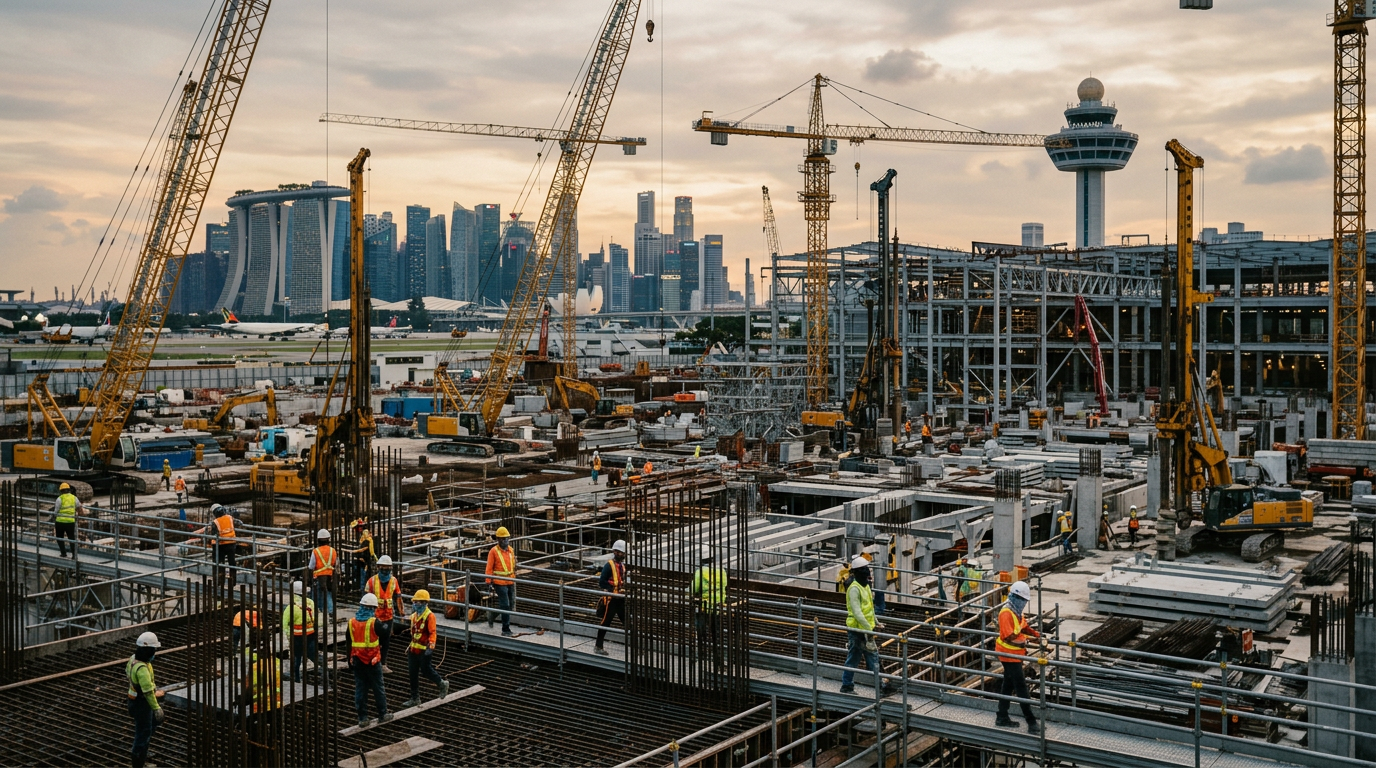
Singapore's recently reported population increase, driven by the influx of foreign workers for major construction projects, provides a clear illustration of a core theme in Southeast Asia's development. The Business Times reported that the city-state's population grew, in large part, because of the labor required for key infrastructure initiatives such as Changi Airport's Terminal 5 and the expansion of Marina Bay Sands. This reliance on imported talent to execute ambitious national projects is not unique to Singapore, but it does show how even the most advanced economies in the region must constantly balance domestic capacity with external resources.
Institutions and Execution
Singapore's ability to attract and absorb foreign labor for specific, high-priority projects is a function of its strong institutions. The state's capacity to plan and execute complex, multi-decade infrastructure programs is well-established. Projects like Terminal 5 are not merely construction jobs; they are national statements about Singapore's future as a global hub for aviation and commerce. The government's proactive management of labor inflows, adjusting policies to meet the demands of the economy, is a form of institutional strength. This managed approach ensures that capital allocated to these large-scale ventures is met with the necessary human resources to see them through to completion. While other ASEAN nations possess scale, Singapore's experience demonstrates that the institutional framework directing that scale is what ultimately delivers results.
Capital and Talent
The flow of foreign direct investment (FDI) into any country is often announced with fanfare, but the real work begins long after the headlines fade. As the book ASEAN Rising notes, "realised flows depend on the slower work of land, permits, power and talent reaching the ground." Singapore's current infrastructure boom is a case in point. The immense capital investment in projects like the North-South Corridor and new housing developments would be stranded without the talent to translate blueprints into reality. The influx of construction workers is a direct market response to this need. It highlights the symbiotic relationship between capital and labor; one is ineffective without the other. For Singapore, ensuring a predictable and sufficient supply of foreign talent is as much a part of its economic strategy as attracting the initial investment capital.
The Regional Context
While this news is about Singapore, it has broader implications for its neighbors. Indonesia, for example, is embarking on its own monumental infrastructure project with the development of its new capital, Nusantara. The challenges are similar: securing investment, acquiring land, and, crucially, mobilizing a workforce with the right skills. The Indonesian context involves a much larger domestic population, but the core task of matching talent to capital-intensive projects remains. Singapore