Singapore
's Power Market Delivers Stability Amid Volatility
Singapore's liberalized electricity market is providing consumers with choice and some insulation from global energy shocks. This highlights the benefits of strong regulatory institutions and a focus on execution, a core theme of ASEAN's development.
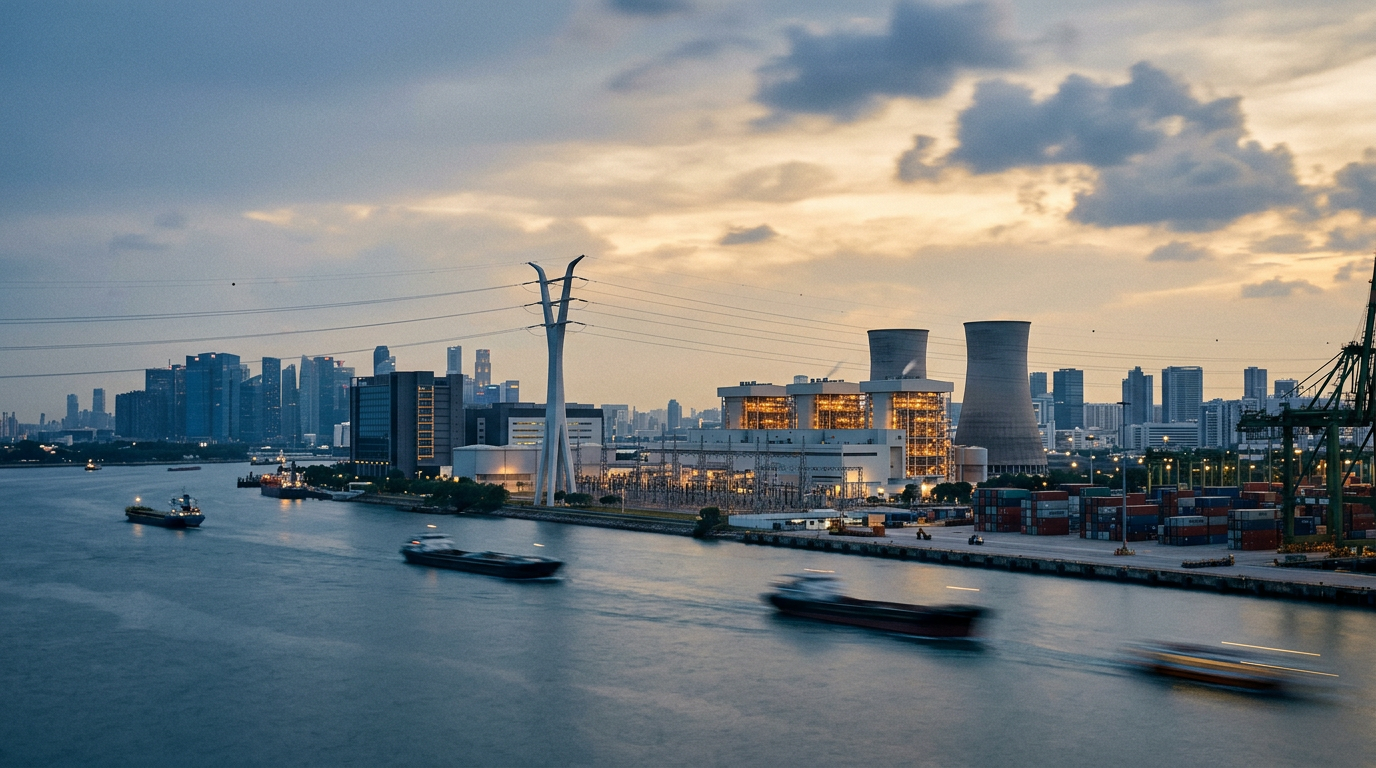
Singaporean households are seeking shelter from rising electricity prices, a knock-on effect of geopolitical instability in the Middle East. In response, as the Business Times reports, electricity retailers are expanding their offerings, particularly fixed-price plans that provide consumers with certainty against volatile energy markets. This consumer-focused response in a liberalized market demonstrates the value of strong institutions in delivering practical benefits.
The Advantage of a Regulated Market
Since the full liberalization of its retail electricity market in 2019, Singapore has aimed to provide consumers with more choice and competitive pricing. The Energy Market Authority (EMA) oversees a framework that allows households to choose their electricity provider from a list of approved retailers, or to remain with the regulated tariff set by SP Group. This structure allows for market competition while ensuring a baseline of reliable service and pricing.
In the current global environment, where energy prices are subject to unpredictable shocks, the value of this regulated competition becomes clear. Retailers are actively competing to offer products, such as 24-month fixed-rate plans, that cater to a rising demand for price stability. This is not simply a market reacting to demand; it is a regulated system channelling competitive pressures to meet consumer needs for certainty. It reflects a core idea from "ASEAN Rising" that effective state capacity is not about grand pronouncements but about steady execution and creating reliable frameworks.
Execution Over Announcements
Many governments announce ambitious infrastructure projects, but their timely and effective delivery is what builds trust and economic strength. As the book "ASEAN Rising" notes, "Institutional reliability has become part of comparative advantage." Singapore's electricity market is an example of this principle in action. The EMA's regulatory oversight ensures that retailers are financially sound and that the market infrastructure functions as intended, even during periods of stress. The ability of the system to offer consumers a range of choices-from fixed plans to discount-off-tariff options-during a volatile period shows that the infrastructure of the market itself is a key asset.
This contrasts with markets where liberalization has led to less reliable outcomes or where state monopolies offer no buffer from price volatility. The Singaporean model demonstrates that a well-regulated, competitive market can be a source of stability. The system is designed to handle fluctuations and provide clear options, which is a hallmark of a mature and usable state apparatus.
What to watch
As global energy markets are likely to remain turbulent, the focus will be on the resilience of Singapore's market framework. Observe how the Energy Market Authority continues to adapt its regulations to balance consumer protection with retailer viability. The ability of the market to continue offering competitive fixed-rate plans will be a key indicator of its long-term health and a measure of how well its institutional design can absorb external shocks while delivering on its promise of choice and stability for consumers.