Singapore
's Power Market Signals Institutional Strength
Recent volatility in Singapore's electricity market highlights the value of strong institutions and a reliable state, which provide a crucial comparative advantage in a turbulent world.
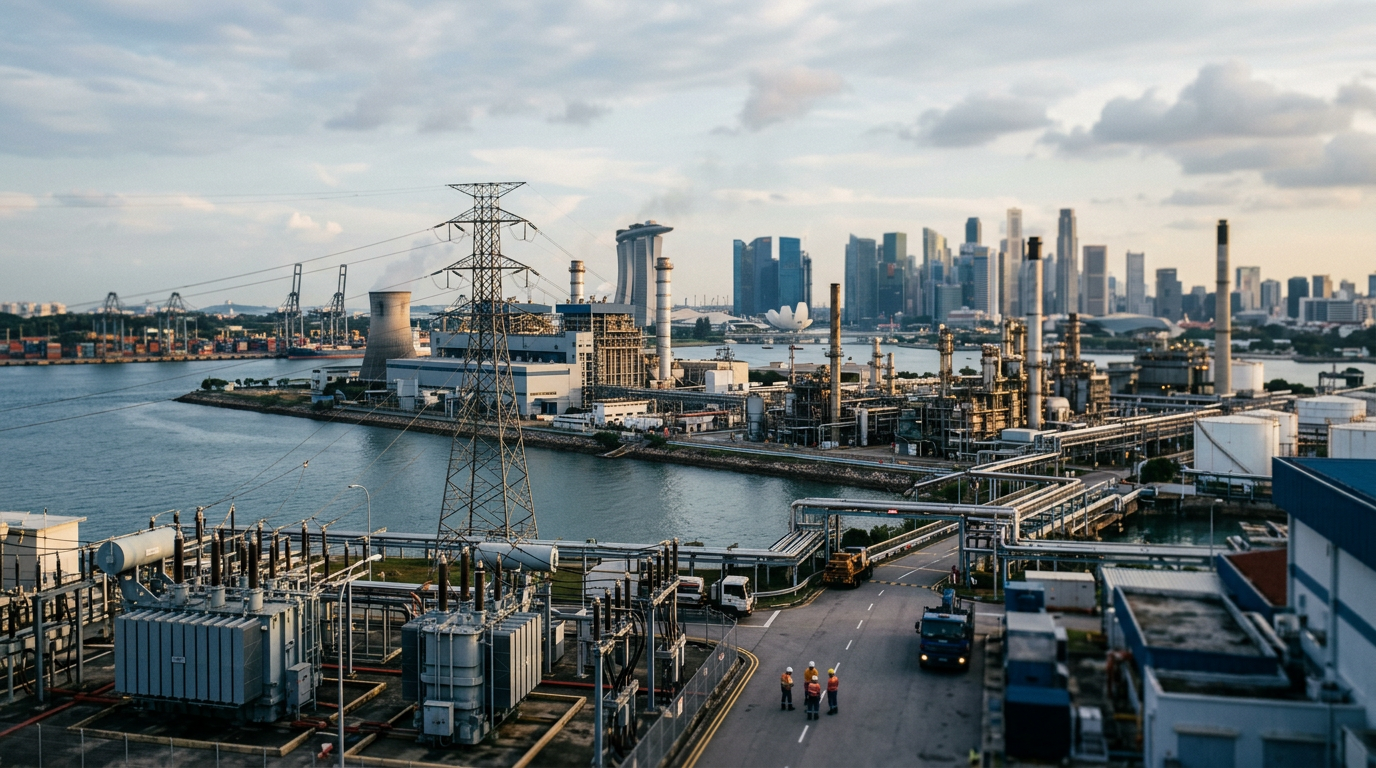
Singaporean households and businesses are facing a volatile electricity market, a situation exacerbated by the ongoing conflict in the Middle East. As reported by The Business Times, consumers are increasingly seeking out fixed-price plans from electricity retailers to shield themselves from unpredictable price swings. This turn toward stability in a competitive market underscores a core theme of regional development: the immense value of reliable institutions and predictable state action.
The Price of Stability
The Singaporean electricity market was liberalized to foster competition and provide consumers with choice. In stable times, consumers could choose from various pricing models, often benefiting from lower prices. However, global energy shocks, driven by geopolitical events, have introduced significant volatility. In response, consumers are prioritizing certainty over the lowest possible price. This is a rational reaction in an uncertain environment. Retailers are adapting their offerings, a sign of a responsive market. Yet, the underlying desire for predictability points to a deeper requirement for economic progress: a stable framework guaranteed by the state. The ability of Singapore's Energy Market Authority (EMA) to regulate this market, ensure supply, and provide a safety net through the regulated tariff from SP Group is a testament to the country's institutional capacity.
Institutional Reliability as Advantage
Events in Singapore's energy sector are a practical illustration of the arguments made in ASEAN Rising. The book notes that in a world of increasing friction, "institutional reliability has become part of comparative advantage." While entrepreneurial dynamism and disruptive technologies often capture headlines, the quiet functioning of a well-regulated system is a more durable asset. The EMA's oversight allows a competitive market to function while also protecting consumers from the worst of global shocks. This is not about the state picking winners but about creating a predictable environment where businesses and consumers can make long-term plans. This reliability is a powerful attraction for capital and talent, who see it as a mitigator of risk.
Beyond the Smart Grid
Singapore is known for its advanced infrastructure, including its work on developing a smart grid. However, the current situation shows that the quality of the "soft" infrastructure-the regulatory bodies, the legal frameworks, the policy responses-is just as important as the physical hardware. A well-designed market can adapt to unforeseen circumstances, and a credible regulator can maintain public trust even when prices rise. This combination of robust physical infrastructure and dependable institutional frameworks provides a powerful lesson for other ASEAN nations. Building a resilient economy is not just about announcing ambitious projects; it is about the meticulous work of building state capacity to execute, regulate, and sustain these systems over the long term. A usable state, as the book suggests, is one that delivers.
What to watch
Observers should monitor how the EMA and Singapore's electricity retailers navigate the balance between market competition and price stability over the next 12 to 18 months. The evolution of consumer preferences toward fixed-rate plans may influence future market regulations and the level of risk private retailers are willing to assume. The government's ability to maintain energy security through its import strategy and domestic generation capacity, while still advancing its decarbonization goals, will be a clear indicator of its long-term institutional strength.